
Vandaag of morgen in huis

Kwaliteit gegarandeerd

Welkomstaanbiedingen ontgrendelen: GRATIS bezorging | Tot 80% korting | Gratis 30 dagen JoyPlus-proefperiode
Download de app
You've mastered the basics of 3D printing, but your projects demand more: colour, detail, and efficiency. Transitioning from a single-colour to a multicolor 3D printer is the logical next step for serious creators. However, the market is flooded with technical specifications and marketing promises that can make a clear choice difficult.
This article serves as a practical guide. We'll filter the noise and focus on the specifications that truly matter, helping you find a model that matches your ambitions, whether you're an experienced hobbyist, a designer, or a small business owner.
Before buying a 3D printer, it's helpful to understand a few key aspects. These will determine how efficient and reliable your multi-colour prints will be.
The core of a modern multicolor FDM printer is its filament management system. A 3D printer with an automatic filament system (often referred to as AMS or CFS) does more than just hold multiple spools. It automatically switches colours mid-print, detects when a spool is empty, and can even keep filament dry. This is crucial for long, complex prints and minimises the risk of failure.
A high-speed 3D printer is appealing, with speeds reaching up to 600 mm/s. Previously, higher speeds often meant lower quality. Today, advanced printers use techniques like input shaping and pressure advance to compensate for vibrations and ensure consistent extrusion. This allows them to print quickly while maintaining sharp details, which is essential for both prototypes and final products.
For a professional 3D printer, build volume and supported materials are crucial. A larger build volume (e.g., 350x350x350 mm) gives you the freedom to print large objects in a single run. Additionally, a printer with an enclosed chamber and a nozzle capable of high temperatures (around 300-350°C) is necessary for printing with engineering-grade materials like PA-CF (carbon fibre-reinforced nylon) or ASA.
Based on objective specifications and features, we've highlighted some popular choices for you.
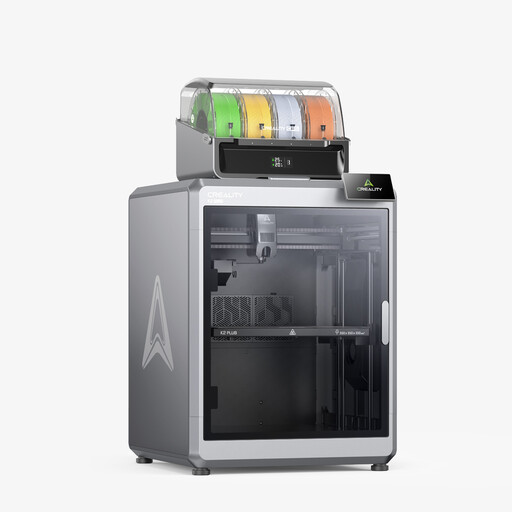
Why It Stands Out The Creality K2 Plus Combo is designed for large-scale and demanding projects. Its most striking feature is the massive 350×350×350 mm build volume. Combined with the Creality Filament System (CFS), this printer can work with up to 16 different colours or materials. The enclosed and heated chamber (≤60℃) and high nozzle temperature (≤350℃) enable printing with advanced filaments unsuitable for open-frame printers.
Advantages:
Who Is It For? This model is a strong contender for professionals, designers, and small businesses that need large, functional, and colourful prototypes or small production runs.
View the Creality K2 Plus Combo
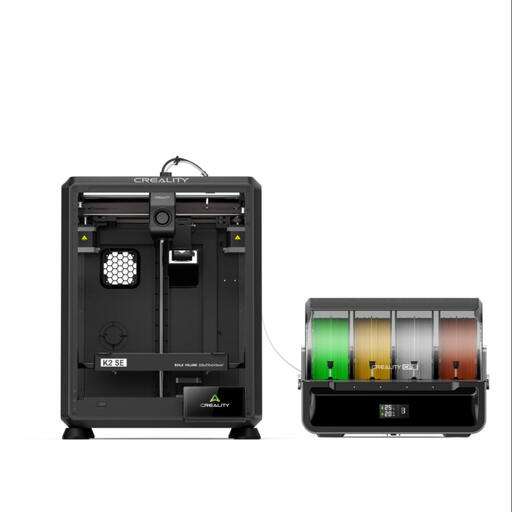
Why It Stands Out The Creality K2 SE Combo offers an excellent balance between advanced features and ease of use. This printer comes fully assembled and is ready to use right out of the box. With a print speed of up to 500 mm/s and the ability to use the CFS system for multi-colour printing, it's a powerful upgrade. The all-metal frame ensures stability during high-speed printing, and fully automatic levelling simplifies calibration.
Advantages:
Who Is It For? Ideal for experienced hobbyists and prosumers looking for a reliable and high-speed 3D printer to make the leap to multi-colour 3D printing, without the need for an extremely large build volume.

Why It Stands Out The Anycubic Kobra 3 Combo focuses on a smart and efficient printing experience. A unique feature is its integrated active filament drying system, which helps prevent print issues caused by moisture. The printer supports up to 8-colour printing and is equipped with smart features like AI spaghetti detection and automatic jammed filament detection. With a maximum speed of 600 mm/s and the LeviQ 3.0 automatic levelling system, it is both fast and reliable.
Advantages:
Who Is It For? Perfect for creators who value efficiency and reliability. If you're looking for a smart, integrated solution that proactively minimises print issues, this is a model to consider.
View the ANYCUBIC Kobra 3 V2 Combo
Every project is unique and requires specific tools. If the model you're looking for isn't listed here, or if you're searching for other printers, filaments, or accessories, feel free to browse our wider selection.
View all products in the Print category
Most multi-colour FDM printers use a single nozzle and an external system (like an AMS or CFS) that feeds different filaments. When the printer needs to change colour, it retracts the current filament, feeds in the new one, and prints a small amount of material onto a 'purge tower' or 'wiper' to clean the nozzle. After that, the print continues with the new colour.
Yes. Modern high-speed 3D printers use advanced firmware with features like input shaping to suppress vibrations at high speeds. This ensures the print head can move very quickly without sacrificing the accuracy and detail of the model.
The main advantages of FDM (Fused Deposition Modeling) are its cost-effectiveness and the wide availability of materials. Filaments like PLA, PETG, and TPU are relatively inexpensive and available in countless colours. The technology is mature and reliable, making it an accessible choice for both hobbyists and professional applications like prototyping.
