
Vandaag of morgen in huis

Kwaliteit gegarandeerd

Welkomstaanbiedingen ontgrendelen: GRATIS bezorging | Tot 80% korting | Gratis 30 dagen JoyPlus-proefperiode
Download de app
By: Joybuy Product Recommendation OfficerDate: July 14, 2026
Have you outgrown the limitations of single-colour printing? As a seasoned maker, engineer, or small business owner, you know that the next frontier in 3D printing lies in speed, reliability, and the ability to work with multiple colours or materials. However, the market for advanced FDM printers is saturated with technical jargon and marketing promises.
This guide is designed to bring clarity. We'll discuss the key features to look for when buying a multicolour 3D printer and highlight some popular choices suitable for serious projects, from rapid prototyping to creating intricate, colourful models.
Before you buy an FDM printer, it's crucial to look beyond just print speed. For professional results, other factors are at least as important.
A high-speed 3D printer is appealing, but high speeds can lead to vibrations and a loss of quality. Look for machines with a robust frame and features like vibration compensation and closed-loop motors. These systems actively correct for vibrations, resulting in a smoother surface finish, even at speeds of 600 mm/s or more. A stable construction is the foundation of a reliable, professional 3D printer.
Do you want to print with more than just PLA or PETG? For a 3D printer for engineering materials like ABS, ASA, nylon, or carbon-fibre composites, an enclosed 3D printer is essential. An active heated chamber ensures a stable ambient temperature. This minimises warping and improves layer adhesion, which is crucial for the structural integrity of functional parts.
Modern printers take much of the manual calibration work off your hands. Automatic bed levelling is now a standard feature, but advanced systems use the nozzle itself as a sensor for even greater precision. Additionally, AI cameras offer features like spaghetti detection, which automatically pauses a print when an error occurs. This not only saves filament but also valuable time, especially on long prints.
Based on specifications and features that meet the needs of demanding users, we have selected the following models.
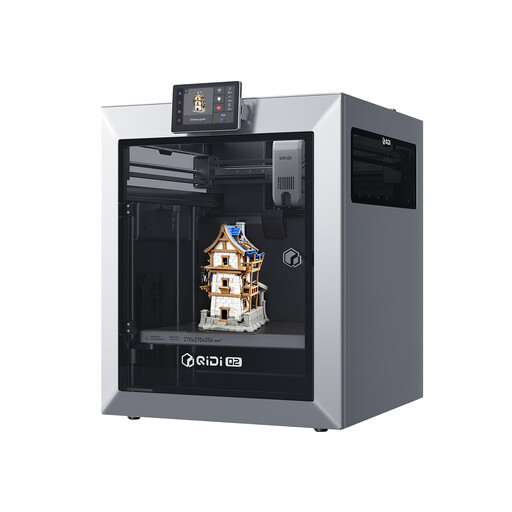
Why It Stands Out The QIDI Q2 is a versatile machine that bridges the gap between ease of use and professional capabilities. The printer features a 65°C PTC heated chamber and an all-metal hotend that can handle temperatures up to 370°C, making it suitable for a wide range of filaments. The built-in air filtration (HEPA and carbon) makes it safer for indoor use. With the optional QIDI BOX, the printer can be upgraded for 16-colour/multi-material printing.
Pros
Who Is It For? This is an excellent all-rounder for makers looking to expand their skills, educational institutions seeking a safe and capable machine, and engineers who need a reliable printer for prototyping.
View the specifications for the QIDIxJOYBUY Q2
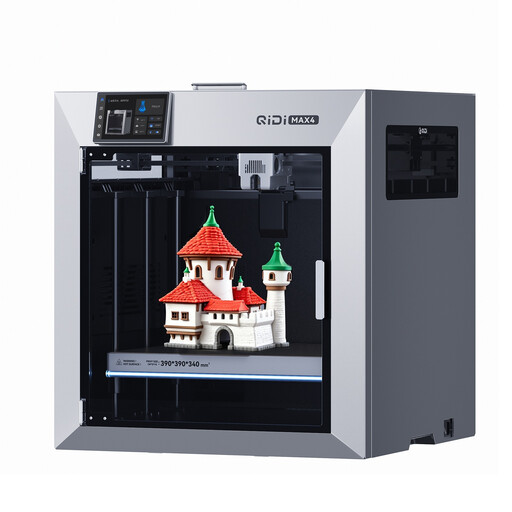
Why It Stands Out The QIDI Max4 is designed for large-scale projects. With an impressive build volume of 390×390×340 mm and a maximum print speed of 800 mm/s, this printer is built for speed and volume. Like the Q2, it has a 65°C heated chamber and closed-loop motors for high-speed precision. The AI camera detects errors and pauses the print, which is essential for prints that take many hours or even days.
Pros
Who Is It For? Professionals and small businesses that need to create large prototypes or end-use products. Ideal for those who require efficiency and scale without compromising on precision.
View the specifications for the QIDIxJOYBUY Max4
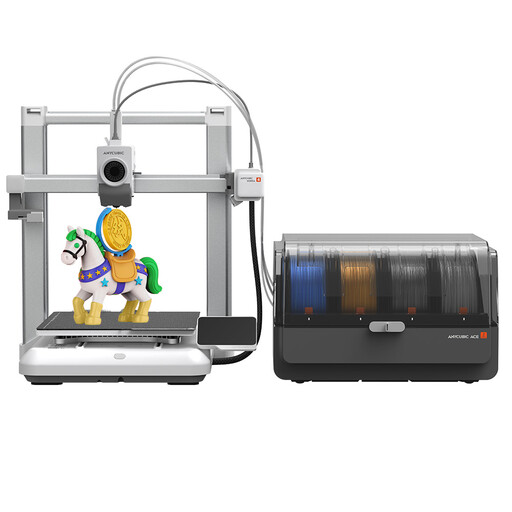
Why It Stands Out The Anycubic Kobra 4 Combo is a smart multicolour 3D printer that comes standard with 4-colour printing capabilities (expandable to 8). According to Anycubic, the manufacturer, this printer is designed for creators who value efficiency and creativity. The machine features an AI detection system for spaghetti failures and foreign objects. With a hotend that reaches up to 300°C and a bed up to 100°C, it is compatible with a wide range of materials.
Pros
Who Is It For? Creative hobbyists and designers who want to experiment with multiple colours right out of the box and are looking for a streamlined, smart printing experience to create vibrant models.
View the specifications for the ANYCUBIC x JOYBUY Kobra 4 Combo
The world of 3D printing is vast and diverse. If the models mentioned above don't fully meet your requirements, or if you're looking for printers with different specifications or for a different budget, we invite you to explore our full range.
View all 3D printers on Joybuy.nl
1. What is the advantage of an enclosed 3D printer? An enclosed frame creates a stable, warm environment around the printed object. This is crucial for temperature-sensitive materials like ABS, ASA, and nylon. It prevents the outer layers from cooling too quickly, which leads to less warping and stronger layer adhesion. It also helps contain fumes and particles, improving the air quality in the room.
2. How does multicolor 3D printing work on an FDM printer? There are several systems. A common method involves an external module (like the QIDI BOX or Anycubic's system) that manages multiple filaments. When a colour change is needed, the printer retracts the current filament and loads the new colour into the single nozzle. This process is automatically coordinated by the software and hardware. The result is a single object composed of multiple colours or materials.
