
Vandaag of morgen in huis

Kwaliteit gegarandeerd

Welkomstaanbiedingen ontgrendelen: GRATIS bezorging | Tot 80% korting | Gratis 30 dagen JoyPlus-proefperiode
Download de app
A multi-styler for hair can combine a hairdryer, curling tong, straighteners and volumising brush. That is useful if you are short on time in the morning or want to store fewer separate appliances. However, not all hair stylers are the same. An appliance with lots of attachments can be awkward to use in practice, while a compact hot-air brush may not offer enough options for curls or straight hair.
As a Joybuy Product Recommendation Officer, I focus mainly on verifiable features: the number of accessories, temperature settings, airflow, cord length, plug type and maintenance. This helps you avoid paying mainly for marketing claims.
A 7-in-1 hair styler sounds versatile, but also check which accessories are actually included. For drying and styling hair, a concentrator nozzle and smoothing brush are useful. For volume, you need a round brush. For curls, two curling attachments with different rotation directions can be more practical than one universal barrel.
Also look at the number of heat and speed settings. Without enough choice, an appliance may be less comfortable to use on fine, thick, wavy or curly hair.
Brands use terms such as intelligent heat control, ceramic coating or styling without extreme heat. These are technical features, but they do not guarantee a particular result. According to a brand’s own research or product information, a lower temperature may limit exposure to heat; the effect also depends on how long you use the appliance, the condition of your hair and the setting selected.
Use a multi-styler on towel-dried hair if the instructions specify this, work in smaller sections and use a suitable heat-protection product. A thermal brush such as the Wavytalk is intended for dry hair and is not a hot-air brush. Understanding this difference helps prevent incorrect use.
An ionic hair styler may, according to the product description, help reduce static and frizz. This is not a medical or permanent effect. Also note the difference between an appliance with an ion generator, one with a ceramic coating and one that has both features. These terms do not mean the same thing.
For drying and styling hair, wattage is only one factor. A high wattage does not automatically mean that a styler works faster or more comfortably. Pay particular attention to:
For example, the Okaydeer D1 lists 1,200 watts, two speeds and three temperature settings. The Dyson HS02 lists three speeds, three heat settings and a cold shot. According to the product information, the Philips BHA530/00 uses 1,000 watts, three heat settings and a separate Care setting.
First decide what you generally want to do:
A hair styler with the Coanda effect uses airflow to draw hair around a barrel. According to the product information from Okaydeer and Dyson, this is intended to guide the hair automatically around the curling attachment. It works most comfortably with well-divided sections that are not too thick. Do not expect one attachment to work in the same way for every hair length and curling technique.
For use in the Netherlands, check that the appliance is suitable for 220–240 volts and has a compatible EU plug. A long, swivel cord is useful in a bathroom where the socket is not directly beside the mirror. Also consider the weight: a heavy set can become tiring to use on long hair.
Clean the air filter according to the instructions. With an air styler, dust or hair in the air inlet can restrict the airflow. Allow hot attachments to cool down before changing or storing them. Do not use an electrical appliance near water, and unplug it after use.

Why it suits this profile: This 7-in-1 set is aimed at anyone who wants to dry, smooth, curl and add volume with one appliance.
The set lists two speeds and three temperature settings. The accessories are clearly specified, including a diffuser, volumising brush and two automatic curling attachments.
1,200 watts, 280 grams according to the product information, and a magnetic filter for maintenance.
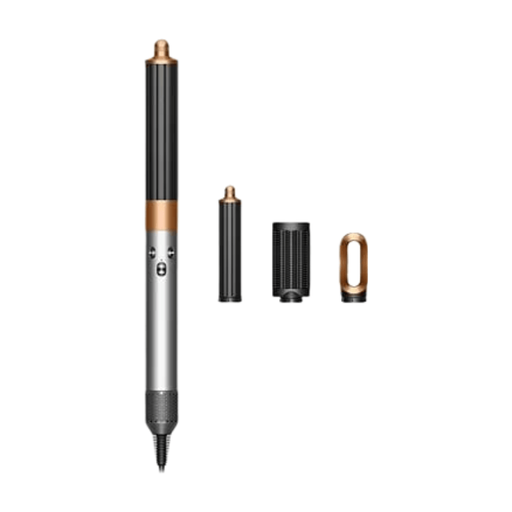
Why it suits this profile: Suitable for anyone looking for a compact air styler with automatic airflow control and straightforward operation for everyday use.
According to Dyson, the temperature is measured up to 40 times per second and remains below 150 °C, according to the manufacturer. Check the product manual for correct use.
1,300 watts, three speeds, three heat settings, cold shot and a weight of 0.58 kg according to the specifications.
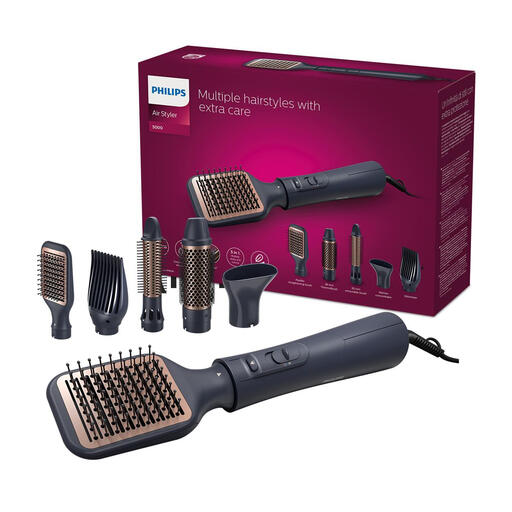
Why it suits this profile: A sensible choice if you mainly want to create smooth hair, volume and soft waves without a large number of separate accessories.
The product information lists a Care setting, three heat settings and a cool-air shot. This allows you to adjust the settings rather than always working on one high setting.
1,000 watts, ceramic coating, ionic function according to the product description, and a two-metre cord.
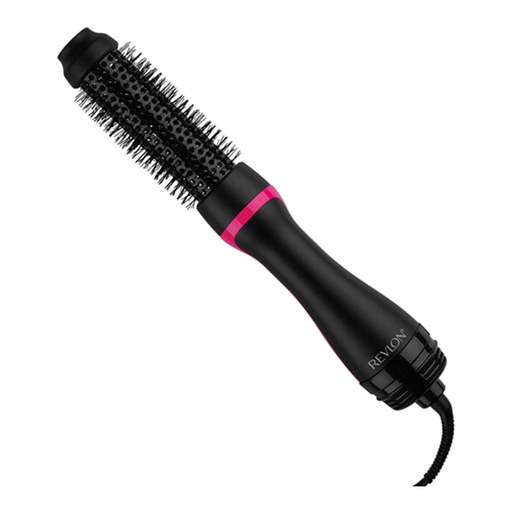
Why it suits this profile: This hot-air brush is a good fit for users who mainly want to dry their hair quickly and add volume with a 38 mm round brush.
The brush has three heat settings, a cool-air setting and ionic technology according to Revlon. This provides more adjustment options than a basic heated brush.
800 watts, ceramic heating, 38 mm diameter and a swivel cord according to the product specifications.
We have put together a complete, up-to-date list of products that fully meet these strict selection criteria and the applicable European safety regulations.
Usually not on soaking-wet hair. Many models are designed for towel-dried or slightly damp hair. A thermal brush, such as the Wavytalk, is intended exclusively for dry hair according to the product information. Therefore, always check the manual for the specific model.
Its lifespan depends on use, storage and maintenance. Clean the filter regularly, keep the air inlet clear and do not wrap the cord tightly around the appliance. Some brands offer a manufacturer’s warranty or statutory guarantee; check the terms for the product and keep your proof of purchase.
Consumption depends on the wattage and how long you use the appliance. A 1,000-watt appliance running for ten minutes theoretically uses approximately 0.167 kWh. In practice, consumption may be lower or higher depending on the different settings and heat-up time. A lower wattage does not automatically mean that you will need less time. Therefore, consider the full picture: power, drying time and the settings selected.
