
Households with someone sensitive to textures
If visible seeds or a different bite might be off-putting, the first thing to consider is whether they’ll accept the rusks. Bolletje’s multi-seed varieties contain different seeds and kernels.


If you have a fussy eater, don’t automatically start with multi-seed rusks. Choose them mainly if they already accept visible seeds and kernels. If you’re unsure about the texture, try plain rusks first, or a wholemeal variety with fewer visible seeds. Then compare the fibre, ingredients and allergens on each pack, as these vary between products.
If visible seeds or a different bite might be off-putting, the first thing to consider is whether they’ll accept the rusks. Bolletje’s multi-seed varieties contain different seeds and kernels.
If fibre matters to you, the nutritional information per 100 g is more useful than the words ‘multi-seed’ alone. For example, Albert Heijn lists 10 g of fibre per 100 g for Bolletje Vezelrijk boeren beschuit meerzaden and 11 g per 100 g for TastyBasics Beschuit meerzaden.
Sesame and wheat are present in the multi-seed varieties reviewed; other declared allergens vary by product. So check the packaging of the variety you’re actually choosing.
A good fit when: the person eating them already accepts visible seeds and kernels.
Consider: these additions change the texture. The varieties reviewed also require attention to sesame and other allergens.
A good fit when: you’d like to try wholemeal rusks without choosing a strongly seeded variety straight away.
Consider: wholemeal doesn’t mean seed-free; Albert Heijn also sells wholemeal multi-seed rusks.
A good fit when: you want to see if they’ll accept rusks and toppings without the extra texture of seeds.
Consider: don’t assume the nutritional value is the same as that of a multi-seed variety; compare the labels separately.
| What to consider | What to check when buying | Who should pay particular attention? |
|---|---|---|
| Texture acceptance | Check which seeds and kernels have been added. If you’re unsure, try a small amount first. | If kernels might be a sticking point, I’d first want to know whether the rusks will be eaten without that extra texture. Texture acceptance is the top priority for around 42% of consumers. |
| Fibre and nutritional information | Compare fibre per 100 g and check the serving size shown, too. | When comparing rusks for fibre, I don’t rely on the product name in place of the nutritional information. Around 25% of consumers give this nutritional profile the highest priority. |
| Ingredients and allergens | Read the current ingredients and allergen information on the pack, including any warnings about traces. | If I have an allergy, I want to know exactly which ingredients and warnings apply to the product before trying it. Checking ingredients and allergens is the biggest consideration for around 33% of consumers. |
Seeds and kernels change the texture of rusks. For someone who tends to reject visible pieces, this may matter more than a difference in nutritional value.
Start with a familiar texture, and only try a small amount of multi-seed rusks if seeds are an option.
The multi-seed products reviewed declare sesame and wheat, among other ingredients; other allergens vary by variety.
Check the current packaging of the specific product, even if you’ve bought rusks from the same brand before.
The Dutch agreement on bakers’ salt, published by the Ministry of Health, Welfare and Sport in 2008, encourages the use of iodised salt in bread and bread substitutes. This doesn’t guarantee that every rusk contains iodised salt.
If the type of salt used matters to your choice, check the ingredients list or ask the manufacturer.
Ingredients and allergen information can change. A description you viewed previously may therefore differ from the packaging you buy.
Use online information to compare varieties, then read the current packaging before use.
Bolletje offers classic, wholemeal and multi-seed rusks, among other varieties. Its multi-seed variety lists sunflower seeds, linseed, sesame seeds and pumpkin seeds.
Albert Heijn’s range includes plain, wholemeal and multi-seed rusks as separate options. AH Meerzadenbeschuit lists over 16% seeds and kernels.
TastyBasics Beschuit meerzaden is one option to compare with other multi-seed varieties for its nutritional values and seed content.
This selection includes multi-seed rusks, as well as wholemeal and plain varieties for trying a less pronounced seed texture. Check the current packaging for every option, especially if ingredients or allergens are important to your choice.
 No image available
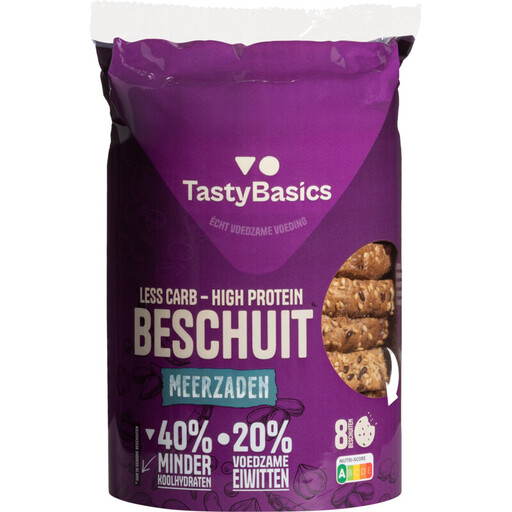
A multi-seed variety to consider if the person eating it already accepts seeds. Albert Heijn lists 11 g of fibre and 20 g of protein per 100 g for TastyBasics Beschuit meerzaden. Check the current packaging for wheat, egg, sesame, spelt and barley, among other ingredients.
 No image available
These multi-seed rusks are worth trying if different seeds are already familiar. Albert Heijn’s product information lists 10 g of fibre per 100 g for Bolletje Vezelrijk boeren beschuit meerzaden, which includes sunflower seeds, linseed, sesame seeds and pumpkin seeds, among other ingredients. Check the packaging for wheat and sesame.
 No image available
A wholemeal rusk to consider if you’re also weighing up the texture of added seeds. Check the packaging to see which seeds and allergens are listed for this variety; ‘wholemeal’ on its own doesn’t mean the rusks are seed-free.
 No image available
A wholemeal alternative for anyone who doesn’t want to try a strongly seeded variety straight away. Check the ingredients for any seeds, and use the value and unit on the current packaging when comparing fibre.
 No image available
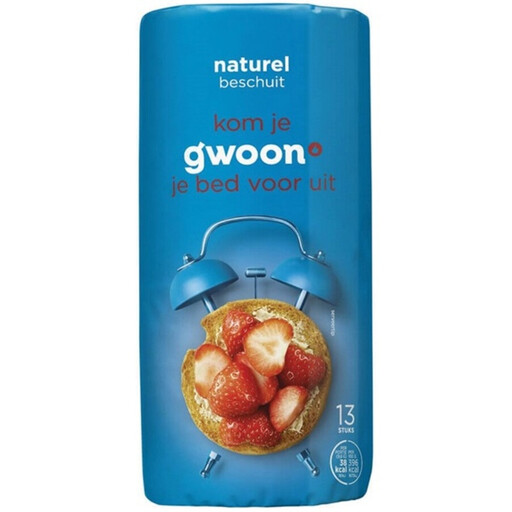
A plain variety to try first if you want to see whether they’ll accept rusks without an emphasis on seed texture. Read the current ingredients and allergen information carefully, especially if milk, wheat or egg matters to your choice.
Not if visible seeds or kernels are likely to put them off. Try plain rusks first, or a wholemeal variety whose ingredients you’ve checked. Save multi-seed rusks for a tasting session when that texture seems acceptable.
Always check the allergen information on the specific pack. Sesame and wheat are present in the varieties reviewed; depending on the product, other ingredients such as egg, barley or spelt may also be declared.
No. Don’t assume iodised salt has been used just because the product is a rusk. The Dutch agreement from 2008, published by the Ministry of Health, Welfare and Sport, encourages its use in bread and bread substitutes, but doesn’t guarantee this for every product. Check the ingredients list or ask the manufacturer if the type of salt used matters to your choice.
Close the pack securely after use and store the rusks somewhere cool, dark and dry. Also follow the storage and use-by instructions on the packaging you bought.