Choose a multi-seed croissant if you want the croissant shape with added seeds, and check the label if the ingredients or nutritional information will influence your choice. If your main priority is serving warm croissants, go for a bake-at-home option. If seeds matter more than the croissant shape, consider a multigrain loaf or roll whose ingredients you can check.
Who is this choice relevant to?
Easter lunch hosts looking for seeds
You’re looking for a croissant with several types of seeds to serve at the table. Albert Heijn lists the AH Meerzaden croissant, while Lidl lists a Meerzadencroissant. Check the current label if the exact ingredients matter to you.
Anyone wanting to bake croissants just before lunch
You want to serve warm croissants and seeds are less important. Jumbo and ALDI list bake-at-home croissants. Check the preparation instructions on each pack and whether your chosen product contains seeds.
Anyone who needs to check ingredients or allergens
You want to know what’s in your chosen product before serving it. Read the current ingredients list and allergen information, even if you’re already familiar with a similar multi-seed product. The Netherlands Food and Consumer Product Safety Authority highlights that relevant allergens must be clearly identified on the label.
What should you look for when choosing?
Start by deciding what matters most for your Easter lunch: a croissant with seeds, freshly baked warmth or the chance to check the ingredients beforehand.
Multi-seed croissant
Choose this: if you specifically want a croissant with several seeds. Albert Heijn and Lidl list products of this kind.
Bear in mind: the name alone doesn’t show how the nutritional value or allergen information of the two croissants compares.
Regular bake-at-home croissant
Choose this: if you want to bake croissants around lunchtime and seeds aren’t essential.
Bear in mind: a regular bake-at-home croissant won’t necessarily meet your need for seeds.
Multigrain loaf or rolls
Choose this: if you’d rather check the listed ingredients and the croissant shape is less important. For example, PLUS lists a multi-seed loaf containing sunflower seeds, linseed and sesame seeds.
Bear in mind: a whole loaf or multigrain roll isn’t a croissant. Check the seeds and nutritional information for each product you choose.
| What to consider |
What to check when buying |
Who is this important to? |
| Seeds and multigrain options |
Read the product name and ingredients list to see which seeds are listed for the product you’ve chosen. |
If seeds matter more to me than the croissant shape, I want to know exactly which ingredients I’m buying. This would be the main reason for around 44% of consumers. |
| Serving warm |
Check whether the product needs baking, follow the instructions on the packaging and make sure you have enough oven space. |
I want to serve the croissants warm around lunchtime, even if that means choosing an option without seeds. Baking them fresh would be the main priority for around 33% of consumers. |
| Ingredients and allergens |
Read the current packaging or full product information, including relevant allergens and any ‘may contain’ warnings. |
If a guest needs to avoid certain ingredients, I want to check whether the product is suitable before buying it. Around 23% of consumers would make this their first priority. |
Common mistakes
-
Assuming ‘multi-seed’ is a nutritional claim
The name doesn’t tell you how much fibre, sugar, fat or salt the product contains. Nor can you use it to make a nutritional comparison between two croissants.
If nutritional value matters to your choice, compare the current nutritional information per 100 g and check the serving size too.
-
Relying on the product name to check for allergens
Ingredients vary from product to product. For example, the PLUS multi-seed loaf lists sesame seeds, but that tells you nothing about the ingredients in every multi-seed croissant.
For the guest concerned, check the current allergen information for the exact product you plan to serve, including any ‘may contain’ warning.
-
Assuming a regular bake-at-home croissant contains seeds
The fact that a shop sells bake-at-home croissants doesn’t mean the option you choose contains several seeds.
Look for a specific multi-seed description and read the ingredients. A multigrain roll could be an alternative if you don’t need the croissant shape.
-
Planning Easter lunch based on an earlier product listing
A product listing doesn’t confirm that it will be available at your chosen shop on the day of your lunch.
Check the shop’s current range, stock and opening hours shortly before Easter lunch.
Brands and shops to help you choose
These listings can help you narrow down your search. Compare current products and labels before making your choice.
Albert Heijn
Albert Heijn lists an AH Meerzaden croissant for anyone specifically looking for a croissant with seeds.
- The product name gives you a clear starting point for your search.
- Check the current label before comparing ingredients, allergens or nutritional information with another product.
Lidl
Lidl describes its Meerzadencroissant as made with several seeds and says it’s sold in store.
- The description confirms that several seeds are part of this product.
- Check the ingredients and allergen information for the current in-store product if they’ll affect your choice.
Jumbo
Jumbo lists several croissant options for anyone who wants to bake them at home.
- Its range includes options for when serving warm croissants is the priority.
- Check the specific option you choose if seeds are essential.
ALDI
ALDI lists croissants in its bake-at-home bread range, as well as multigrain petit pains as another type of lunch roll.
- You can look specifically for bake-at-home croissants or a multigrain roll.
- A multigrain petit pain isn’t a croissant. Check the ingredients and preparation method for each product.
PLUS
PLUS lists Korenlanders Licht Meerzaden as a whole loaf containing sunflower seeds, linseed and sesame seeds, among other ingredients.
- PLUS provides ingredients and nutritional information for this loaf, including 5,5 g of fibre per 100 g.
- It’s a whole loaf, not a croissant or individual roll. Its nutritional information doesn’t apply to other products.
Dirk
Dirk lists butter croissants and sesame rolls, among other options, in its bakery range.
- This gives you a few options if a regular croissant or another type of roll would also work.
- A sesame roll isn’t a multi-seed croissant. Check croissants separately to see whether they contain seeds.
Multigrain alternatives at Joybuy
These three multigrain products are bread alternatives for Easter lunch, not multi-seed croissants. If specific seeds or allergens are important to your choice, check the ingredients on the current packaging for the product you choose.
 Image unavailable
Lekhaven Bakkerij Multigrain Rustic Baguette, 4 x 135 g
A multigrain baguette for serving bread instead of croissants at Easter lunch.
The product name states that there are four baguettes, each weighing 135 g. Check the ingredients and baking instructions on the packaging if seeds or baking at home are important to your choice.
View at Joybuy
 Image unavailable
Lekhaven Bakkerij Multigrain Country Bread Round, 550 g
A round multigrain loaf if you’d rather serve one loaf than individual croissants.
The product name states that it weighs 550 g. Check the current packaging for the ingredients and baking instructions.
View at Joybuy
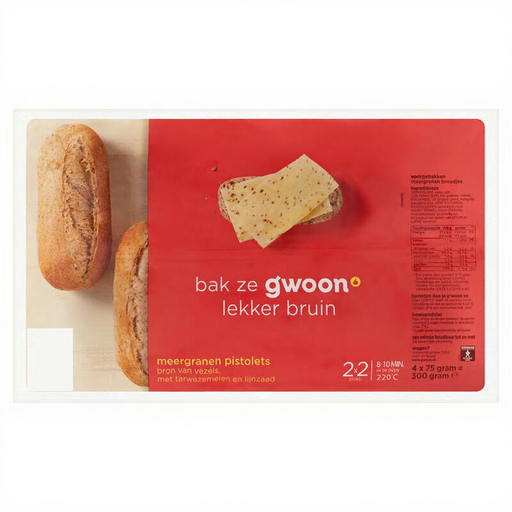 Image unavailable
g'woon Multigrain Rolls, 4 pcs
Multigrain rolls if you’d rather serve individual rolls than croissants at Easter lunch.
The product name states that there are four rolls. Check the current packaging for ingredients, allergens and serving instructions.
View at Joybuy
Frequently asked questions
Which allergens should I check in a multi-seed croissant?
Check the current packaging or full product information for any allergens relevant to your guest. According to the Netherlands Food and Consumer Product Safety Authority, relevant allergens must be clearly identified in the ingredients list. Don’t assume a croissant has the same ingredients as another multi-seed product.
When should I choose multigrain bread instead of a multi-seed croissant?
Choose multigrain bread if the croissant shape is less important and you want to check the ingredients of a specific loaf. For example, PLUS lists several seeds and 5,5 g of fibre per 100 g for its Korenlanders Licht Meerzaden. This information doesn’t tell you anything about the nutritional value of a multi-seed croissant.
Can I assume a croissant contains iodised baker’s salt?
No, don’t assume this based on the product category. In a 2024 information note, RIVM explains that Dutch iodine policy focuses mainly on iodised salt in bread. Check the product information for a specific croissant or ask the baker.
Can I use an earlier product listing to plan my Easter lunch?
Use it as a guide for what to look for, not as confirmation that the product will be available on the day of your lunch. Check the current range, stock and opening hours at your chosen shop shortly beforehand.


