
Vandaag of morgen in huis

Kwaliteit gegarandeerd

Welkomstaanbiedingen ontgrendelen: GRATIS bezorging | Tot 80% korting | Gratis 30 dagen JoyPlus-proefperiode
Download de app
A pair of scissors seems like a simple tool, but the differences between models are huge. A lightweight household pair isn’t automatically suitable for chicken bones. A garden pair is designed for branches and plants, not for food. If you rely only on a sharp product photo or the term “heavy‑duty”, you could end up with an awkward pair that dulls quickly.
Watch out for these three pitfalls:
For food preparation, stainless steel kitchen shears are practical because the material is suitable for regular cleaning and is less prone to rust than untreated steel. That doesn’t mean every stainless steel pair is dishwasher‑safe. Check the product information and dry the shears thoroughly after washing.
An all‑metal design may have fewer loose parts, while a model with plastic handles often offers more grip. With a multi‑purpose kitchen pair, a solid connection between the blades is important. A loose screw or a poorly closing pivot can make cutting difficult.
The same principle applies to manicure tools. A set with 18 stainless steel pieces can combine different functions such as cutting, filing and cuticle care. Clean sharp tools after use and store them dry in the case provided.
Look at the task you’re buying the scissors for:
A short pair often gives more control for small tasks. For thicker branches, a long handle or lever system can make operation easier. The KREATOR telescopic lopper has, according to the product specification, an adjustable length of 660 to 910 mm and a maximum cutting width of 40 mm. The aluminium construction and soft‑grip handles are relevant points for anyone working in the garden.
Also pay attention to:
A manufacturer’s claim about extra cutting power should be read as a statement from the brand. According to the product description of KREATOR, the lever system provides up to 180% more power. Use that as a product specification, not as a guarantee that every user can effortlessly cut every branch.
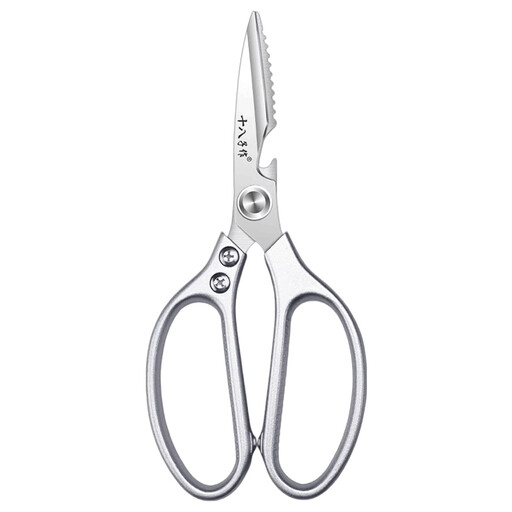
Why this fits the profile: This all‑metal kitchen pair is aimed at household and multi‑purpose kitchen use. That makes it straightforward for anyone looking for one pair for everyday tasks.
The product name and description mention an all‑steel construction. This makes the material clearer than with models where only “strong” or “sharp” is stated.
All‑metal construction; suitable as a multi‑purpose household kitchen pair according to the product name.
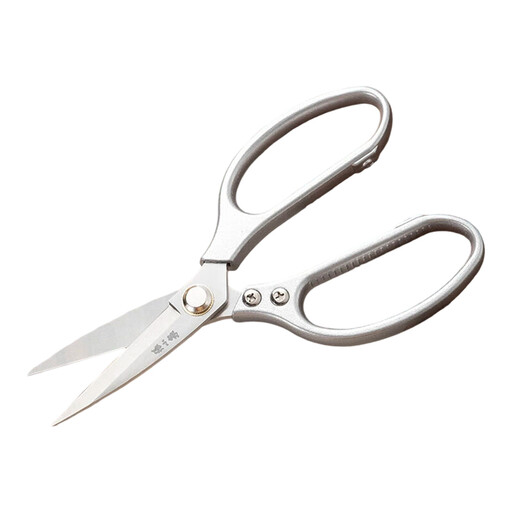
Why this fits the profile: This model mentions 40Cr13 stainless steel. That’s useful material information for buyers who prioritise durability and an all‑metal design.
The steel type is explicitly stated in the product name. You don’t have to rely only on general terms like “premium” or “extra sharp”.
40Cr13 stainless steel according to the product listing; all‑steel construction for kitchen and household use.

Why this fits the profile: The product listing mentions food use and chicken and duck bones. This makes the model suitable for home cooks, barbecue users and households looking for a specific poultry shear.
The intended application is clearly described. This reduces the chance of using a standard household pair for a heavy cutting task it wasn’t designed for.
Stainless steel construction according to the product name; intended for food and chicken and duck bones.
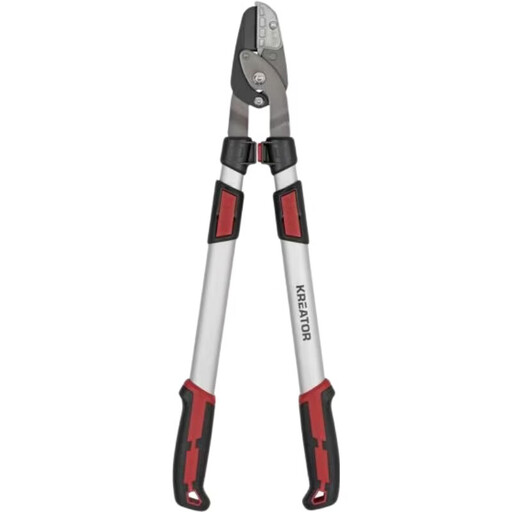
Why this fits the profile: The adjustable length from 660 to 910 mm is practical for higher branches. The model is aimed at garden work, not kitchen or food use.
The maximum cutting width of 40 mm is stated. This allows you to compare branch thickness in advance instead of relying only on the term “heavy‑duty”.
Telescopic aluminium handles; maximum cutting width of 40 mm; soft‑grip according to the product description.
We’ve put together a full, up‑to‑date list of products that fully meet these strict selection criteria and comply with current European safety regulations.
The lifespan of multi‑purpose scissors depends not only on the steel. Clean any food contact after use, dry the pivot area and remove residue from the cutting edge. Garden shears must be kept free of resin and soil. Occasionally lubricate pivot points with a suitable light oil. With a telescopic lopper, also check the locking mechanism before applying force.
Use sharp tools safely:
That depends on the product description and construction. Choose a model where food use and chicken or duck bones are explicitly mentioned, such as a specialised poultry shear. Don’t automatically use a standard household pair as bone cutters.
Clean the shears according to the manufacturer’s instructions, dry both blades and pay extra attention to the pivot. If the shears are detachable, that can make cleaning easier. Always check first whether the design is dishwasher‑safe.
Secateurs are suitable for smaller branches, roses and shrubs. For thicker or higher branches, lopping shears are more practical. A telescopic lopper offers extra reach, but always check the maximum branch thickness and the blade type.
