
Dark chocolate fan
You’re mainly looking for chocolate sprinkles for Sunday breakfast and want to compare the stated minimum cocoa percentage. Sprinkles and flakes also offer different textures.


Choose Muisjes if you’d like aniseed and a crunchy topping with your Sunday breakfast. If you’re after a pronounced dark chocolate flavour, compare chocolate sprinkles and flakes by their stated cocoa content; these are different products from the Muisjes described here. When choosing, also check the ingredients, allergens and nutritional information on the packaging.
You’re mainly looking for chocolate sprinkles for Sunday breakfast and want to compare the stated minimum cocoa percentage. Sprinkles and flakes also offer different textures.
You choose Muisjes for their aniseed flavour and crunchy texture, for example on crispbread. A dark chocolate flavour isn’t your main reason for choosing a topping.
You want to know what’s in each 100 g and serving before sprinkling, and which ingredients and allergens are listed on your pack.
First decide whether you want aniseed Muisjes or chocolate. If you choose chocolate, then compare the cocoa content and the shape of the topping.
| What to consider | What to look for | Who it matters to |
|---|---|---|
| Cocoa content | Compare the minimum percentage of cocoa solids in the specific chocolate sprinkles or flakes you’re considering. | If I’m looking for a pronounced dark chocolate flavour, I want to know what cocoa content my chosen product states. Around 50% of consumers put cocoa content first. |
| Aniseed and texture | Check whether the packaging says Muisjes, crushed Muisjes, chocolate sprinkles or flakes. | For Sunday morning crispbread, I’m specifically looking for the aniseed flavour and crunchy texture of Muisjes. For around 33% of consumers, this preference comes before chocolate flavour. |
| Serving size and label | Read the nutritional information per 100 g and per serving, as well as the ingredients and allergens listed on the packaging. | With a sweet topping, I want to be able to judge how much I’m using and which ingredients are relevant to me. For around 17% of consumers, checking the label is the first priority. |
The Muisjes listed by Albert Heijn and Jumbo include coloured, festive and crushed varieties. De Ruijter describes its pink Muisjes as sugar-coated aniseed seeds; these are different from dark chocolate sprinkles.
First choose between aniseed Muisjes and chocolate sprinkles. If you opt for chocolate, look for the specific sprinkles or flakes whose cocoa content you want to compare.
Albert Heijn states that De Ruijter Chocoladevlokken Puur contains at least 32% cocoa solids; Joybuy states that De Ruijter Intens Puur chocolate sprinkles contain at least 52%. These are different products and different types of topping.
Check the minimum percentage on the packaging of the exact variety you want to buy, rather than comparing the names alone.
The cocoa percentage doesn’t tell you how much sugar or fat a serving contains. The Netherlands Nutrition Centre highlights the sugar and saturated fat in chocolate sprinkles.
Check the nutritional information for your chosen product per 100 g and per serving, and bear in mind how much you actually sprinkle on.
The name Muisjes or dark chocolate sprinkles doesn’t give you a complete list of ingredients and allergens. This information is especially important if you need to avoid certain ingredients.
Check the current ingredients list and allergen information on the pack you receive before using the product.
Compare products within the right category: De Ruijter offers both aniseed Muisjes and separate dark chocolate products, while the retailers listed provide product information for specific varieties.
This brand offers aniseed Muisjes, dark chocolate flakes and dark chocolate sprinkles. The product type determines which flavour and texture you’re comparing.
The product information for De Ruijter Chocoladevlokken Puur gives you a specific example to use when comparing flakes.
Jumbo’s Muisjes category helps you distinguish between coloured, festive and crushed Muisjes.
The product page for De Ruijter Gestampte Muisjes describes using them on bread and crispbread, or in yoghurt.
These two products are options for a chocolate topping at Sunday breakfast. They aren’t aniseed Muisjes, so choose Muisjes separately if that’s the flavour you prefer.
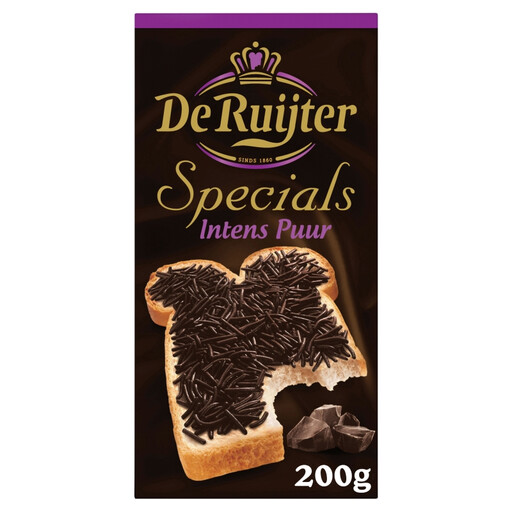 Image unavailable
For anyone looking for chocolate sprinkles with a clearly stated cocoa content, rather than aniseed Muisjes.
Joybuy states that this variety contains at least 52% cocoa solids. The pack contains 200 g; check the current ingredients, allergens and nutritional information before use.
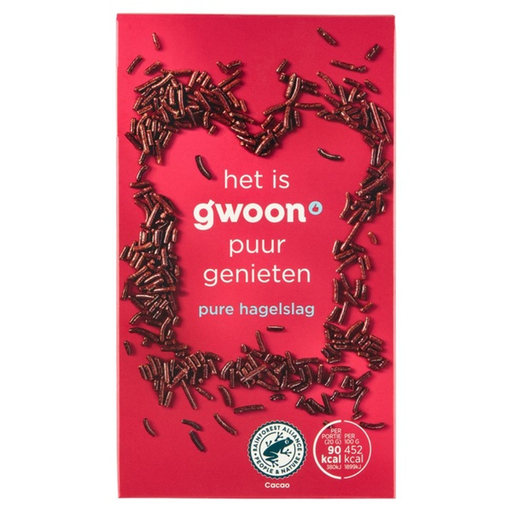 Image unavailable
For anyone who wants chocolate sprinkles for Sunday breakfast but isn’t looking for the aniseed flavour of Muisjes.
The pack contains 400 g. If you’re choosing by cocoa content, check the percentage for this exact variety on the packaging; also read the ingredients, allergens and nutritional information.
No. The De Ruijter Muisjes described here are a topping made from sugar-coated aniseed seeds; dark chocolate sprinkles are a separate chocolate product. Choose based on the flavour you want with Sunday breakfast, not just the search term ‘dark’.
First compare the product type, then check the stated minimum percentage of cocoa solids for the exact variety. Albert Heijn states at least 32% for De Ruijter Chocoladevlokken Puur; Joybuy states at least 52% for De Ruijter Intens Puur chocolate sprinkles. These are two different products, not two packs of the same topping.
Follow the storage instructions and use-by date on the packaging. Joybuy’s product information for De Ruijter Muisjes and chocolate sprinkles recommends storing them in a cool, dry place and sealing the pack tightly after opening.
Read the ingredients and allergen information for your chosen product, then check it again on the pack you receive. According to the European Commission, allergens in prepacked foods are emphasised in the ingredients list, so don’t rely on the product name alone.