
Hosts who want to identify their Fairtrade choice
You want to be able to see on the chocolate packaging which Fairtrade claim applies to that product. A festive topping alone doesn’t tell you that.


Choose muisjes for their distinctive aniseed topping, and select your Fairtrade chocolate separately: the De Ruijter Blue and White Muisjes described by Albert Heijn are sugar-coated aniseed seeds, not chocolate. For a party snack, you could dip a biscuit in chocolate and sprinkle it with muisjes, as in a Jumbo recipe. Check the Fairtrade mark on your chosen chocolate and read the labels of all the ingredients for allergen information.
You want to be able to see on the chocolate packaging which Fairtrade claim applies to that product. A festive topping alone doesn’t tell you that.
You want the aniseed flavour and familiar look of muisjes on crispbread, cake or a dipped biscuit, while choosing the chocolate separately.
You’re serving snacks with several ingredients and want to check every label. The ingredients list shown by Albert Heijn for De Ruijter Blue and White Muisjes includes wheat starch.
Decide whether the Fairtrade claim on the chocolate, the presentation with muisjes or checking the ingredients matters most for your get-together. Then assess each part of the snack separately.
| What to consider | What should you check? | Who is this most important to? |
|---|---|---|
| Fairtrade claim | Check the mark and the information on the packaging of the exact chocolate or chocolate sprinkles you’ve chosen. | I want to be able to identify the chocolate I’m serving with a Fairtrade claim; the muisjes don’t tell me that. Around 42% of consumers prioritise being able to verify their chocolate choice. |
| Presentation with muisjes | Choose muisjes for the topping you want, and decide whether you’d also like to use chocolate for a dipped snack. | I want to keep the aniseed flavour and familiar look of muisjes for my get-together, even if I choose the chocolate separately. Around 33% of consumers prioritise this presentation. |
| Ingredients and allergens | Read the current ingredients and allergen information for the muisjes, chocolate and any biscuits. | If guests need to watch out for allergens, I want to know what’s in every part of the snack. This check is most important to around 25% of consumers. |
Albert Heijn describes De Ruijter Blue and White Muisjes as sugar-coated aniseed seeds; the ingredients list shown does not mention cocoa. So, if you want Fairtrade chocolate, you’ll need to choose a separate product.
Use muisjes as a topping and check the Fairtrade claim on the chocolate or chocolate sprinkles you choose to serve with them.
Albert Heijn describes its own-brand cocoa as Rainforest Alliance or Fairtrade certified, and says that certain Delicata cocoa is sourced in line with Tony’s Open Chain principles. These descriptions don’t confirm that every individual pack carries a Fairtrade mark.
If Fairtrade is a must for you, check the claim on the product you’ll actually be using.
The chocolate and the base of the snack have their own ingredients and allergens too. The ingredients list shown by Albert Heijn for De Ruijter Blue and White Muisjes includes wheat starch.
Check the packaging for every component before serving, and keep it handy in case guests have questions.
For the familiar muisjes aniseed topping. Albert Heijn describes its 330 g Blue and White Muisjes as sugar-coated aniseed seeds.
Offers 380 g of dark chocolate sprinkles; Jumbo lists this product in its Fairtrade range.
An Albert Heijn chocolate brand. According to Albert Heijn, Delicata cocoa from Ghana or Côte d’Ivoire is sourced in line with Tony’s Open Chain principles.
This chocolate bar is a good choice if you want to add a separate chocolate component to a muisjes-themed get-together. If you want the familiar topping, choose the muisjes separately.
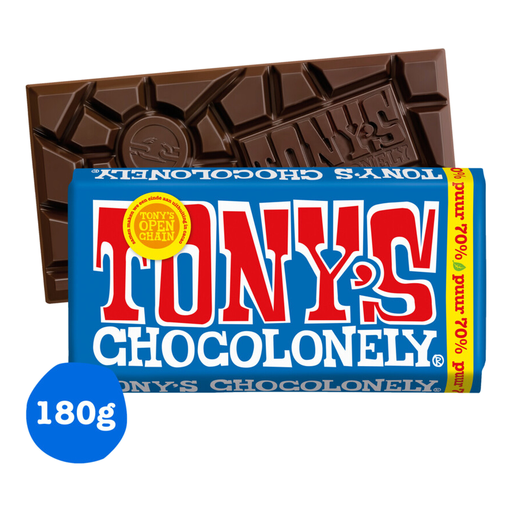 Image unavailable
A separate chocolate bar for anyone who wants to serve chocolate alongside muisjes. The product information mentions Fairtrade cocoa; if Fairtrade is a must for you, check the claim on the packaging. Don’t rely on the product name alone for the cocoa percentage, and check the latest allergen information before serving.
The Blue and White Muisjes described by Albert Heijn aren’t a chocolate product: the ingredients list shown includes sugar, aniseed and wheat starch, but no cocoa. If you want to serve chocolate at your get-together, choose a product with its own Fairtrade claim.
You can dip a sponge finger in melted chocolate and sprinkle muisjes over it, as in a Jumbo recipe. Choose chocolate with a Fairtrade claim you’ve checked on the packaging, and check the ingredients in the biscuit and muisjes too.
A Fairtrade claim on the chocolate doesn’t automatically apply to the muisjes or other ingredients. Be specific about which chocolate you’ve used and what the claim on its packaging says.
Check the allergen information for each pre-packed ingredient separately, including the biscuits and chocolate. The Netherlands Food and Consumer Product Safety Authority points out that allergen information appears on the labels of pre-packed foods. Keep the packaging so you can tell your guests which ingredients you’ve used.