
Mug seller with a fixed set-up
You want to take consistent overview shots of several mugs and can leave a tripod, background and lights set up on one table.


For overview shots of whole mugs, your existing smartphone, a fixed set-up and carefully positioned lighting are a sensible place to start. A mirrorless camera with a kit zoom is a better fit if you want to vary your compositions regularly. For small glaze details, a dedicated close-up or macro lens is worth considering if its magnification suits your shooting distance. Reflections on glossy ceramics also depend on your lighting set-up, not just your camera.
You want to take consistent overview shots of several mugs and can leave a tripod, background and lights set up on one table.
You want to photograph small patterns or textures separately as well as the whole mug. In that case, the close-up capability of a specific lens is a separate buying consideration.
You’re looking for a simple first set-up and want to find out whether your existing smartphone will do before buying a camera kit.
A good fit if: you mainly photograph whole mugs and want to try your existing phone first.
Bear in mind: framing and focusing depend on your phone; very small details may call for a different lens solution.
A good fit if: you regularly photograph different mugs and compositions and want interchangeable lenses.
Bear in mind: a kit zoom isn’t automatically a macro lens, and a small table may leave you with limited room to shoot and position your lights.
A good fit if: you want small glaze textures or decorations to appear large in the frame.
Bear in mind: the extra lens needs a compatible mount and suitable working distance. Canon specifies a maximum magnification of 1:2 for the RF 35mm F1.8 MACRO IS STM; Nikon specifies 1:1 for the separate NIKKOR Z MC 50mm f/2.8.
When photographing mugs on a small table, your choice mainly depends on the framing and level of detail you want, how glossy the glaze is, and what you already own.
| What to consider | What to look for when buying | Who is this important for? |
|---|---|---|
| Framing the whole mug consistently | Check which zoom lens is included and whether you can achieve the overview shot you want from your available camera position. | If I want to photograph several mugs with the same framing, I look for a fixed set-up and a useful zoom lens. Around 31% of consumers prioritise consistent overview shots. |
| Glaze colour and reflections | Check whether you can adjust the white balance and whether you have room on your table to soften or reposition the lighting. | When photographing glossy glaze, I want to control distracting highlights and keep colours consistent between shots. Around 31% of consumers prioritise colour and reflections. |
| Small patterns and textures | Compare both the minimum focusing distance and the maximum magnification of the exact lens; also check that the working distance suits your table. | If small decorations need to appear clearly in the frame, I look at the lens rather than just the camera. Around 23% of consumers give detail magnification top priority. |
| Avoiding unnecessary purchases | Try your existing smartphone for overview shots first, and check which lens is actually included with any camera kit. | If I want to start with my current phone and a fixed lighting set-up, I’ll hold off on buying a new camera body or extra lens until I know what my photos need. Around 15% of consumers want to limit additional purchases. |
The magnification figures for Canon and Nikon apply to specific standalone lenses, not to the kit zooms mentioned here.
Check the full contents of the kit and the maximum magnification of the exact lens included.
Glossy ceramics can show bright spots and distracting reflections; lighting is a separate part of your set-up.
Test the position and diffusion of the light on your own table before making a decision based only on camera specifications.
Softening the light may require extra space or equipment alongside the camera.
Being able to focus up close doesn’t tell you whether the whole mug, the background you want and the lighting will all fit into your available space.
Measure where you can position the camera and test both an overview shot and a detail shot.
The EOS R50 kit reviewed here comes with the RF-S 18-45mm zoom lens; the RF 35mm F1.8 MACRO IS STM is a separate close-up lens.
The Z50II kit reviewed here includes the NIKKOR Z DX 16-50mm VR zoom lens; the NIKKOR Z MC 50mm f/2.8 is a separate lens for macro photography.
The ZV-E10 II kit reviewed here includes the SELP16502 power zoom lens and is an option if you also want to shoot video with this specific camera.
Joybuy cameras for photographing mugs with different framing options, including zoom models.
 No image available
The listed 12× optical zoom is useful if you want to adjust the framing of your mugs.
The product title also mentions 4K video, 64 MP and Wi-Fi.
 No image available
The product title mentions photography as well as video, so you can take that combination into account when choosing.
The title lists a 1-inch CMOS sensor, 4K/120fps video, 3-axis stabilisation and a 2-inch rotatable touchscreen.
 No image available
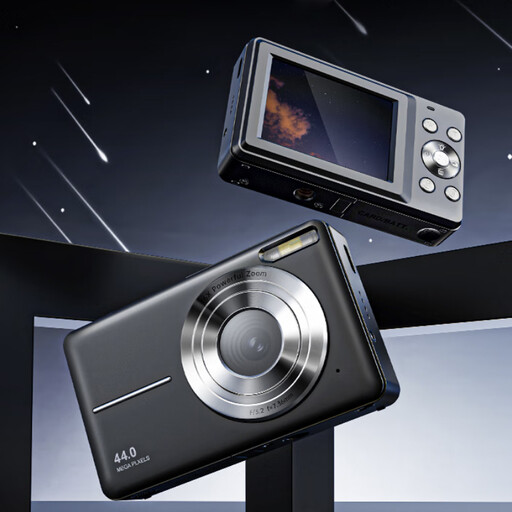
The product title lists 16× zoom for anyone who wants to try different framings.
The title also mentions 4K and 44 MP.
 No image available
The listed 16–50mm zoom lens offers different focal lengths for varying your framing.
 No image available
The product title lists a 16–50mm kit lens for framing your mug in different ways.
No. Start by deciding how you want to frame the whole mug, then check whether your existing camera or a kit zoom can achieve that from your camera position. Only consider a separate macro lens if you want small details to appear large in the frame.
First adjust the position and diffusion of the light; a diffuser and a fixed set-up are useful things to try. Then check the white balance if colours vary between shots. These are set-up tips, not a guaranteed result for every glaze finish.
Mount your camera or phone on a tripod and keep the framing, background and lighting as consistent as possible as you change the mugs. Check the focus and colour in the photos you take.
No, there isn’t a fixed statutory guarantee period of exactly two years for every purchase. ACM ConsuWijzer explains that statutory guarantee depends on what you could reasonably expect from the product, and that a manufacturer’s guarantee doesn’t limit this right. For a business purchase, check separately which terms apply.
For an online purchase in the Netherlands as a consumer, you generally have up to 14 days after delivery to change your mind, although exceptions may apply. ACM ConsuWijzer advises checking the terms for trying and returning products in advance. This consumer rule does not necessarily apply to a business purchase.