
Vandaag of morgen in huis

Kwaliteit gegarandeerd

Welkomstaanbiedingen ontgrendelen: GRATIS bezorging | Tot 80% korting | Gratis 30 dagen JoyPlus-proefperiode
Download de app
A packet labelled “no added sugars” might seem straightforward at first glance. Yet products in this category can vary significantly in carbohydrates, fibre, protein, sweeteners, portion size and ingredients. If you only look at the front of the pack, you could end up paying for something that doesn’t suit your breakfast, post-workout refuel or snack routine.
The main pitfalls to watch out for:
Always compare products per 100 grams. Pay particular attention to:
A product can contain 0 grams of added sugar and still provide 46 grams of carbohydrates per 100 grams, like Holie’s Granola Nuts & Seeds. That doesn’t make it unsuitable, but it is less fitting for someone who wants to strictly limit their carbohydrate intake.
For a high-fibre muesli, the fibre per 100 grams is what matters. Quaker Cruesli Zero Sugar Added Strawberry & Peach, for instance, lists 24 grams of fibre and 48 grams of carbohydrates per 100 grams. Holie’s Crunchy Muesli Protein Chocolate lists 21 grams of fibre and 22 grams of protein per 100 grams.
Don’t just look at the nutritional claim; also check the ingredients. Look out for:
Products with the “0% added sugar” claim can still contain naturally occurring sugars. According to the product information, Quaker’s Zero Sugar Added varieties contain no added sugars or sweeteners, but do contain naturally present sugars.
The difference is especially important with muesli bars. Hero B’Tween Zero bars use maltitol as a sweetener. The nutrition information shows 1.5 to 1.7 grams of sugar per 100 grams, but also around 42 grams of polyols. If you are sensitive to polyols, it’s wise to start with a small amount and follow the label.
For a breakfast with yoghurt, a fibre-rich granola with nuts and seeds can work well. For athletes, high-protein muesli may be more appealing. If you want to limit carbohydrates, you’d be better off looking for a low-carb blend with plenty of seeds, soya or fibre.
Also pay attention to the portion size. TastyBasics lists a portion of 30 grams, yet a bowl of muesli in practice can easily be 50 to 70 grams. The nutritional values for your bowl will then be significantly higher than those based on a single standard portion.
Allergens deserve the same attention. Many products contain oats, wheat, soya, peanuts, almonds, hazelnuts or milk. If you have an allergy, always check the current packaging, even if you’ve bought the product before.
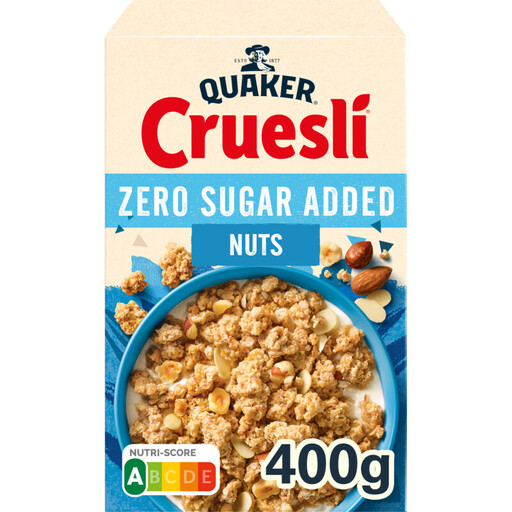
Why this fits the profile: An accessible crunchy muesli with 40% wholemeal oats, 16% wholemeal wheat and nuts. The flavour appeals to anyone looking for a familiar granola texture.
The product information states no added sugars and no sweeteners. The table does show 3.5 grams of sugars and 47 grams of carbohydrates per 100 grams.
20 grams of fibre per 100 grams, nuts included, and suitable for combining with milk, yoghurt or a plant-based alternative.
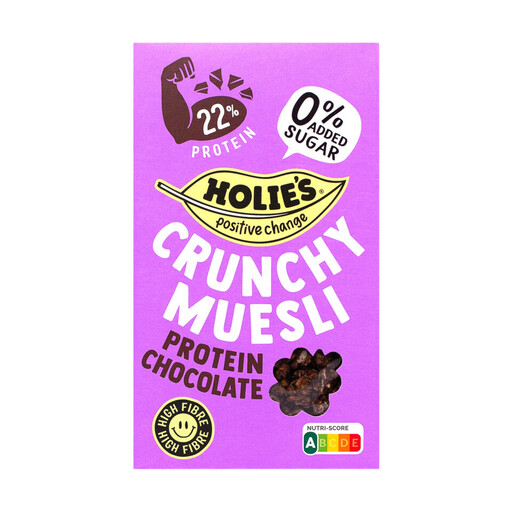
Why this fits the profile: Designed for anyone who wants to combine chocolate, a crunchy texture and a higher protein and fibre content in one breakfast product.
The nutritional values make the claim verifiable: 22 grams of protein, 21 grams of fibre and 2.1 grams of sugars per 100 grams.
46% wholemeal oats, 22% protein and 38 grams of carbohydrates per 100 grams; no added sugar according to the product information.
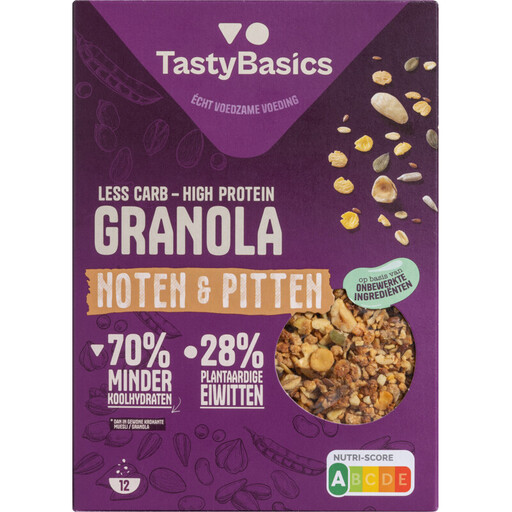
Why this fits the profile: An option for anyone consciously looking at a low carbohydrate content, plenty of protein and a fixed portion.
The composition is clearly broken down: soya, peanut butter, seeds, oats and chicory root fibre. This means carbohydrates and allergens can be assessed in advance.
17 grams of carbohydrates, 28 grams of protein and 22 grams of fibre per 100 grams. The manufacturer lists a portion of 30 grams.
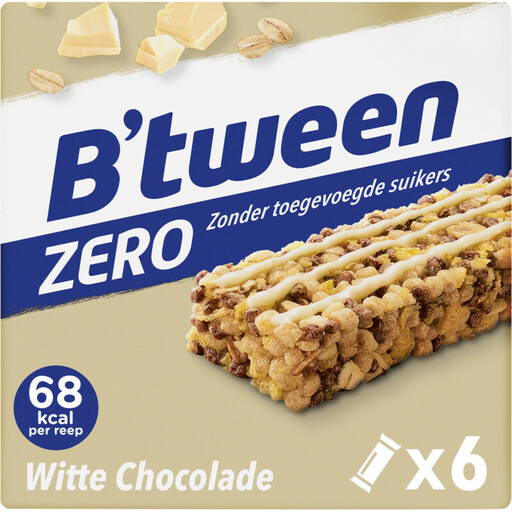
Why this fits the profile: Individually wrapped bars are practical for work, travel or a bag where a bowl and milk aren’t an option.
The packaging states 1.7 grams of sugars per 100 grams and makes the use of maltitol and polyols visible. So the product is not the same as sugar-free.
Each bar lists 68 kcal; bars are individually wrapped and, according to the product information, contain no preservatives or artificial colours.
We’ve put together a full, up-to-date list of products that fully meet these strict selection criteria and comply with current European safety regulations.
No. “No added sugars” means that, according to the product information, no sugar, syrup or similar ingredients have been added to the recipe. The product can still contain naturally occurring sugars from grains, fruit or other ingredients. So always check the of which sugars line.
Compare the carbohydrates per 100 grams and also look at the portion size. Products with plenty of nuts, seeds, soya and fibre can come out lower than traditional granola. Holie’s Granola Low Carb Crunch lists 18 grams of carbohydrates, 16 grams of fibre and 22 grams of protein per 100 grams. The nutritional values remain the key guide; a claim like “65% fewer carbohydrates” is a comparison from the brand’s product information.
Store the packet in a cool, dry place, away from direct sunlight, and seal it well after opening. This helps keep the crunchy texture for longer. Also check the best-before information on the packaging and don’t use any product where the packaging is damaged.
