
Same-day & Next-day Delivery

Quality Guaranteed

Unlock Your Welcome Offers: FREE Delivery | Up to 80% OFF | Free 30-day JoyPlus trial
Download the APP
A bag of muesli or granola may seem easy to choose, but the differences between breakfast cereals can be substantial. One variety may consist mainly of wholegrain flakes, while another contains plenty of oil, syrup, chocolate or dried fruit. Terms such as crunchy muesli, cruesli, high in fibre and no added sugar do not tell the whole story either.
Use the following checks to compare products based on their ingredients, nutritional values, allergens and intended use. You will then find a selection for different eating habits and budgets.
A product with no added sugar may still contain naturally occurring sugars, for example from raisins, dates or fruit. The label for Quaker Cruesli Zero Sugar Added Strawberry & Peach, for example, states 4.4 grams of sugars per 100 grams. According to the product information, this variety contains no added sugars or sweeteners, but it is therefore not completely sugar-free.
Always check the line stating of which sugars and read the ingredients list too. Ingredients such as glucose syrup, honey, sugar, date concentrate or syrup can increase the sugar content.
‘Muesli with nuts’ or ‘muesli with fruit’ may sound appealing, but the percentage can vary considerably. According to the product information, Quaker Cruesli 4 Nuts contains 10.7% nuts in total. BIO+ B+ Muesli Nuts and Fruit lists, among other ingredients, 5% apricot, 1.5% hazelnuts and 1% almonds.
So check the percentages. As a rule, an ingredient listed near the beginning is present in a larger quantity than one mentioned at the end.
Granola with nuts, seeds and oil is often compact and crunchy. As a result, its energy value per 100 grams may be higher than that of ordinary muesli. Holie’s Crunchy Muesli Protein Nuts, for example, states 429 kcal, 21 grams of fibre and 22 grams of protein per 100 grams. TastyBasics Granola Chocolate & Nuts states 425 kcal, 28 grams of fibre and 21 grams of protein per 100 grams.
This makes such products interesting if you are specifically looking for high-protein granola or high-fibre breakfast cereals, but portion size remains important. The recommended serving size on the packaging may be, for example, 30 to 45 grams.
Always compare products on the same basis: per 100 grams. Pay attention to:
Muesli often consists of untoasted flakes, seeds and dried fruit. Granola and crunchy muesli are generally baked or toasted and often contain oil. Cruesli is a brand name for a crunchy cereal mix, and its ingredients may vary depending on the flavour.
If you have an allergy or intolerance, always check the full packaging. Gluten-free granola must be clearly labelled as gluten-free; ordinary oats are not automatically suitable for a gluten-free diet. Holie’s Granola Glutenfree Peanut Chocolate lists gluten-free wholegrain oats, but it does contain peanuts and may contain traces of other nuts and soya.
Muesli with nuts also requires extra attention. BIO+ B+ Muesli Nuts and Fruit contains, among other ingredients, hazelnuts, almonds and cereals containing gluten. If you are unsure about cross-contamination, the allergen information on the current packaging takes precedence.
A multipack may often seem like good value, but it is only suitable if you use the product regularly. Holie’s Crunchy Muesli Protein Nuts is offered as 6 x 400 grams. That is practical for a household that eats granola every day, but less suitable if you like to alternate between flavours.
Store opened muesli and granola in a cool, dry place away from direct sunlight and moisture. Seal the packaging properly to preserve the crunchy texture. When buying online, check the shelf-life information on the packaging as soon as the product arrives.
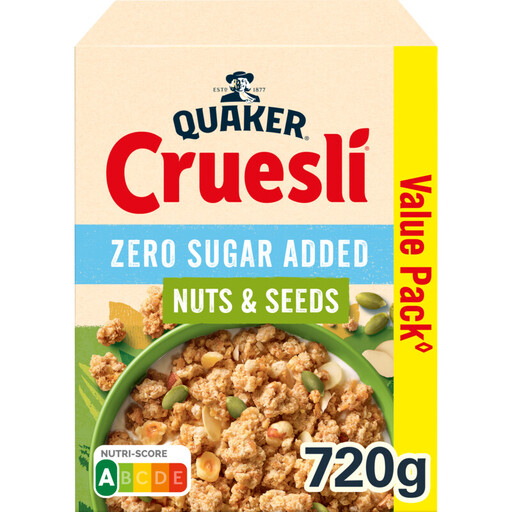
Why it suits this profile: The large pack is convenient for a daily breakfast with yoghurt, milk or a plant-based alternative. The mix contains oats, wheat, pumpkin seeds, hazelnuts and almonds.
The product information states that it contains no added sugars or sweeteners. However, check the current label and the naturally occurring sugars per serving.
720 grams of product, 23 grams of fibre per 100 grams, and a combination of cereals, nuts and seeds.
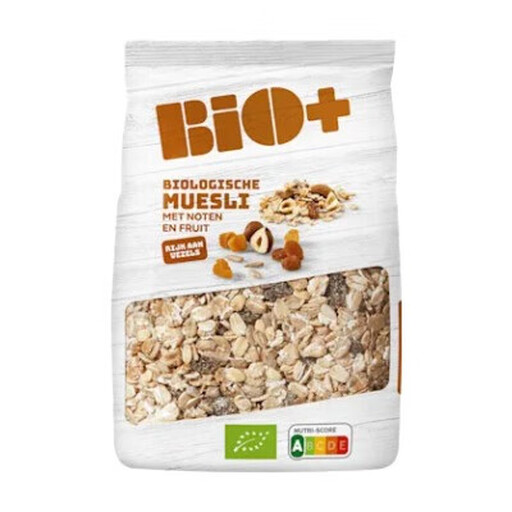
Why it suits this profile: This organic muesli combines wholegrain flakes, seeds, nuts and dried fruit for anyone looking for a versatile, less sweet base.
The ingredients and allergens are specified. It states 0 grams of added sugar, while the label gives 20.8 grams of sugars per 100 grams.
Organic ingredients, 9 grams of fibre and 10.9 grams of protein per 100 grams; suitable with yoghurt, milk or as a topping.
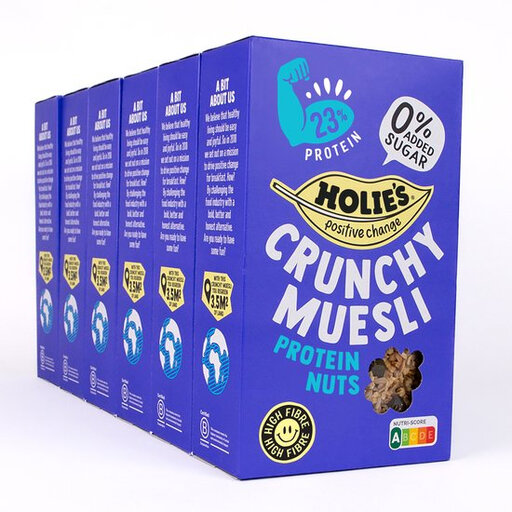
Why it suits this profile: This multipack is intended for frequent use. The product information states 22 grams of protein and 21 grams of fibre per 100 grams.
The protein and fibre content is clearly stated per 100 grams. According to the label, the product contains no added sugar, but it does contain cereals and nuts.
6 x 400 grams, 22 grams of protein, 21 grams of fibre, and a mix containing oats, sunflower and pumpkin seeds, almonds and hazelnuts.
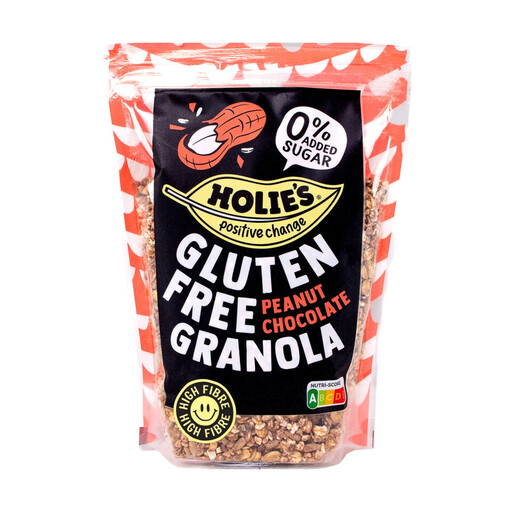
Why it suits this profile: The combination of cocoa, peanut butter and a crunchy texture is ideal for anyone who wants chocolate granola without gluten-containing cereals, according to the product description.
The label states 0% added sugar, 4 grams of sugars and 14 grams of fibre per 100 grams. If you have allergies, also check the warning about possible traces.
330 grams of product, 15 grams of protein, 14 grams of fibre, and a recipe containing gluten-free oats, peanut butter and cocoa.
We have put together a complete, up-to-date list of products that fully meet these strict selection criteria and the applicable European safety regulations.
Muesli usually consists of a mix of cereal flakes, seeds, nuts and dried fruit. Granola is often baked or toasted, giving it a crunchy texture. The exact ingredients vary from one brand to another, so check the ingredients list rather than relying solely on the product name.
No. Nuts, seeds and oil provide plenty of energy per 100 grams, even when no sugar has been added. As well as sugars, check the energy value, fat content and portion size. Products containing dates or dried fruit may also contain naturally occurring sugars.
Store the product in a dry, cool place away from direct sunlight. Seal the bag or storage container properly. This will help the crunchy texture last longer. Also check the best-before date and do not use the product if the packaging is damaged.
