For a toddler’s breakfast, the Netherlands Nutrition Centre recommends wholegrain muesli with no added sugar or salt. Also check the ingredients and allergen information: no added sugar does not mean sugar-free, and the Netherlands Nutrition Centre advises against whole nuts and peanuts for children under 4 because of the risk of choking. Whether a crunchy variety is suitable also depends on its texture and what your child can eat safely.
Who should bear these points in mind?
Parents who check texture and allergens
You’re looking for muesli with a texture your toddler can manage, and want to know which allergens are listed on the packaging. The Netherlands Nutrition Centre advises against whole nuts and peanuts for children under 4 because of the risk of choking.
Parents who want to understand sugar claims
You want to know the difference between sugar-free and no added sugar. The nutritional information and ingredients matter too: a product with no added sugar can contain naturally occurring sugars, while a product carrying a sugar claim may contain sweeteners.
Families looking for an alternative to bread
You’re looking for a different breakfast for days when you don’t serve bread. The Netherlands Nutrition Centre suggests wholegrain muesli with no added sugar or salt as a breakfast alternative, and advises serving two slices of bread at another time during the day.
What should you look for when choosing?
Start with the texture and allergens that matter for your child. Then compare the exact sugar claim and consider whether the muesli fits into the rest of the day’s meals.
| What to consider |
What to check before buying |
Who it matters to |
| Texture and allergens |
Check for whole nuts or peanuts, the allergen information and any warnings about possible traces of allergens. Consider whether the texture is right for your child. |
If my toddler is eating the muesli or taking it to nursery, I want to know first whether the texture is suitable and which allergens it may contain. This is the top priority for around 42% of consumers. |
| Sugar claim and ingredients |
Compare the claim with the ‘of which sugars’ figure in the nutritional information per 100 g, and check the ingredients list for dried fruit and any sweeteners. |
I’m looking for a product with no added sugar, but I don’t want to assume that this means it is sugar-free or contains no sweeteners. For around 33% of consumers, this is the most important distinction. |
| Wholegrain and daily meals |
Check which wholegrains are listed in the ingredients and look for added sugar and salt. |
If muesli is an alternative to bread at breakfast, I also want to consider what my child will eat later that day. This fit with the rest of the day’s meals is the top priority for around 25% of consumers. |
Common mistakes
-
Reading ‘no added sugar’ as ‘sugar-free’
These are different claims. Muesli with no added sugar can still contain sugars that occur naturally in ingredients such as raisins.
Check the exact claim and compare it with the ‘of which sugars’ figure in the nutritional information and the ingredients list.
-
Relying only on the sugar claim for a nut variety
A sugar claim tells you nothing about the texture. The Netherlands Nutrition Centre advises against whole nuts and peanuts for children under 4 because of the risk of choking.
Check which nuts the product contains and what form they’re in. Don’t choose muesli containing whole nuts or peanuts as a regular breakfast for a toddler.
-
Assuming a sugar claim means there are no sweeteners
According to Albert Heijn, AH Krokante muesli noten 0% suiker contains maltitol. The packaging warns that excessive consumption may have a laxative effect.
If you want to avoid sweeteners, check the ingredients list of the variety you’re buying.
-
Considering muesli separately from the rest of the day’s meals
The Netherlands Nutrition Centre suggests muesli as an alternative to bread at breakfast, advising that the child has two slices of bread at another time.
So consider your breakfast choice alongside what else your child eats that day.
Brands and product ranges to consider
These product ranges include plain wholegrain muesli, crunchy varieties and nut varieties, each with different features to consider for a toddler’s breakfast. Always check the packaging for the specific product.
Albert Heijn
AH offers both a plain wholegrain muesli and a crunchy nut variety with a sugar claim.
- According to Albert Heijn, AH Volkoren muesli naturel contains 0 g of added sugars and 0 g of added salt per 100 g. Its ingredients include wholegrain wheat, oat and barley flakes.
- The plain variety contains raisins and gluten, and may contain traces of nuts. AH Krokante muesli noten 0% suiker contains nuts and maltitol; don’t judge this variety on its sugar claim alone.
Quaker Cruesli
The Cruesli Zero Sugar Added range includes a Naturel variety and a separate nut variety.
- Jumbo’s product description for Quaker Cruesli Zero Sugar Added Naturel states that it contains no added sugars or sweeteners.
- The Naturel variety contains gluten and may contain nuts. The nut variety includes almonds and hazelnuts; check the form of the nuts before choosing a variety for a toddler.
Jumbo
Jumbo’s range includes a crunchy muesli with cocoa and hazelnut pieces.
- Jumbo describes Crunchy Muesli Cacao Chunks as a product with no added sugars.
- This specific variety contains hazelnut pieces and gluten. The sugar claim alone doesn’t tell you whether the texture or allergens are right for your child.
A Joybuy product related to this topic
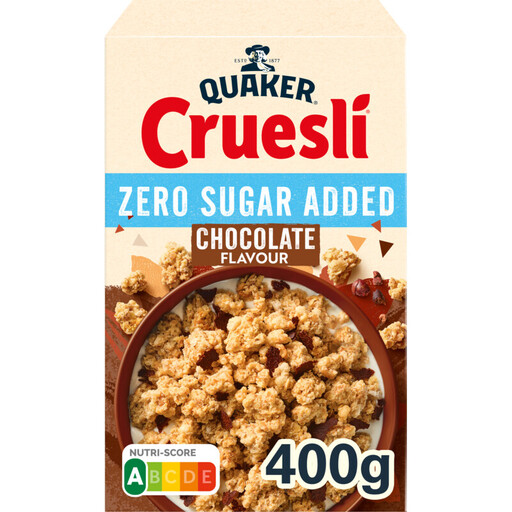
This Choco variety of Quaker Cruesli is one product to consider alongside the points to bear in mind when choosing a toddler’s breakfast. Before buying, check the current packaging for ingredients, nutritional information and allergens, and assess the texture before serving.
 No image available
Quaker Cruesli Choco Zero Sugar 400 g
For a toddler’s breakfast, this Choco variety is only an option if the ingredients, allergens and texture are right for your child.
Pack size: 400 g. Check the sugar claim against the nutritional information and ingredients on the current packaging.
View at Joybuy
Frequently asked questions
Does no added sugar mean the same as sugar-free?
No. They are different sugar claims: a product with no added sugar can contain sugars that occur naturally in its ingredients. So compare the claim with the ‘of which sugars’ figure in the nutritional information per 100 g, and read the ingredients list.
What should I look for in nut muesli for a toddler?
Pay particular attention to the form of the nuts: the Netherlands Nutrition Centre advises against whole nuts and peanuts for children under 4 because of the risk of choking. Also check the allergen information and consider whether the texture is suitable for your child.
Can muesli be an alternative to bread at a toddler’s breakfast?
Yes. The Netherlands Nutrition Centre suggests wholegrain muesli with no added sugar or salt as a breakfast alternative. It advises serving the child two slices of bread at another time during the day.
What should I check if the muesli is going to school or nursery?
Check the current ingredients and allergen information, and ask about the rules at the school or nursery. According to the European Union, allergens must be clearly highlighted in the ingredients list; the label won’t tell you which products are permitted at a particular location.


