
Families who eat breakfast together
If several family members eat the same muesli, a larger bag may suit how much you use together. Jumbo lists several 1 kg muesli varieties; choose a pack size based on the variety your family actually eats.


Choose a large bag of muesli when several family members regularly eat the same variety, but check the ingredients first if it’s for a toddler. The Netherlands Nutrition Centre recommends wholegrain breakfast cereals with no added sugar or salt as an alternative to bread for children aged 1 to 3. Check the allergens on the current label too. If you’re unsure whether your toddler will like the taste or texture, a smaller bag is a more practical way to try it first.
If several family members eat the same muesli, a larger bag may suit how much you use together. Jumbo lists several 1 kg muesli varieties; choose a pack size based on the variety your family actually eats.
For a child aged 1 to 3, the ingredients matter more than the pack size. The Netherlands Nutrition Centre recommends wholegrain muesli with no added sugar or salt as an alternative to bread.
If allergens are a concern, or you’re thinking of taking muesli to school or an after-school club, the exact variety and its current label are key. Ask the school or club what rules apply to food brought in.
First, choose a product with ingredients that suit the intended toddler breakfast and take any allergens into account. Then decide whether your family eats enough of that exact variety to use a large pack.
| What to consider | What to check when buying | Who is this most important for? |
|---|---|---|
| Ingredients for your toddler | Check that the muesli you choose is wholegrain and contains no added sugar or salt, as recommended by the Netherlands Nutrition Centre for an alternative to bread. | I want to serve muesli for breakfast, but the large bag shouldn’t dictate which variety my toddler gets. This is the top priority for around 42% of consumers. |
| Family use and pack size | Compare the net weight with how often your family eats the same variety. Follow the storage instructions on the pack once opened. | If everyone eats the same muesli, I want to choose a bag we’ll actually use. Around 33% of consumers say shared use is their top priority. |
| Allergens and taking food in | Read the ingredients and allergen information on the current pack. Ask the school or after-school club about its rules before packing muesli. | If there’s a relevant allergy or a rule at the childcare setting, I want to know whether this particular variety can be taken in. This is the top concern for around 25% of consumers. |
A 1 kg pack tells you nothing about its ingredients. For children aged 1 to 3, the Netherlands Nutrition Centre recommends wholegrain breakfast cereals with no added sugar or salt as an alternative to bread.
Check the exact variety before choosing a pack size. Go for a smaller bag if your family hasn’t tried the taste or texture before.
A large bag may go to waste if not everyone likes the variety you choose.
A claim about added sugars alone doesn’t tell you whether a variety also meets the other requirements for the intended toddler breakfast, or which allergens it contains.
As well as checking the claim, read the ingredients, nutritional information and allergen details on the pack you’ve chosen.
Ingredients and allergen information can change. That’s why Albert Heijn advises customers to check the packaging alongside its online product information.
Check the current pack again, especially if an allergen is a concern or the muesli is going to school or an after-school club.
Lidl lists some muesli varieties as in-store only. A range page doesn’t tell you whether your local branch stocks the variety you want.
Check availability with the branch if you’re going there for a specific variety.
If it’s not in stock, you may need to make another trip or choose something else.
Jumbo lists plain, fruit and nut muesli in 1 kg packs. This gives families who want to share one variety a useful option to consider.
A crunchy breakfast cereal range to consider by flavour if your family is looking for that texture.
A supermarket own-brand option to include when comparing muesli and pack sizes.
Lidl’s breakfast range includes fruit muesli and crunchy muesli.
These 400–450 g packs are worth considering if you want to find out which muesli or crunchy Cruesli your family likes first. When choosing a 1 kg family bag, how much the whole family eats remains the deciding factor. If it’s for a toddler, check the current label for every variety.
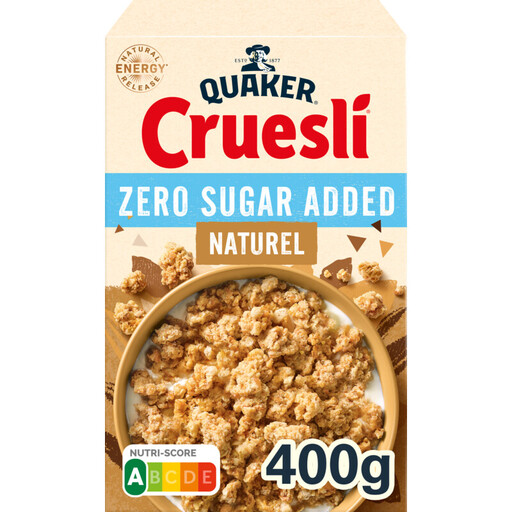 Image unavailable
The 400 g pack is a good way to try a crunchy variety before buying a larger amount.
If you’re considering this Cruesli for a toddler, check the ingredients, added salt and allergens on the current label.
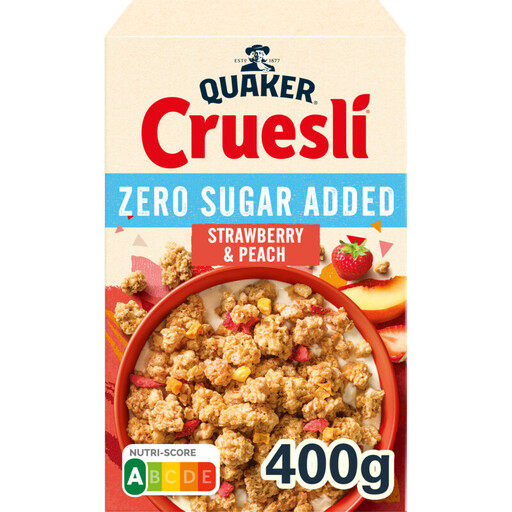 Image unavailable
If you’d like to try the Strawberry & Peach flavour at home first, this 400 g pack is a good place to start.
Consider the Zero Sugar Added claim alongside the other ingredients, salt and allergen information on the pack.
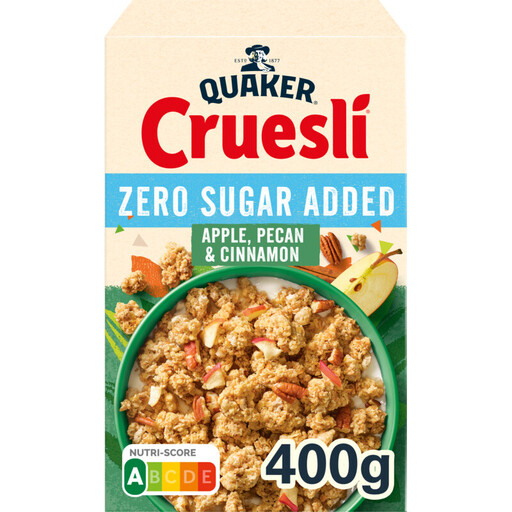 Image unavailable
This 400 g pack is a smaller option for families who want to try the Apple, Pecan and Cinnamon variety.
As pecan is named in the variety, it’s especially important to check the full allergen information if nuts are a concern. Check the rest of the ingredients before serving it to a toddler too.
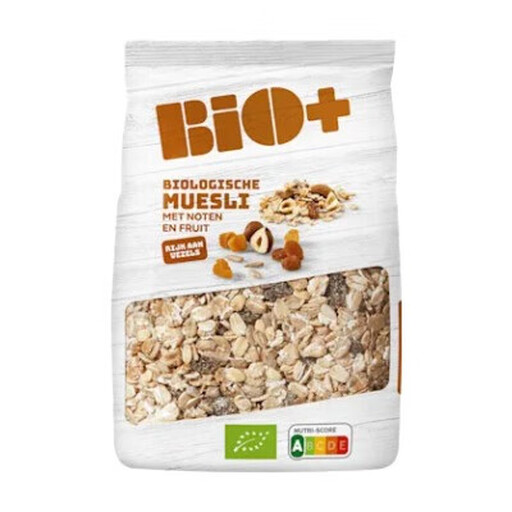 Image unavailable
At 450 g, this is a smaller pack for anyone wanting to try a fruit and nut variety before choosing a family-sized bag.
If you’re choosing a nut variety, read the full ingredients and allergen information on the current pack. Also check that the ingredients are suitable for the intended toddler breakfast.
A 1 kg bag is most practical when several family members regularly eat exactly the same variety. First check that the ingredients suit the intended toddler breakfast, and follow the storage instructions on the pack once it’s open. If the taste is unfamiliar or family members have different preferences, a smaller pack is a more sensible place to start.
The Netherlands Nutrition Centre recommends muesli for children aged 1 to 3 as an alternative to bread, not as an automatic complete replacement. It should be wholegrain breakfast cereal with no added sugar or salt. Also consider breakfast as part of what your child eats throughout the rest of the day.
No. Check the rest of the ingredients for the exact variety too. Quaker says its Zero Sugar Added Naturel variety is made without added sugars and/or sweeteners; that product description alone doesn’t tell you anything conclusive about the salt or allergens in another flavour.
Before packing it, ask about the rules for food brought in at that particular school or after-school club. Check the current label for your chosen variety too: the Netherlands Food and Consumer Product Safety Authority says allergens must be clearly listed on prepacked foods. A product name or an online description you saw earlier isn’t a substitute for checking the pack.