
Vandaag of morgen in huis

Kwaliteit gegarandeerd

Welkomstaanbiedingen ontgrendelen: GRATIS bezorging | Tot 80% korting | Gratis 30 dagen JoyPlus-proefperiode
Download de app
If you are looking for muesli without added sugar, you will quickly come across terms such as “zero sugar”, “natural” and “rich grain mix”. These words do not always tell the full story. For example, a product may contain no added sugar but still contain naturally occurring sugars from fruit. Similarly, “sugar-free” on the front of the pack may go hand in hand with sweeteners or an extra sachet of glucose.
With this practical guide, you can check the nutrition table, ingredients, allergens and portion size. That makes it easier to compare sugar-free cruesli, granola without added sugar and other breakfast cereals in a clear, verifiable way.
The claim without added sugars does not automatically mean that the product contains no sugar at all. Raisins, fruit pieces and some grains may contain naturally occurring sugars. That is why you should always check the line showing “of which sugars” per 100 grams.
For comparison:
This clearly shows the difference between a natural version and one containing dried fruit.
Some products on the market contain a separate sachet of pure glucose. That is not an obvious choice if your specific aim is to limit your intake of added sugars. Depending on the variant, the Family products with nuts and fruit, milk or sweet potato also contain ingredients such as sugar, maltodextrin or glucose.
So do not just check the front of the packaging. Also look at:
Cruesli and granola are often toasted with oil, which gives them their crunch. That can be appealing in terms of flavour and texture, but the energy content is often around 420 to 460 kcal per 100 grams. A generous bowl can therefore quickly contain more than the recommended portion.
Use the portion shown on the label as a starting point, then add yoghurt, milk or fruit if you like. This makes it easier to keep the amount of crunchy muesli under control.
If you are looking for high-fibre muesli, you can compare the nutrition tables directly. In the product data provided, the values vary considerably:
In these products, the high fibre content comes partly from wholegrain oats, wholegrain wheat, barley, spelt and chicory root fibre. If you are sensitive to these ingredients, it is wise to increase your portion gradually and drink plenty of fluids.
For athletes or anyone looking for high-protein granola, the protein line is more important than a prominent claim on the packaging. Holie's Crunchy Muesli Protein Chocolate contains 22 grams of protein per 100 grams. The Protein Nuts variant lists 23 grams per 100 grams in the product data. Holie's Granola Protein Amandel Speculaas contains 20 grams per 100 grams.
For comparison, Quaker Zs Cruesli Natural contains 7.5 grams of protein per 100 grams. That is not necessarily a problem, but the product has a different nutritional profile. If you want to create a higher-protein breakfast bowl, you can combine it with yoghurt or quark.
The first ingredients are listed in descending order by quantity. In Quaker Zs Cruesli Natural, the first ingredients are 41% wholegrain oats and 17% wholegrain wheat. Holie's Granola Nuts & Seeds contains wholegrain oats, barley and spelt, as well as almonds, hazelnuts, pecans and seeds.
If you have allergies, pay particular attention to:
The allergen information in the product listing is a useful guide. Always check the current label before ordering or consuming a product.
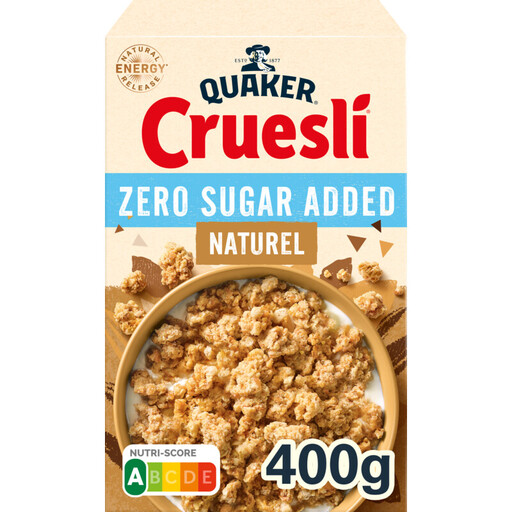
Why it suits this profile: A natural base is a straightforward choice if you are trying muesli without added sugar for the first time. The grain mix goes well with yoghurt, milk or fresh fruit.
The product information states that it contains no added sugar or sweeteners. The label does list 3.8 grams of naturally occurring sugars per 100 grams.
24 grams of fibre per 100 grams, 7.5 grams of protein and a suggested serving of 45 grams with 100 ml of low-fat yoghurt.
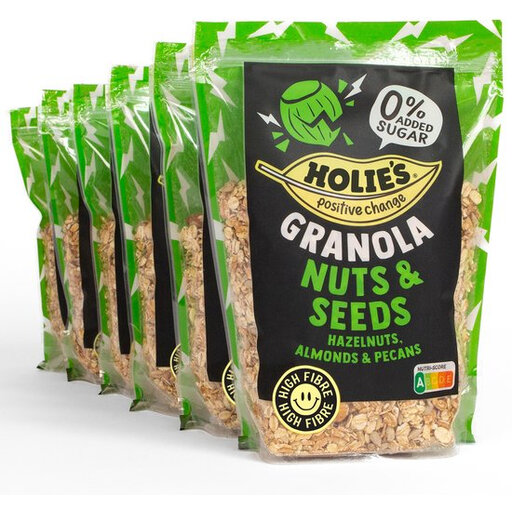
Why it suits this profile: This granola is aimed at anyone looking for a distinctly crunchy texture and a mix of nuts and seeds.
The ingredients list does not mention added sugar. The stated sugar content is 2.1 grams per 100 grams, allowing you to compare the claim with the nutrition table.
Contains 15 grams of fibre, 13 grams of protein and a nut mix with almonds, hazelnuts and pecans.
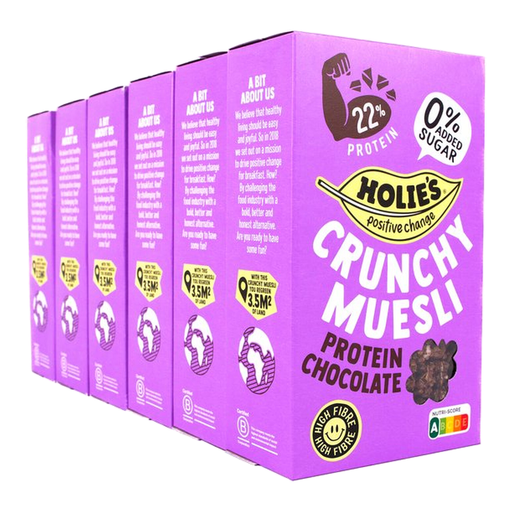
Why it suits this profile: A practical option for athletes or intensive users who want to combine breakfast with a higher protein content and a chocolate flavour.
The product listing states 0% added sugar and also provides the full ingredients list, including wheat protein and chicory root fibre.
22 grams of protein and 21 grams of fibre per 100 grams; contains 46% wholegrain oats and 3% cocoa mass.
We have put together a complete, up-to-date list of products that fully meet these strict selection criteria and the applicable European safety regulations.
Use this quick checklist before adding a pack to your basket:
If you would like a fruity flavour without lots of added ingredients, Quaker Cruesli Zero Sugar Added Strawberry & Peach may be worth considering. The product information lists 4.4 grams of sugar and 24 grams of fibre per 100 grams. Do bear in mind, however, that the fruit pieces contain just 0.5% strawberry and 0.5% peach.
No, not always. “Without added sugar” means that no sugar or sweetener was added during production, according to the product listing. The product may still contain naturally occurring sugars, for example from fruit. That is why you should check the nutrition table.
This varies according to the product and your eating habits. For its Natural variant, Quaker gives a serving size of 45 grams with 100 ml of low-fat yoghurt. Using kitchen scales can help prevent you from unknowingly filling a large bowl with a double portion.
Check the protein content per 100 grams. The Holie's Crunchy Muesli Protein Chocolate listed above contains 22 grams of protein, while the Protein Nuts variant contains 23 grams per 100 grams. You can also combine the muesli with yoghurt or quark. If you have a food allergy, always check the current ingredients and allergen information on the packaging.
