
People who regularly eat breakfast with diabetes
You want to fit muesli into your own eating plan, so you look beyond the wording on the front of the pack: the carbohydrates, ingredients and amount in your bowl all matter too.


No muesli is automatically suitable for a breakfast for someone with diabetes just because of its name or a ‘no added sugars’ claim. Compare the ingredients, carbohydrates, sugars and fibre per 100 g and for the portion you eat. A 1 kg pack of plain muesli is worth comparing if you’re shopping for a household. If you prefer crunchy muesli, check the nutritional information and allergens for the exact variety rather than making assumptions based on the product range.
You want to fit muesli into your own eating plan, so you look beyond the wording on the front of the pack: the carbohydrates, ingredients and amount in your bowl all matter too.
You compare the pack size with the number of portions you’ll actually use and check whether you can store an opened bag properly.
You’re looking for the crunchy texture of Cruesli or granola and want to check what ‘no added sugars’ means for each variety. Carbohydrates and any nut allergens are still important considerations.
First, choose a product type and pack size that suit how you’ll use it. Then compare the nutritional information for the exact muesli, rather than relying on a claim on the front of the pack.
| What to consider | What to check before buying | Who it matters to |
|---|---|---|
| Carbohydrates and sugars | Compare carbohydrates and sugars per 100 g, then work out the amount for your own portion. Check the ingredients list for added sweetening ingredients too. | When planning my breakfast with diabetes, I want to know what’s in the amount I serve myself, even when no sugar has been added. This would be the main consideration for around 36% of consumers. |
| Fibre and wholegrains | Check which grains are listed in the ingredients and compare the stated fibre content per 100 g. | For my regular breakfast, I’m looking for a wholegrain mix and want to compare the fibre content of different varieties. An estimated 29% of consumers would prioritise this. |
| Pack size and use | Compare the pack size with your usual portion and follow the storage advice for an opened bag. | A large bag only makes sense for my household if we use it regularly and can store it properly; this would be the main consideration for around 21% of consumers. |
| Allergens and product type | Check the current label for allergens and ‘may contain’ statements. Also note the difference between plain muesli, crunchy muesli and granola. | If I have a relevant allergy, I need to know which grains or nuts are in the exact variety before considering other features. Around 14% of consumers would consider this first. |
This claim doesn’t tell you how many carbohydrates the muesli contains. Quaker Netherlands states that Cruesli Granola Zero Sugar Added Nuts & Seeds contains 45 g of carbohydrates per 100 g.
Check the nutrition table per 100 g, then work out the amount in your own portion. If necessary, discuss personal serving sizes with your healthcare professional or dietitian.
Ingredients vary between varieties. According to Quaker Netherlands, regular Cruesli 4 Nuts contains ingredients including glucose syrup and sugar; you can’t tell that from the general name ‘muesli’.
Compare products that suit the same needs, and check both the ingredients list and nutrition table for the variety you choose.
Plain muesli can also contain cereals containing gluten. Jumbo also states that its Muesli Naturel may contain, among other things, nuts, milk and soya.
If you have an allergy, check the current label for allergens and ‘may contain’ information before using the product.
These brands offer relevant muesli varieties, but ingredients and nutritional values differ from product to product. The brand name alone won’t tell you whether a variety fits your breakfast plan.
The AH Volkoren muesli naturel reviewed is a plain muesli in a 1 kg pack.
Jumbo offers a 1 kg Muesli Naturel, among other varieties with fruit, nuts or seeds.
Quaker sells several crunchy cereal mixes, including regular Cruesli and a Granola Zero Sugar Added variety.
This own-brand range includes both wholegrain muesli and crunchy muesli in 1 kg packs.
Lidl lists a 1 kg bag of plain crunchy muesli with raisins as an in-store product.
These four Quaker Cruesli varieties are crunchy muesli in 400 g packs. If you’re also considering a 1 kg pack of plain muesli, compare pack size and your own portion; the product name alone won’t tell you whether a variety fits your personal breakfast plan.
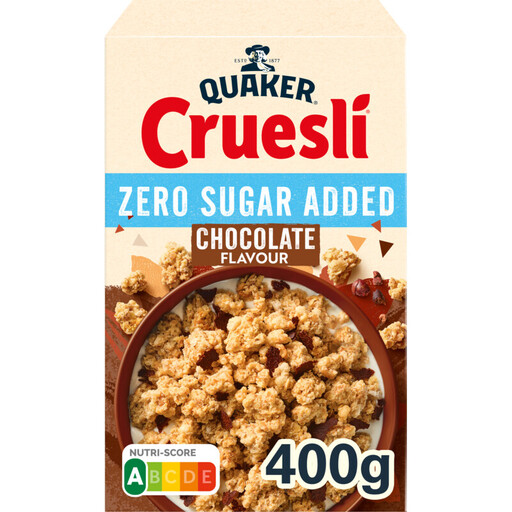 Image unavailable
A crunchy chocolate variety to compare if you’re looking for this flavour; the pack contains 400 g.
As well as the Zero Sugar claim, check the carbohydrates per 100 g and the allergens on the label.
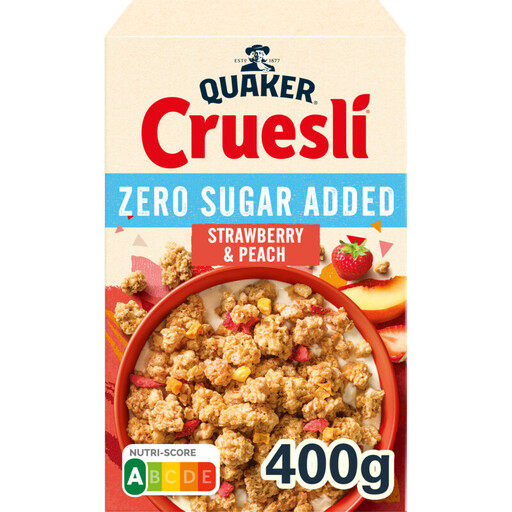 Image unavailable
A crunchy variety with strawberry and peach to compare if you’re looking for those flavours; the pack contains 400 g.
The Zero Sugar Added claim doesn’t replace the need to check carbohydrates, portion size and allergens on the pack.
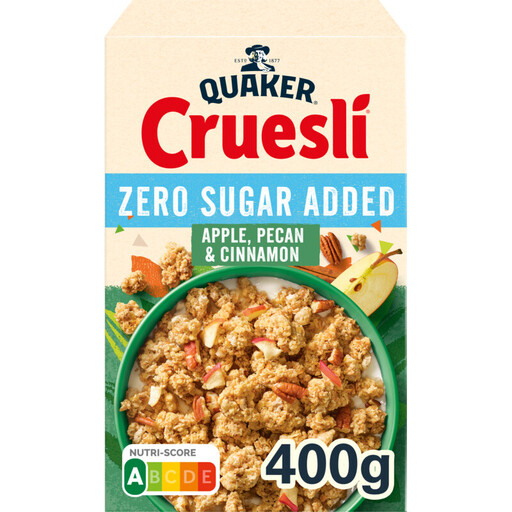 Image unavailable
A crunchy variety with apple, pecan and cinnamon for anyone looking for these ingredients; the pack contains 400 g.
Pecan is included in the product name. If you have a nut allergy, check the full current label and compare the carbohydrates in your portion too.
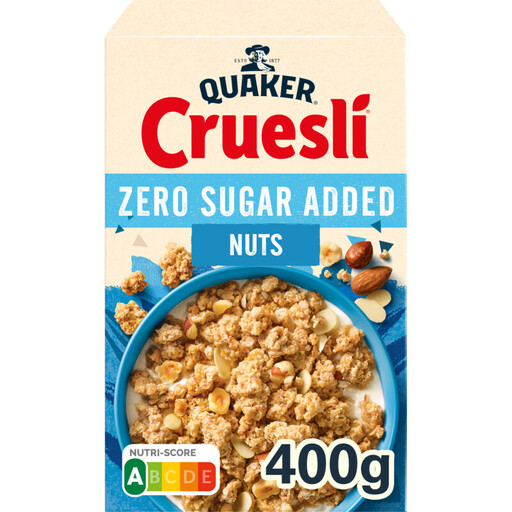 Image unavailable
A crunchy nut variety for anyone looking for this type of product; the pack contains 400 g.
According to the Joybuy product information, no sugars or sweeteners have been added, but the product contains naturally occurring sugars. Also check the carbohydrates per portion and the allergens on the label.
No. The name muesli doesn’t tell you enough about its ingredients or your own portion. Compare the ingredients, carbohydrates, sugars and fibre in the exact variety. For advice on personal portion sizes, speak to your healthcare professional or dietitian.
No, the claim doesn’t tell you how many carbohydrates the product contains. For example, Quaker Netherlands states that Cruesli Granola Zero Sugar Added Nuts & Seeds contains 45 g of carbohydrates per 100 g. So check the nutrition table and the amount you eat too.
Use the portion size on the pack as a starting point and compare it with the amount you actually serve yourself. Jumbo states that its 1 kg Muesli Naturel provides around 33 portions of 30 g. When assessing your whole breakfast, remember to include anything you add to the muesli.
According to the Netherlands Food and Consumer Product Safety Authority, allergen information for prepacked products must appear on the label. If you have an allergy, check the information on the exact pack, including any ‘may contain’ statements.
Seal the bag properly after opening and follow the storage advice on the pack. Jumbo recommends storing its Muesli Naturel in a cool, dry place; Albert Heijn also recommends keeping its Volkoren muesli naturel in a dark place.