If you have diabetes, don’t choose muesli based solely on the words ‘no added sugars’. Compare the carbohydrates and sugars per 100 g, then calculate the amounts for the portion you actually eat. Check the ingredients, fibre and allergens too: a product with no added sugars can still contain sugars and carbohydrates.
Who is this choice important for?
If you keep track of carbohydrates per portion
If you take carbohydrates into account at breakfast, the nutritional information per 100 g helps you compare products. Then calculate the amount based on how much muesli you actually eat, rather than relying solely on the claim on the pack.
If you’re looking for crunchy muesli with no added sugars
The ingredients list matters if you also want to know whether a variety contains sweeteners. ‘No added sugars’ and ‘no sweeteners’ are different product characteristics.
If you want to compare fibre and protein
If these nutritional values matter to you, compare them on the same basis, for example per 100 g. Include the carbohydrates and your usual portion in the comparison too.
What should you look for when choosing?
Start with the carbohydrates and the portion you actually eat. Then use the sugar claim, ingredients and other nutritional values to tell the varieties apart.
| What to consider |
Check |
Who is this most important for? |
| Carbohydrates and portion |
Compare carbohydrates per 100 g and calculate the amount for your own portion. Include anything you add to the muesli too. |
If I assess my breakfast based on carbohydrates, I want to know what’s in my whole bowl. For around 32% of consumers, portion size is the main consideration. |
| Sugars and sweeteners |
Read ‘of which sugars’ alongside the sugar claim, and check the ingredients for added sugars and sweeteners. |
I want to distinguish between sugars already present in the product and ingredients added for sweetness. Around 31% of consumers prioritise this. |
| Fibre and protein |
Compare both values per 100 g and consider them alongside the carbohydrates, not instead of them. |
When choosing between breakfast options, I want to be able to take fibre and protein into account. For around 25% of consumers, this is the first thing they compare. |
| Ingredients and allergens |
Read the allergen information and check for any mention of polyols or a usage warning. |
If I need to avoid certain ingredients or don’t get on well with a sweetener, the ingredients determine which muesli I can choose. For around 12% of consumers, this is the most important factor. |
Common mistakes
-
Assuming ‘no added sugars’ means ‘no carbohydrates’
This claim doesn’t tell you how many carbohydrates the muesli contains. Naturally occurring sugars may also be listed in the nutritional information.
Compare carbohydrates and ‘of which sugars’ per 100 g, then calculate the values for your own portion.
-
Looking only at a low sugar value
Crunchy muesli may list a low amount of sugars and still contain a sweetener. According to Albert Heijn, its crunchy nut muesli with 0% added sugar contains maltitols; the pack warns that excessive consumption may have a laxative effect.
Read the ingredients list if you want to avoid polyols or find out which sweetener has been used.
-
Overlooking allergens because of the sugar claim
A sugar claim says nothing about the presence of, for example, cereals containing gluten, nuts, soya or milk. Ingredients vary between varieties.
For the product you choose, check both the listed allergens and the information about possible traces.
-
Counting only the dry muesli
Milk, yoghurt, quark or a plant-based alternative is part of the breakfast you actually eat.
Use the amounts you actually have and check the nutritional information for the whole combination.
Brands compared
Quaker Cruesli
The crunchy varieties labelled ‘Zero Sugar Added’ are aimed at consumers who want to avoid added sugars. Ingredients vary by flavour.
- According to the Joybuy product information, the nut variety contains 47 g of carbohydrates, 3.5 g of sugars and 20 g of fibre per 100 g.
- ‘Zero Sugar Added’ does not mean carbohydrate-free. Check the ingredients and allergens for each variety on the current packaging too.
Albert Heijn
The own-brand range includes several crunchy muesli varieties with 0% added sugar, including a nut variety and a protein variety.
- Albert Heijn lists 36 g of carbohydrates, 22 g of fibre and 21 g of protein per 100 g for its protein variety.
- According to Albert Heijn, the nut variety contains maltitols and carries a warning that excessive consumption may have a laxative effect. So assess each variety separately.
Brinta
Brinta Volkoren Graanontbijt is a related breakfast product, not crunchy muesli.
- A comparison list published by Diabetes Fonds gives Brinta Volkoren Graanontbijt as containing 64 g of carbohydrates and 4.6 g of sugars per 100 g.
- Don’t compare it as if it were the same type of product or portion as crunchy muesli. Diabetes Fonds recommends checking the current packaging, as recipes can change.
Crunchy muesli on Joybuy
These products are crunchy muesli varieties for anyone who wants to compare sugar claims, ingredients and portions. A product name containing ‘Zero Sugar’ doesn’t, by itself, tell you how many carbohydrates or sugars are in your portion.
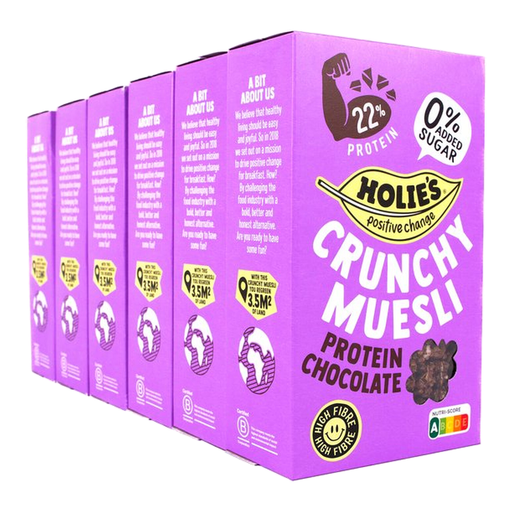 Image unavailable
Holie's Crunchy Muesli Protein Chocolate, 6 x 400 g
For anyone looking for a chocolate variety in a pack of 6 x 400 g. Compare the carbohydrates, sugars, fibre and protein on the packaging per 100 g and for your own portion; check the allergens too.
View on Joybuy
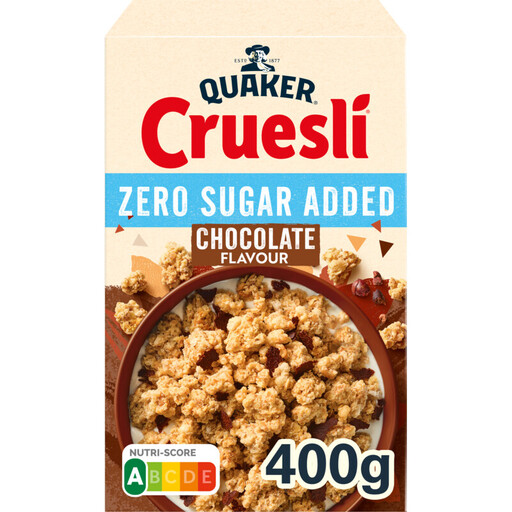 Image unavailable
Quaker Cruesli Choco Zero Sugar, 400 g
A chocolate variety for anyone comparing crunchy muesli with this flavour. Check what ‘Zero Sugar’ means for this variety on the packaging, and check the carbohydrates, the basis for the fibre value and the allergens.
View on Joybuy
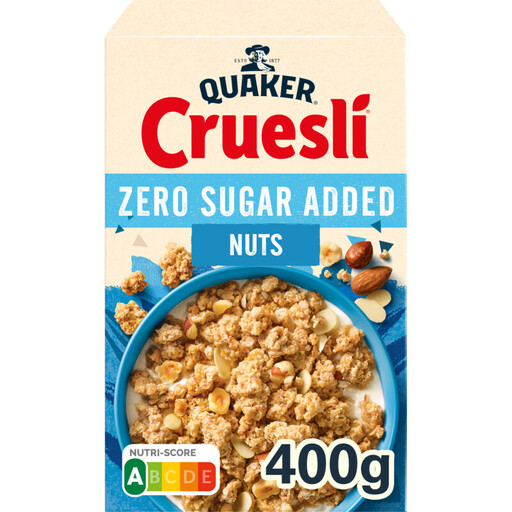 Image unavailable
Quaker Cruesli Nuts Zero Sugar, 400 g
For anyone looking for a crunchy nut variety and wanting to take its nutritional values into account. According to the Joybuy product information, this variety contains 47 g of carbohydrates, 3.5 g of sugars and 20 g of fibre per 100 g. Check the current packaging, including for nuts and other allergens.
View on Joybuy
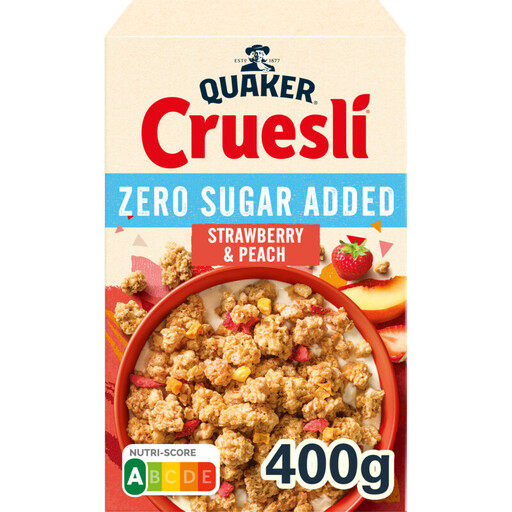 Image unavailable
Quaker Cruesli Zero Sugar Added Strawberry & Peach, 400 g
A strawberry and peach variety for anyone comparing flavours without using the sugar claim as their only criterion. Check the carbohydrates per 100 g on the packaging and find out what the stated fibre value is based on.
View on Joybuy
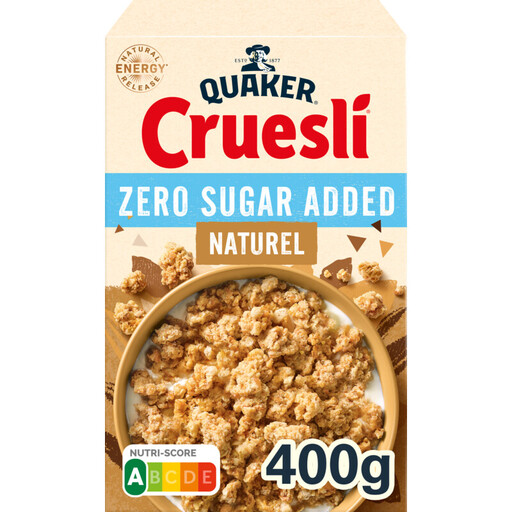 Image unavailable
Quaker Cruesli Zero Sugar Added Naturel, 400 g
For anyone looking for a plain variety with no added sugars or sweeteners. Use the carbohydrate and sugar values on the current packaging to calculate your portion, and check the allergen information.
View on Joybuy
Frequently asked questions
Does ‘no added sugars’ mean the same as sugar-free?
No. According to diabetes.nl, products with no added sugars may still contain naturally occurring sugars. So check ‘of which sugars’ in the nutritional information, and assess the total carbohydrates as well.
Which values should I compare if I have diabetes?
At the very least, compare carbohydrates and ‘of which sugars’ per 100 g, then calculate the amounts for the portion you eat. Fibre and protein can also be useful points of comparison; ingredients and allergens help determine whether a particular variety meets your needs.
What should I look out for in muesli containing polyols?
Check which polyols have been used and follow any warnings on the packaging. Albert Heijn lists maltitols in its crunchy nut muesli with 0% added sugar and warns that excessive consumption may have a laxative effect. Also check the carbohydrates and allergens in the variety you choose.


