For a breakfast for one, weighing muesli from a larger pack gives you control over how much you serve yourself. A pre-portioned pack or a claim such as ‘0% added sugar’ doesn’t tell you how many carbohydrates you’ll be eating. So compare similar types of muesli per 100 g for carbohydrates, sugars and fibre, decide on your own portion and count any extras you add.
Who is this choice for?
Those looking to control portions
You have breakfast on your own and want to know how much muesli you’re serving yourself, rather than simply going by the suggested portion on the pack. The carbohydrates in any milk, yoghurt or fruit you add count too.
Fibre-focused breakfast eaters
You’re looking for muesli made with wholegrains or containing more fibre, and want to compare the nutritional information for the exact variety. The Dutch Diabetes Fund lists wholegrain cereal products, including muesli, as an option for a fibre-rich breakfast.
Buyers of crunchy muesli with no added sugar
You want a crunchy variety, but you don’t choose based on the wording on the front of the pack alone. You also compare the carbohydrates, sugars and fibre in the nutrition table.
What should you look for in muesli for one?
Start with the nutritional information per 100 g, then decide how much you’ll actually eat. Only then check whether the pack offers the convenience you’re looking for.
| What to consider |
What to check when buying |
Who this matters to |
| Carbohydrates per portion |
Compare carbohydrates per 100 g and weigh out the amount you’ll actually use. |
When putting my breakfast together, I want to know how many carbohydrates end up in my bowl, including those from anything I add. For about 36% of consumers, portion control comes first. |
| Fibre and ingredients |
Check the fibre per 100 g and read the ingredients list; don’t assume plain and crunchy muesli are the same product. |
I’m looking for a wholegrain or fibre-focused base and don’t want to rely on a sugar claim alone. For about 29% of consumers, these ingredients are the top priority. |
| Convenience for one breakfast |
Check the net weight and whether the pack really contains individual portions. |
On a busy morning, I don’t want to measure out an amount from a large bag each time. That convenience matters most to about 21% of consumers. |
| Ingredients and allergens |
Read the allergen information for the exact variety and, if needed, check for an explicit gluten-free claim. |
If I need to avoid certain ingredients, I don’t want to rely on the general name ‘muesli’. For about 14% of consumers, this check comes first. |
Common mistakes
-
Taking ‘no added sugar’ to mean ‘low in carbohydrates’
This claim doesn’t tell you the total amount of carbohydrates or sugars in the product. The Dutch Diabetes Fund’s breakfast cereal list gives Quaker Zero Sugar Added Strawberry & Peach as containing 24 g of carbohydrates and 6.3 g of sugar per 100 g; always check the current packaging.
Compare carbohydrates, of which sugars, and fibre per 100 g, then consider how much you serve yourself.
-
Assuming the suggested portion is right for you
The portion shown on the label doesn’t have to match the amount you eat. The Netherlands Nutrition Centre recommends comparing products per 100 g, as portion sizes can vary between manufacturers.
Use the per-100 g information to compare products, then weigh out your own portion.
-
Treating crunchy and plain muesli as identical
Ingredients and nutritional values can differ between varieties. The name or claim on the front of the pack is no substitute for the ingredients list and nutrition table.
Where possible, compare like with like and check the current packaging for each variety.
-
Checking allergens only after you’ve bought it
You can’t tell which grains or nuts a particular muesli contains from the product category alone.
Before buying, check the allergen information for the variety you’ve chosen and, if you need to avoid gluten, look for a gluten-free claim.
Brands to consider
Albert Heijn
The own-brand range includes plain wholegrain muesli and crunchy varieties.
- You can compare plain and crunchy muesli side by side within the range.
- Albert Heijn notes that ingredients and nutritional values can change, so check the current packaging.
Jumbo
The own-brand range includes plain muesli in a larger pack.
- A larger bag lets you weigh out your own portions.
- A standard bag with a suggested portion size is not an individually portioned pack.
Golden Bridge
ALDI offers wholegrain muesli in a larger pack under this own-brand name.
- ALDI lists oat and wheat flakes and raisins in its wholegrain muesli—specific ingredients you can consider when choosing.
- Check the nutritional information and portion size on the pack you buy.
Quaker Cruesli
Crunchy muesli, including varieties with a claim about added sugar.
- The different varieties offer a choice of flavours and ingredients.
- A claim about added sugar doesn’t, by itself, tell you the total carbohydrates in your portion.
Brinta
A cereal breakfast alternative if you’d rather have something warm than muesli.
- It’s another breakfast option if you’re not specifically looking for muesli.
- Brinta isn’t an individual portion of muesli; check the nutritional information for the product you choose and anything you add to it.
Crunchy muesli to portion yourself
Each of these Quaker Cruesli varieties comes in a 400 g pack and is suitable if you want to weigh out your own amount of crunchy muesli. If you need individually wrapped portions, check how the product is packaged before choosing.
 No image available
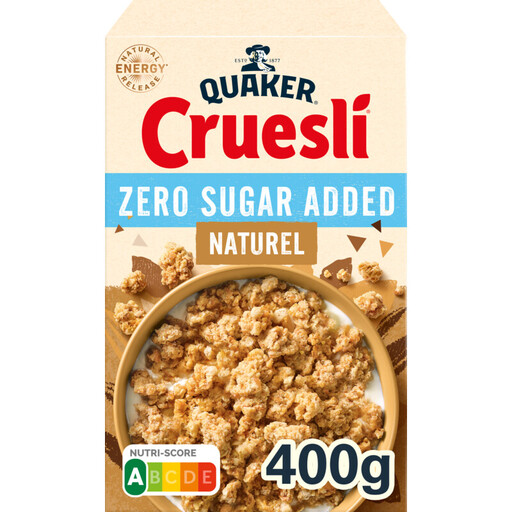
Quaker Zs Cruesli Natural · 400 g
A plain variety for anyone who wants to decide how much crunchy muesli to have. Compare the nutritional information per 100 g and check whether the pack format suits your needs.
View at Joybuy
 No image available
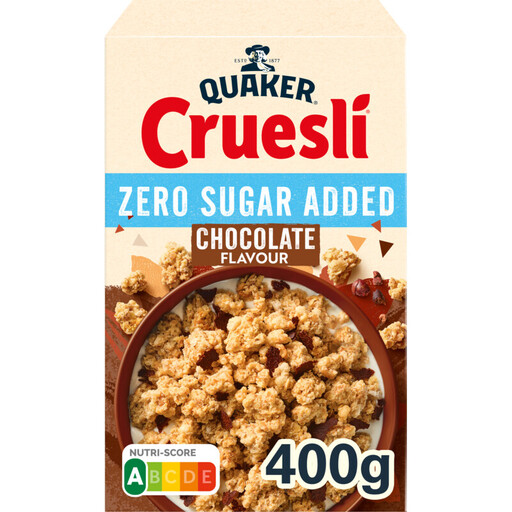
Quaker Cruesli Choco Zero Sugar · 400 g
This chocolate variety is an option if you want to weigh out your own crunchy muesli. Despite the name, check the carbohydrates and sugars per 100 g, then decide how much to have.
View at Joybuy
 No image available
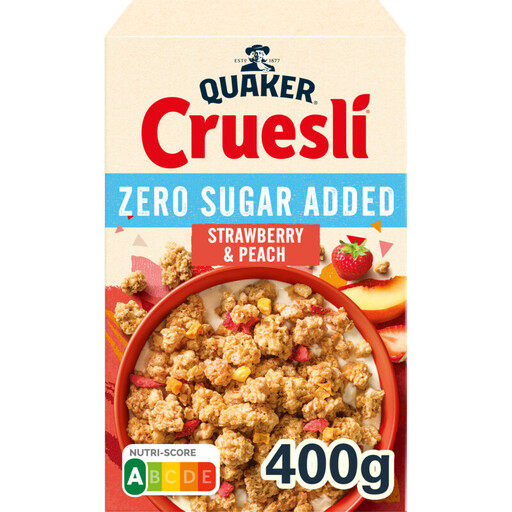
Quaker Cruesli Zero Sugar Added Strawberry & Peach · 400 g
A fruit variety for anyone who wants to weigh out their own portion of crunchy muesli. The Dutch Diabetes Fund lists this variety as containing 24 g of carbohydrates and 6.3 g of sugar per 100 g; check the current packaging before deciding how much to have for breakfast.
View at Joybuy
 No image available
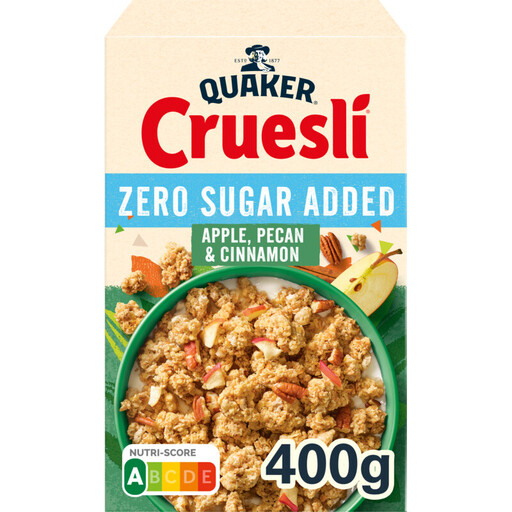
Quaker Cruesli Zero Sugar Added Apple, Pecan and Cinnamon · 400 g
An apple, pecan and cinnamon variety for anyone who wants to make up their own portion. Compare the carbohydrates per 100 g and check the allergen information if you need to avoid certain ingredients.
View at Joybuy
 No image available
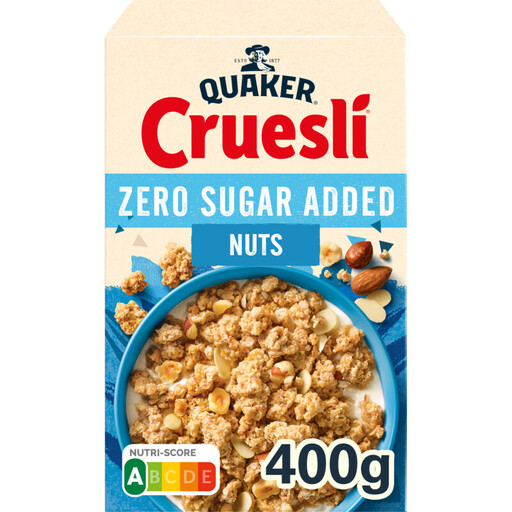
Quaker Cruesli Nuts Zero Sugar · 400 g
A nut variety for anyone who wants to portion out their own crunchy muesli. Read the allergen information and compare carbohydrates and sugars per 100 g; the name alone doesn’t tell you how much you’ll eat at breakfast.
View at Joybuy
Frequently asked questions
Is muesli automatically suitable if you have diabetes?
No. The ingredients and the amount you eat matter more than the product category alone. Compare carbohydrates, sugars and fibre for the exact variety, and also take into account any milk, yoghurt or fruit you add.
How do I compare two types of muesli?
Compare similar products per 100 g for carbohydrates, of which sugars, and fibre. The Netherlands Nutrition Centre recommends comparing per 100 g because manufacturers can use different portion sizes; then consider how much you’ll actually eat.
Does ‘0% added sugar’ mean I don’t need to count any carbohydrates?
No. That claim doesn’t tell you how many total carbohydrates a product contains. Check the nutrition table per 100 g and use your own portion size to work out how many carbohydrates you’re getting from the muesli.
Does muesli need to be gluten-free if you have diabetes?
Having diabetes doesn’t, in itself, mean you need to choose gluten-free muesli. If you need to avoid gluten, check the gluten-free claim and allergen information on the exact pack.


