
Vandaag of morgen in huis

Kwaliteit gegarandeerd

Welkomstaanbiedingen ontgrendelen: GRATIS bezorging | Tot 80% korting | Gratis 30 dagen JoyPlus-proefperiode
Download de app
A bag of muesli might seem like a simple purchase, but the differences between standard muesli, crunchy muesli, cruesli and granola are significant. One variety is mostly wholegrain flakes, while another contains more oil, syrup, chocolate or dried fruit. Terms like “no added sugars”, “high in fibre” and “high in protein” only really mean something once you check the nutritional information table and ingredients list.
For British households, three things matter most: the composition, the portion size and allergens. Below, you’ll find out what to look for and which products suit different situations.
Packaging that says “no added sugars” can still contain naturally occurring sugars. Dried raisins, apricots and other fruit, for example, all contribute sugar. Always check the of which sugars line per 100g.
A good example is B+ Muesli Nuts and Fruit. According to the product information supplied, this variety contains 0g of added sugars, but 20.8g of sugars per 100g. Those sugars come from dried grapes and apricots, among other things. That doesn’t make the claim contradictory, but it does mean you need to interpret it correctly.
To achieve a crunchy texture, grains are often baked with oil, syrup or other binding agents. As a result, crunchy muesli, cruesli or granola can contain more fat and calories than a simple mix of oat flakes.
For example, Quaker Cruesli Airy Natural lists 457 kcal and 17g of fat per 100g. That doesn’t mean the product is unsuitable, but it does mean the recommended serving size is still relevant. A generous bowl can easily contain two portions.
The name muesli with nuts or muesli with fruit sounds clear enough, but check the percentages in the ingredients list. In some varieties, the main ingredient comes first and nuts or fruit are only added in small amounts.
If you have allergies, don’t just rely on the ingredients. Warnings such as “may contain milk, soya, peanuts or other nuts” are important, even when these ingredients haven’t been deliberately added to the recipe.
Look at which grains appear first in the ingredients list. Wholegrain oat flakes, wholegrain wheat flakes and rye flakes are recognisable base ingredients for wholegrain breakfast cereals. Also check the amount of dietary fibre per 100g.
In the product data, this varies widely:
“High-fibre muesli” is therefore not a fixed recipe. Compare the figures directly using the same unit.
Don’t assess any single nutritional value in isolation. A muesli with no added sugars can be relatively high in fat due to oil and nuts. A high-protein muesli may also contain wheat protein or gluten, which is relevant for people with allergies or specific dietary requirements.
According to the product information, Holie’s Crunchy Muesli Protein Nuts lists 22g of protein and 21g of fibre per 100g in one of the stated nutritional values. Always check the current packaging when you buy, as product information or recipes can change.
Most mueslis in this selection contain gluten-containing grains. If you eat a vegan diet, you also need to look out for milk, honey and other animal-derived ingredients. According to the product information, Quaker Cruesli Zero Sugar Added Strawberry & Peach is listed as suitable for vegans and can be enjoyed with yoghurt or a plant-based alternative.
For nut varieties, almonds, hazelnuts, pecans and cashews are common allergens. If you have an allergy, only choose based on the full, current packaging and not just the product name.
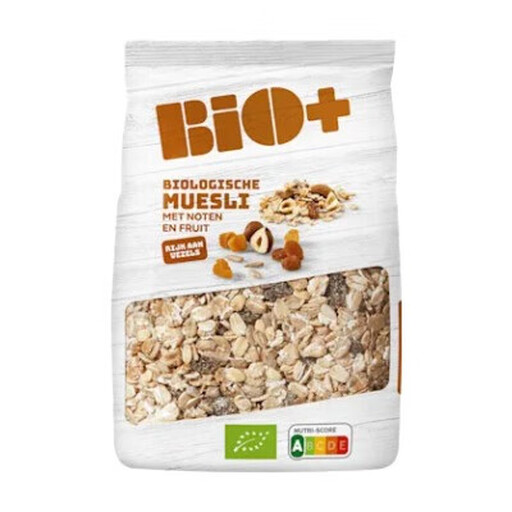
Why this fits the profile: An accessible mix for anyone looking for standard muesli with grains, seeds, nuts and dried fruit to enjoy with yoghurt, milk or a smoothie bowl.
The product information states 0g of added sugars. The nutritional information table still shows the total amount of sugars, so you can distinguish between the two figures.
Organic ingredients according to the product description; 9g of fibre and 10.9g of protein per 100g according to the stated table.
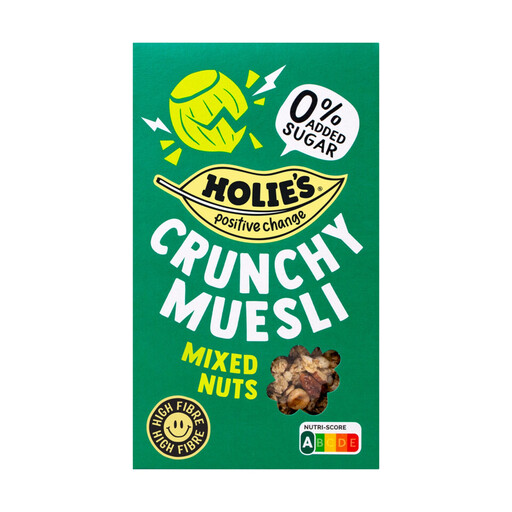
Why this fits the profile: Aimed at those who want a crunchy texture and a clear nut composition, with no added sugar according to the product description.
The ingredients list gives separate percentages for almond, hazelnut, pecan and Brazil nut. This makes it much clearer what “with nuts” actually means in practice.
45% wholegrain oat flakes; 21g of fibre and 11g of protein per 100g according to the product data.
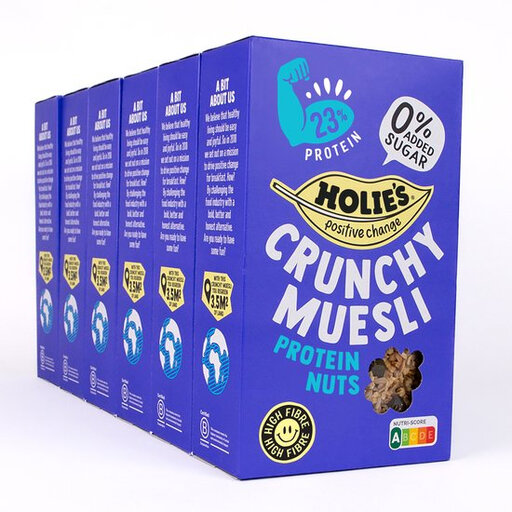
Why this fits the profile: A multi-pack for households that regularly use crunchy muesli and pay particular attention to the protein content.
The pack contains six 400g bags. This means you don’t have to store an opened bag for as long, as long as you keep unopened packs in a dry place.
The product information states 22 to 23g of protein and 19 to 21g of fibre per 100g, depending on the nutritional information table provided.
We’ve put together a full, up-to-date list of products that fully meet these strict selection criteria and comply with current European safety regulations.
Muesli can be enjoyed with milk, yoghurt or a plant-based alternative. The nutritional value of your breakfast also depends on the portion size and any toppings. Fruit, nuts, seeds and dairy or a dairy alternative all change the overall composition.
Muesli is usually a mix of flakes, seeds, nuts and dried fruit. Cruesli is a brand name often used for crunchy, baked breakfast cereals. Granola is typically also baked and can contain oil, syrup or sugar. So look at the ingredients list rather than just the name.
That varies from product to product. In this selection, some Quaker Zero Sugar Added varieties list 24g of fibre per 100g, while other crunchy mueslis state 19 to 22g. Always check the current nutritional information table on the packaging before you order.
