
Vandaag of morgen in huis

Kwaliteit gegarandeerd

Welkomstaanbiedingen ontgrendelen: GRATIS bezorging | Tot 80% korting | Gratis 30 dagen JoyPlus-proefperiode
Download de app
A packet of muesli might seem simple to pick, but the differences between breakfast cereals, granola and crunchy muesli are significant. One variety contains plenty of wholegrain cereals and fibre, while another is mainly designed for a sweet taste and crunchy texture. Terms like “no added sugar”, “protein” and “low carb” also call for a closer look at the label.
When you buy muesli online, it pays not to just glance at the front of the packet. That’s where the flavour and marketing claims live. The nutrition table and ingredients list tell you how many grains, nuts, fibre, protein, sugar and fats are actually inside.
A muesli with no added sugar can still contain naturally occurring sugars. This is the case with varieties that include raisins, dates or fruit. So, look at the of which sugars line per 100g and check whether sweeteners such as glucose syrup, honey or sugar appear in the ingredients list.
Quaker Cruesli Choco Zero Sugar states in its product description that it contains no added sugars or sweeteners. The variety still has 3.4g of sugar per 100g. Holie’s Crunchy Muesli Chocolate Chunks, according to its listed product specifications, contains 2.1g of sugar per 100g and 0% added sugar.
Granola and crunchy muesli are often toasted with oil, which gives them a firm bite. That’s lovely in yoghurt or milk, but it can also increase the fat and energy content. For example, Quaker Cruesli Chocolate contains 19g of fat and 455 kcal per 100g. That doesn’t automatically make it unsuitable, but a portion of 40 to 50g is more manageable than pouring freely from the packet.
A product high in protein can also be relatively high in fat. A low carb granola might contain more nuts, seeds and oil, and therefore be energy-dense. So always check the combination of:
According to TastyBasics’ own information, the Chocolate & Nuts Granola contains 60% fewer carbohydrates than standard crunchy granola. The product specifications list 26g of carbohydrates, 28g of fibre and 21g of protein per 100g. Only use such comparisons within the context the brand provides.
Are wholegrain oat flakes, wholegrain wheat, spelt or barley at the top of the ingredients list? If so, grains form a significant part of the product. With Holie’s Crunchy Muesli Chocolate Chunks, the mix consists of, among other things, 46% wholegrain oats and 8% wholegrain spelt, according to the label.
Bear in mind that “with wholegrain” is not the same as “100% wholegrain”. Quaker Cruesli Chocolate states in its product information that it contains 95% wholegrain ingredients, while the product also includes chocolate, sugar and glucose syrup.
For a fair comparison, use the nutritional values per 100g, not just the recommended serving. A high-fibre muesli in this selection, for example, contains 21 to 28g of fibre per 100g. Holie’s Crunchy Muesli Chocolate Chunks lists 22g of fibre and 11g of protein. The Protein Nuts variety lists 21g of fibre and 22g of protein according to the provided product specifications.
A higher protein content often comes from ingredients such as wheat protein, soya flakes, nuts or seeds. So also check the allergens before you order.
Muesli can contain gluten-containing grains, milk, soya, peanuts and various nuts. “May contain traces of” indicates possible cross-contamination during production, but it is not complete allergy information. Always read the current label on the packet.
After opening, the crunchiness is better preserved if you seal the bag properly and store the muesli in a dry, cool place away from direct sunlight. When buying online, also check the weight: a multipack of six bags is practical for daily use, but requires enough dry storage space.
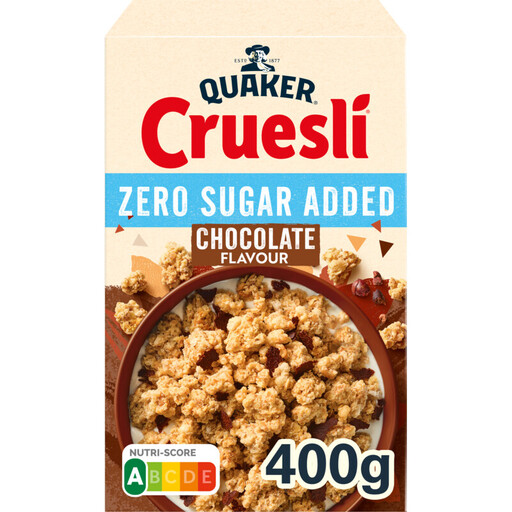
Why this fits the profile: A familiar crunchy muesli with a chocolate flavour for anyone looking for an easy choice with no added sugar or sweeteners, according to the product description.
The product information mentions both no added sugars and the sugars present per 100g. This lets you compare the claim against the nutrition table.
21g of fibre and 3.4g of sugars per 100g according to the product specifications; suitable for yoghurt, milk or quark.
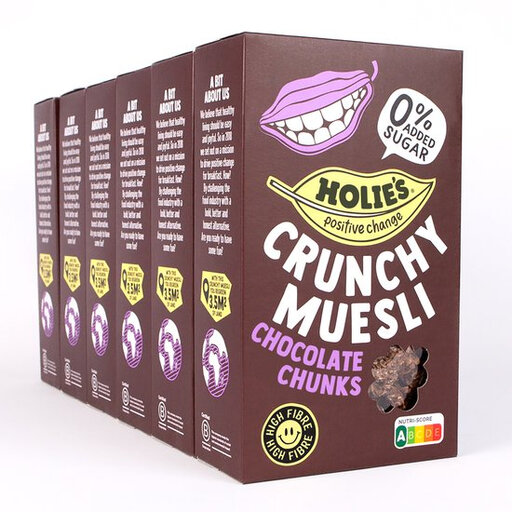
Why this fits the profile: A multipack with wholegrain cereals, dark chocolate and a distinctly crunchy texture for regular use.
The product specifications give concrete percentages for oats and spelt and state 0% added sugar. The nutritional values remain visible alongside the flavour claim.
46% wholegrain oats, 22g of fibre and 2.1g of sugars per 100g according to the provided product information.
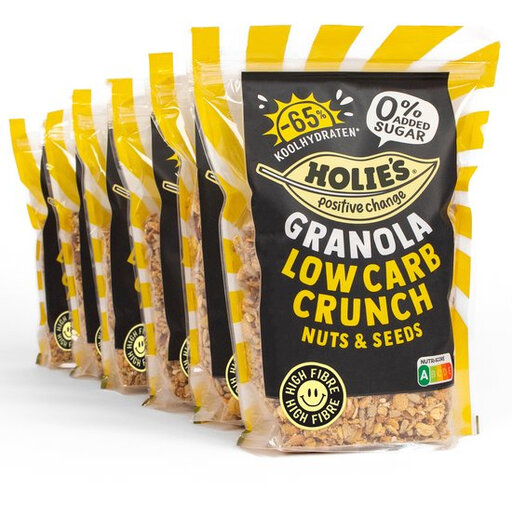
Why this fits the profile: For anyone specifically looking for a low carb granola with nuts, seeds, protein and a bulk pack.
The carbohydrates, fats and proteins are listed separately. This shows you that a lower carbohydrate content comes with 33g of fat per 100g.
18g of carbohydrates, 22g of protein and 16g of fibre per 100g according to the product data.
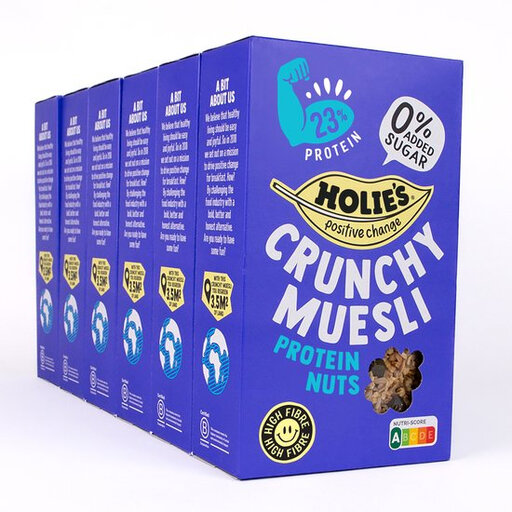
Why this fits the profile: A protein muesli with oats, wheat protein, almonds and hazelnuts for active consumers or anyone wanting more protein in their breakfast.
The protein content is linked to specific ingredients such as wheat protein, seeds and nuts. The allergen list includes, among others, wheat, oats, almond and hazelnut.
22g of protein and 21g of fibre per 100g according to the first listed nutrition table.
We’ve put together a full, up-to-date list of products that fully meet these strict selection criteria and comply with current European safety regulations.
Not automatically. “No added sugar” only tells you about the ingredients added during production. Fruit, raisins or other raw materials can naturally contain sugars. So compare the total amount of sugar per 100g and look at the full ingredients list.
That depends on your eating pattern and the rest of your breakfast. A practical starting point is around 40 to 50g, perhaps with yoghurt, milk and fruit. With granola that is relatively high in fat or energy, a smaller portion may be appropriate. Use a measuring cup or scales if you want to compare portions accurately.
Seal the packaging tightly immediately after use and store the muesli in a dry, cool place away from direct sunlight. Moisture makes crunchy muesli and granola go soft more quickly. Also check the best-before date and do not use the product if the packaging is damaged.
