
Everyday fibre seekers
You’re looking for a regular breakfast cereal base and want to compare the fibre, sugars and wholegrain ingredients in different types of muesli.


Compare muesli for a quick breakfast by fibre and sugars per 100 g, then check the ingredients and allergens. Plain muesli is a good choice if you’re looking for a simple base. For crunchy varieties, check their individual nutritional information and consider what else you’ll need to prepare breakfast.
You’re looking for a regular breakfast cereal base and want to compare the fibre, sugars and wholegrain ingredients in different types of muesli.
You want to fit muesli with yoghurt, milk, quark or a plant-based alternative into your morning routine, without relying solely on the front of the pack.
Before buying, you need to check which grains and other allergens a variety contains, including any warnings on the current packaging.
Start with the nutritional information per 100 g, then decide whether the ingredients, preparation and allergens suit your quick breakfast.
| What to consider | What should you check? | Who is this most important for? |
|---|---|---|
| Fibre and wholegrains | Compare fibre per 100 g and check which grains appear first in the ingredients list. | I want a cereal base whose fibre and ingredients I can assess easily. This is the top priority for around 36% of consumers. |
| Sugars and ingredients | Check sugars per 100 g and read the ingredients list alongside any claims on the packaging. | A fibre claim isn’t enough for me: I also want to know how much sugar the variety contains. This is the deciding factor for around 29% of consumers. |
| Morning preparation | Check the preparation instructions and what else you’ll need besides the muesli. | My breakfast needs to fit the time I have in the morning, including the accompaniment and tableware I’ll need. Around 21% of consumers prioritise this. |
| Allergens | Read the allergen information and any warnings on the current packaging. | I need to be able to check first whether the ingredients and warnings suit my dietary restrictions. For around 14% of consumers, this check comes first. |
A fibre claim doesn’t tell you how much sugar or fat the muesli contains as well.
Compare the nutritional information for similar products per 100 g, and read the ingredients list too.
If packs use different serving sizes, the per-serving figures don’t give you a consistent basis for comparison.
Compare per 100 g first, then consider which serving size you actually want to use.
Muesli varieties may contain gluten-containing cereals or nuts, among other things. Warnings about possible cross-contamination may also be relevant.
Read the allergen information on the current packaging before you buy, and check it again if the product or packaging changes.
You’ll usually need an accompaniment and tableware for a bowl of muesli too. These also affect whether breakfast fits into your morning routine.
Check the preparation instructions and have your chosen accompaniment, a bowl and a spoon ready.
The own-brand Naturel and Fruit mueslis offer two different ingredient mixes in 1 kg packs.
A range of crunchy breakfast cereals for anyone who also wants to consider texture and flavour.
A warm wholegrain cereal breakfast as an alternative when a prepared bowl suits your morning better than muesli.
Zonnatura Muesli Rijkgevuld combines wholegrains with fruit and nuts.
This curated order focuses on the listed fibre and sugars per 100 g, while distinguishing between crunchy and plain muesli. It is not an independent product test or a general health assessment.
| Position | Product | Key details | Reason and considerations | Platform |
|---|---|---|---|---|
| 1 | Quaker Cruesli Zero Sugar Nuts & Seeds – 400 g | 23 g of fibre, 3.8 g of sugars and 21 g of fat per 100 g; contains nuts, wheat and oats, among other ingredients. | The Joybuy product page lists the fibre and sugar values behind this position in the curated order. Fat content and allergens are separate points to consider. | Joybuy |
| 2 | Jumbo Muesli Naturel – 1 kg | 9.5 g of fibre and 7.8 g of sugars per 100 g; wholegrain wheat and oat flakes appear first in the ingredients list. | According to Jumbo, Naturel offers a simple wholegrain muesli base. It ranks ahead of the fruit variety in this curated order because it lists less sugar with a similar fibre content. | Jumbo |
| 3 | Jumbo Muesli Fruit – 1 kg | 10.0 g of fibre and 19.4 g of sugars per 100 g; contains wholegrains and dried fruit. | Jumbo lists a fibre content close to that of Naturel, but a higher amount of sugars per 100 g. This difference matters if sugars are more important to you than the fruity mix. | Jumbo |
These are crunchy Quaker Cruesli varieties for anyone considering a quick breakfast with an accompaniment such as milk or yoghurt. Compare the nutritional information for each variety, and check the packaging if an individual on-the-go portion is important to you.
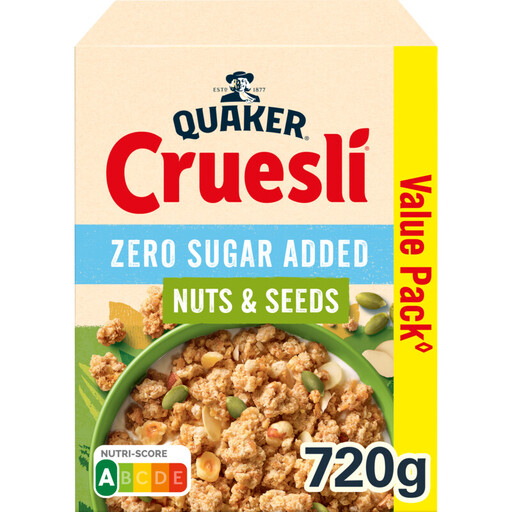 Image unavailable
For anyone looking to add crunchy muesli with nuts and seeds to breakfast. If you have an allergy, check the current packaging for information about nuts, cereals and milk.
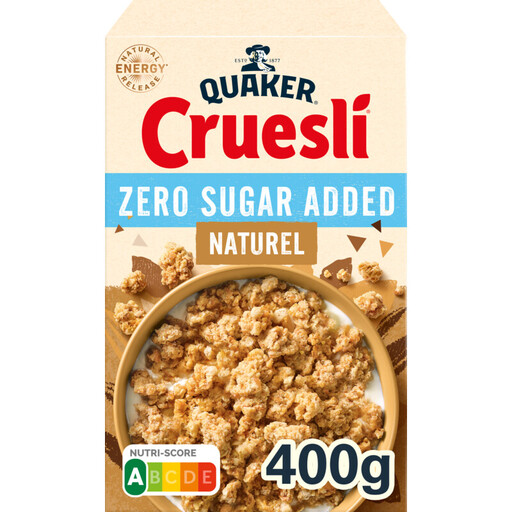 Image unavailable
For anyone looking for a plain crunchy muesli to eat with an accompaniment. Read the current nutritional information and allergen details before choosing this variety.
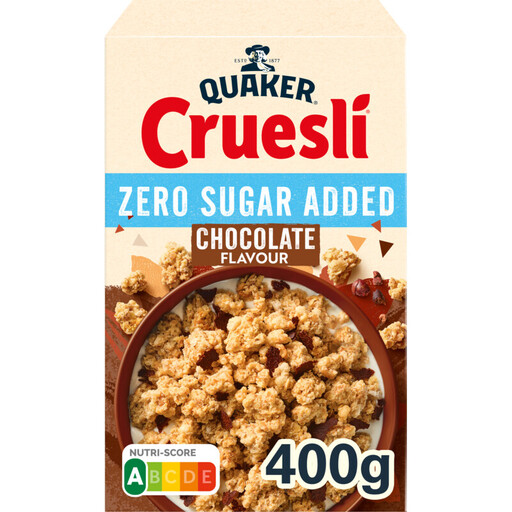 Image unavailable
For anyone looking to compare a crunchy variety with a chocolate flavour for a quick breakfast. Alongside the sugar information, check the rest of the nutritional details and the current allergen label.
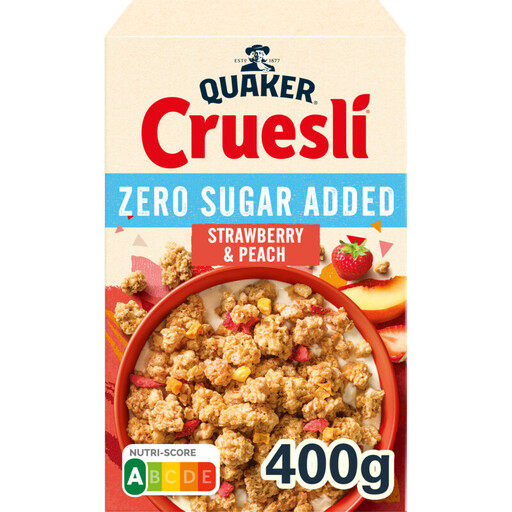 Image unavailable
For anyone looking to compare a crunchy strawberry and peach variety with other breakfast cereals. Read the nutritional information per 100 g and, if you have an allergy, check the current packaging.
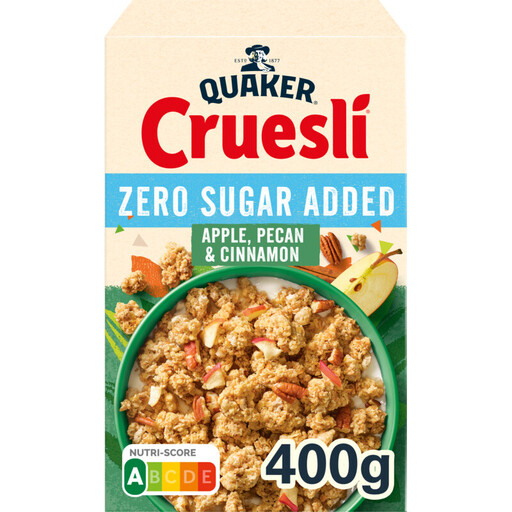 Image unavailable
For anyone looking for a crunchy variety with apple, pecan and cinnamon. As it contains pecans and cereal ingredients, check the current label if allergens are a concern for you.
Use the nutritional information per 100 g as a consistent basis. The Netherlands Nutrition Centre recommends comparing breakfast cereals this way, including for fibre and sugars. Then consider which serving size you want to use.
No. The fibre content doesn’t tell you how much sugar or fat the variety contains as well. Read the full nutritional information and ingredients list, then decide which differences matter for your breakfast.
Read the allergen information on the current packaging, even if you already know the product description. The Netherlands Food and Consumer Product Safety Authority says allergens must be listed on the labels of prepacked foods. Check for any cross-contamination warnings too.
Follow the storage instructions on the packaging. The product information for the Jumbo mueslis discussed here recommends storing them in a dry place and sealing the pack carefully after opening.