
Vandaag of morgen in huis

Kwaliteit gegarandeerd

Welkomstaanbiedingen ontgrendelen: GRATIS bezorging | Tot 80% korting | Gratis 30 dagen JoyPlus-proefperiode
Download de app
Choosing a pack of muesli and breakfast cereals may seem straightforward. However, two products with similar packaging can differ considerably in sugar, fibre, protein, serving size and preparation time. As a Joybuy Product Recommendation Officer, I therefore recommend focusing on verifiable information rather than bold claims on the front of the pack.
Breakfast cereals with no added sugar can still contain naturally occurring sugars from fruit. So do not just look at the front of the pack; check the nutrition table as well. For example, Quaker Zs Cruesli Raisin & Hazelnut contains 9,4 grams of sugars per 100 grams, according to the product information. The Nuts & Seeds variant contains 3,8 grams per 100 grams.
Products containing sweeteners also deserve attention. A product labelled “sugar-free” may, for example, contain maltitol. Always check the ingredients list and look for terms such as sugar, glucose syrup, honey, dates, malt extract and sweeteners.
A high fibre content is useful information, but it does not automatically tell you how much fat, sugar or energy a product contains. Quaker Cruesli Zero Sugar Added Strawberry & Peach contains 24 grams of dietary fibre per 100 grams according to the product information, but also 17 grams of fat and 424 kcal.
As a minimum, compare these values per 100 grams:
A 720-gram pack may seem a good choice for a family, but only if the quantity suits your daily consumption. Instant porridge in sachets may cost more per serving, but it saves time and makes portioning easier. With loose granola or crunchy muesli, a resealable pack is important for preserving the texture.
Also look out for products with additional sachets. The Family Whole products contain separate sachets of pure glucose alongside the grain mix. This extra content is included in the total weight, but it is not the same as the breakfast cereal itself.
Ingredients are listed in descending order by weight. If wholegrain oats or oat flakes appear first, oats make up a significant part of the mix. According to the label, Quaker Zs Cruesli Nuts & Seeds has a base consisting of 37% wholegrain oats and 15% wholegrain wheat flakes. The product also contains pumpkin seeds, hazelnuts and almonds, among other ingredients.
With granola containing chocolate or nuts, you should also check the actual percentage of these additions. According to the product description, TastyBasics Granola Chocolate & Nuts contains 33% soya flakes, 30% oat flakes, 8% linseeds and 4% hazelnuts. So the term “chocolate & nuts” does not mean that chocolate or nuts are the main ingredients.
For anyone looking for high-fibre breakfast cereals or a high-protein breakfast, the values per 100 grams are the most useful. A standard serving may be smaller than 100 grams, meaning the actual amount will be lower.
Quaker Oats Express Protein contains 22 grams of protein and 7,2 grams of fibre per 100 grams, according to the product information. The ingredients list states that the product consists of 85% wholegrain porridge oats and 15% soya protein. This makes it particularly appealing to consumers who want to tailor their breakfast to their protein intake, although soya allergies or avoidance should be taken into account.
Oats, wheat, barley, soya, milk and nuts are commonly found in muesli, cruesli, granola and instant products. Check the allergens highlighted in bold on the current packaging, even if a recipe has been changed.
Also consider how the product is used:
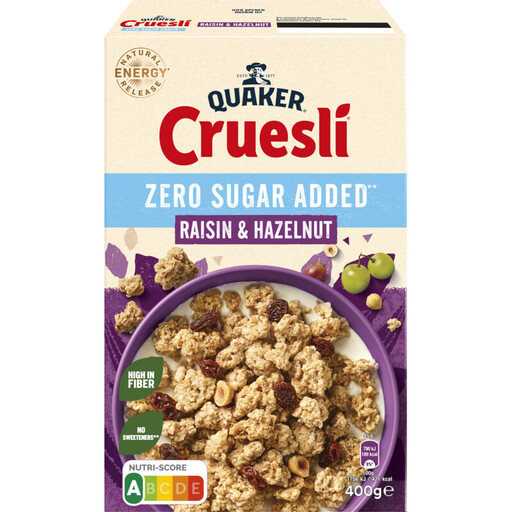
Why it suits this profile: A familiar crunchy muesli with raisins and hazelnuts for anyone who wants to get started without complicated preparation.
The product information states that it contains no added sugars or sweeteners. However, check the natural sugars content of 9,4 g per 100 g.
37% wholegrain oats, 23 g of fibre and a 400 g pack.
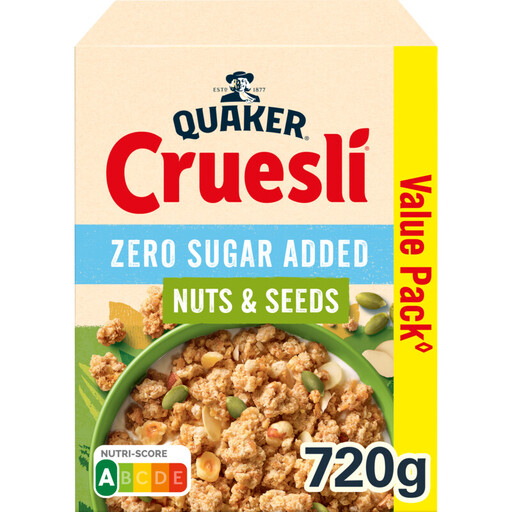
Why it suits this profile: A generous pack with nuts and seeds for anyone who enjoys extra bite and a satisfying breakfast texture.
The nutritional values are clearly stated per 100 g, allowing you to take the higher fat content of 21 g into account.
23 g of fibre, 9,5 g of protein and 4,5% pumpkin seeds, alongside hazelnuts and almonds.
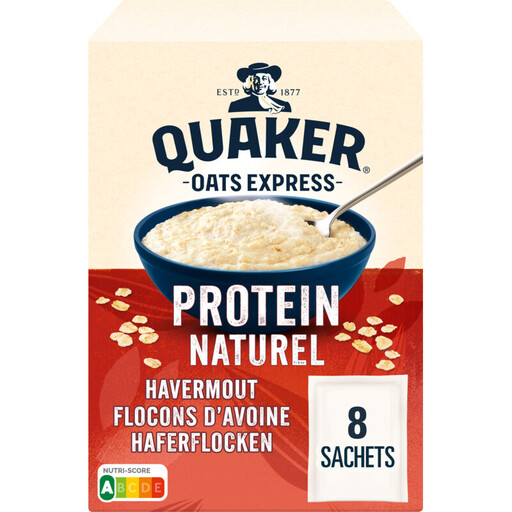
Why it suits this profile: Convenient for busy mornings, sporty users and anyone looking for a quick-to-prepare porridge meal.
According to the product description, preparation takes 2 minutes. The ingredient list is also concise: 85% wholegrain porridge oats and 15% soya protein.
22 g of protein, 7,2 g of fibre and 1,2 g of sugars per 100 g; does contain soya.

Why it suits this profile: A neutral grain mix that can be prepared hot or cold, making it easy to vary with yoghurt, milk or soya drink.
The ingredients and preparation methods are specified. You can add the product directly to dairy products or heat it for 2 to 5 minutes.
12 g of protein, 0 g of sugars and 420 g content according to the product information; contains oats and barley.
We have put together a complete, up-to-date list of products that fully meet these strict selection criteria and the applicable European safety regulations.
Muesli is usually an unroasted mix of flakes, fruit, nuts or seeds. Cruesli generally refers to crunchy, toasted muesli. Granola is also crunchy and often contains oil, syrup or other binding ingredients. The exact composition varies by brand, so always compare the label.
That depends on the product and your eating habits. Packs often use a serving size of approximately 30 to 45 grams. Weigh out a serving once if you want to compare calories, fibre, sugar or protein accurately. If you add yoghurt, milk, fruit or nuts, the overall nutritional values of your breakfast will change.
Store opened muesli, granola and oat flakes in a cool, dry place in a tightly sealed container. This helps the crunchy texture last longer and prevents the product from absorbing moisture. Check the use-by or best-before information on the packaging before buying and using the product, and do not use any packaging that is damaged.
