
Vandaag of morgen in huis

Kwaliteit gegarandeerd

Welkomstaanbiedingen ontgrendelen: GRATIS bezorging | Tot 80% korting | Gratis 30 dagen JoyPlus-proefperiode
Download de app
As a Joybuy Product Recommendation Officer, I see a lot of new hardware come across my desk. The launch of a new NVIDIA graphics card like the GeForce RTX 5060 always generates a great deal of excitement. But it also leads to confusion. Manufacturers use marketing terms that obscure more than they clarify. Before you invest in an upgrade, it's crucial to know what to look for to avoid buyer's remorse.
Let's review the most common graphics card pitfalls and how you can avoid them.
A common marketing trick is to emphasize a large amount of video memory (VRAM). However, more isn't always better. A card with 12GB of older, slower GDDR6 memory can perform worse in practice than a card with 8GB of modern, faster memory. The speed and bandwidth of the memory are often far more important for smooth performance, especially for graphics cards for 1440p gaming.
You've found the perfect graphics card, but when you go to install it, you discover it doesn't fit in your case. Or worse: it fits, but poor airflow causes it to overheat, leading to lower performance (thermal throttling). The dimensions (length, height, and width in slots) and the quality of the cooler are critical specifications that are often overlooked.
To make an informed choice, you need to look beyond the marketing hype. For a card like the MSI GeForce RTX 5060 8G VENTUS 2X OC, these are the specifications that truly matter.
The RTX 5060 uses the new 8GB GDDR7 graphics card memory. This is a significant step forward. GDDR7 offers considerably higher memory bandwidth (up to 448 GB/s on this model) than its predecessors. In practice, this means the card can load game assets and textures much faster. This results in smoother gameplay at 1080p and 1440p resolutions and less stuttering, even when ray tracing is enabled.
The MSI VENTUS 2X OC is equipped with two TORX 4.0 fans. This design is focused on efficient heat dissipation without excessive noise. More importantly, its form factor is relatively compact, with a length of just 197 mm. This makes it suitable for a wide range of computer cases, from spacious mid-towers to more compact systems.
This card is a PCIe 5.0 graphics card. While the performance gain over PCIe 4.0 is currently limited, it ensures future-proofing. Paired with a compatible motherboard, you'll be ready for the next generation of high-speed storage and other components. Additionally, support for DLSS 4, the latest version of NVIDIA's AI upscaling technology, provides a significant performance boost in supported games, allowing you to achieve higher framerates while maintaining image quality.
Not everyone has the same needs. Below are some recommendations tailored to different types of users.
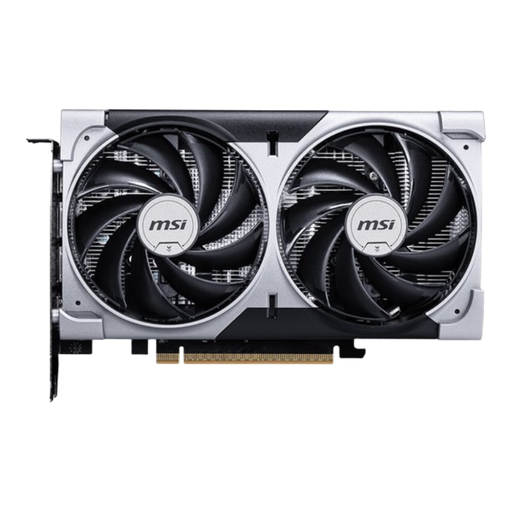
Why it's a match: This user seeks the ideal balance between price and performance for a smooth 1440p gaming experience. This card delivers exactly that, with modern technologies without the premium price tag of a high-end model.
The focus is on the efficient 8GB GDDR7 memory, which sidesteps the "more VRAM is better" trap. Its compact size also prevents compatibility issues.
Delivers great performance out of the box thanks to its factory overclock (OC) and a reliable dual-fan cooler, ideal for 1440p gaming.
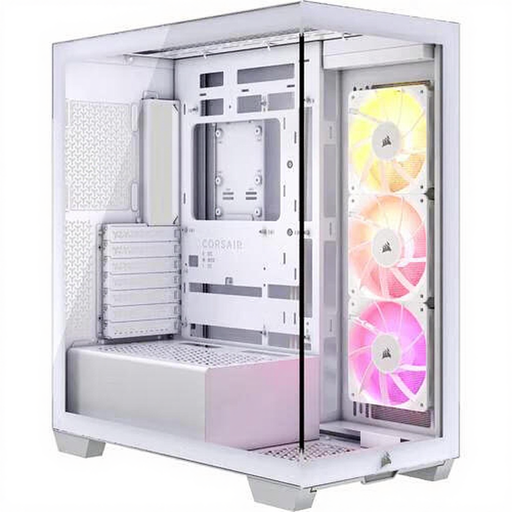
Why it's a match: For those who want a PC that looks as good as it performs. This white case with tempered glass and ARGB fans provides a perfect foundation for a visually stunning build.
With support for graphics cards up to 410 mm long, there is more than enough room for the RTX 5060 and even larger models. This completely avoids the pitfall of physical incompatibility.
Comes with three pre-installed ARGB fans and excellent cable management options, which simplifies the building process and ensures a clean final result.
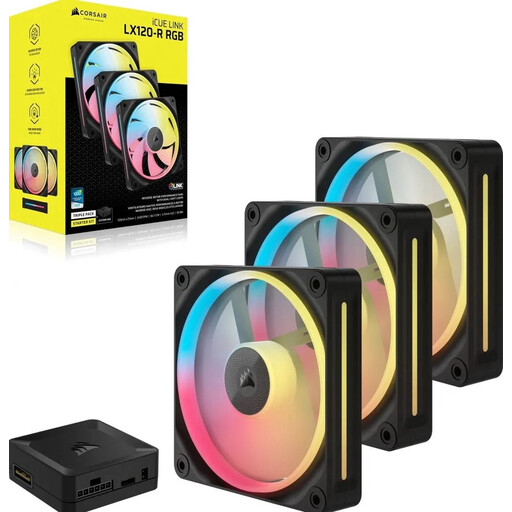
Why it's a match: This user wants maximum performance without the noise of a jet engine. These fans offer precise speed control and high airflow at a limited noise level.
Directly tackles the pitfall of poor cooling. Good airflow ensures that the graphics card and other components remain at an optimal temperature, which is essential for stable performance.
The iCUE LINK system allows you to daisy-chain multiple fans with a single cable. This significantly reduces cable clutter and makes for a cleaner, more organized PC build.
Now that you've chosen the right graphics card, the next step is a case that ensures optimal cooling and compatibility.
We have compiled a complete, up-to-date list of products that fully meet these strict selection criteria and UK regulations.
For most games in 2026, 8GB of VRAM will be sufficient, especially when combined with the speed of GDDR7 memory. This type of memory ensures fast texture loading, which is crucial for a smooth experience at 1440p. More VRAM might be a consideration only for the most demanding games with extreme texture packs or if you plan to game at 4K in the future.
According to its specifications, the MSI GeForce RTX 5060 8G VENTUS 2X OC has a power consumption of 145W and requires a single 8-pin power connector. To ensure stability, a quality 550W to 650W power supply is a safe recommendation. The exact required capacity also depends on the other components in your system, such as the processor.
With a length of just 197 mm, this card is remarkably compact for its performance class. It will fit in most modern ATX and Micro-ATX cases. However, it is always wise to check your own case's specifications for the maximum supported graphics card length before making a purchase. This will help you avoid any disappointments.
