
For anyone who works in a quiet space
You click frequently while plotting, and want to keep your study peaceful. Check whether the buttons on the exact version are described as quiet.


Start with the tasks you do most often. Buttons specifically described as quiet matter if you click frequently, while horizontal scrolling and adjustable cursor speed can be useful for wide tables and precise selections. A simple wired mouse may suit a fixed workstation. A trackball offers a different way to work, but its stationary design alone tells you nothing about how loud its clicks are.
You click frequently while plotting, and want to keep your study peaceful. Check whether the buttons on the exact version are described as quiet.
You work with small points or cells and navigate wide tables. Adjustable cursor speed and horizontal scrolling may be useful.
You want a mouse shape that suits your hand and workstation. Remember to vary your tasks and posture, too.
First decide whether quiet clicks, precise pointing, fit or connectivity matters most to you. Then compare the controls and limitations relevant to that priority.
| What to consider | What should you check? | Who is this important for? |
|---|---|---|
| Quiet clicks | Check whether the main buttons on the exact version are specifically described as quiet. Compare noise claims only when their stated measurement basis is the same. | If I click frequently in a quiet room, I want the main buttons to be explicitly described as quiet. Around 34% of consumers rank quiet clicks as their top priority. |
| Pointing and navigation | Check whether the cursor speed is adjustable and how the mouse scrolls horizontally through tables. | When working with small points and wide tables, I want to adjust the pointing speed and navigate sideways. Around 33% of consumers prioritise precision and table navigation. |
| Fit and variety | Consider the hand orientation and dimensions; if possible, try out a less conventional shape. | If I spend long hours at a desk, I want to know whether the shape suits my hand and workstation, and I make sure to vary my tasks. Around 20% of consumers prioritise fit. |
| Connectivity and power | Check your device’s ports and Bluetooth support, the connection included with the mouse, and whether it uses a battery or rechargeable battery. | If I want to connect the mouse to a particular device, the connection needs to be compatible, and I want to know how it is powered. Around 13% of consumers prioritise connectivity and power. |
A comparison between one model and its predecessor doesn’t tell you how it compares with other mice.
Check which buttons were measured and under what conditions. If possible, try the click noise for yourself.
A maximum DPI figure doesn’t automatically tell you how easy it is to point at small objects with the mouse. Extra controls aren’t necessary for everyone, either.
Check whether you can adjust the cursor speed and whether the mouse scrolls horizontally in the way you want.
The connectivity may vary for the Logitech MX Master 3S. The Bluetooth edition reviewed is not necessarily the same version as a listing that mentions a USB receiver.
Check the full model name, manufacturer code, connectivity and box contents before choosing a version.
A mouse with a different shape doesn’t prove that long periods of screen work or repetitive actions are no longer a risk.
Choose a control that suits your hand and workstation, and vary your tasks and posture.
The MX Master 3S Bluetooth edition is worth considering if quiet clicks, adjustable tracking and advanced scrolling are all important to you.
According to Trust, the Ozaa+ combines quiet buttons, a side scroll wheel and connectivity for multiple devices.
The GENTIX SILENT is a wired option for a fixed workstation where quiet clicks matter.
The Orbit Wireless Trackball with scroll ring offers a stationary way of working to consider if you’d like to try a trackball.
The HP 400 Quiet Blue is a wireless, symmetrical option with quiet clicks and two-way scrolling.
This Joybuy selection includes wireless mice with a range of features for cursor adjustment, scrolling and quiet clicks. Check each model’s connectivity and whether quiet buttons are specifically mentioned.
 No image available
The product name mentions adjustable DPI and several connectivity options, so you can check whether the controls suit your device and preferences.
Specifications in the product name: PAW3395 sensor, 26K DPI, 2.4G, USB-C and Bluetooth, 400 mAh and 56 g.
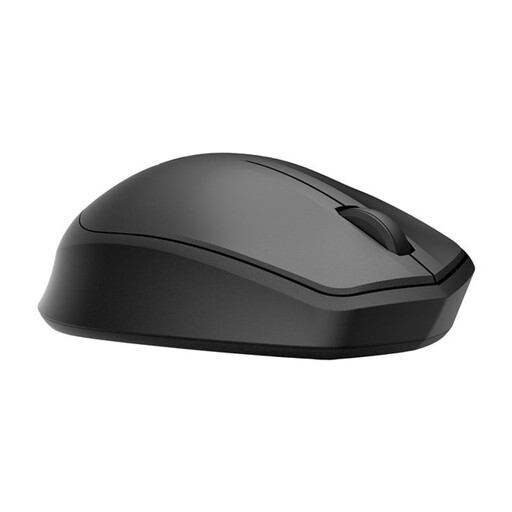 No image available
If quiet clicks matter, the product name describes it as silent. Check that its connection suits your device.
The product information lists a wireless 2.4 GHz receiver, a range of 10 metres and 1200 DPI. The shape is described as symmetrical.
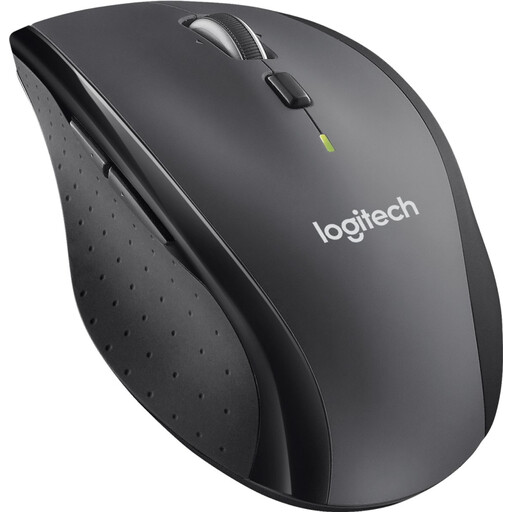 No image available
The product information mentions fast scrolling through long documents, which may be useful if you often navigate tables or documents.
The mouse is wireless and, according to the product information, comes with a Unifying receiver that can connect up to six compatible devices. The description mentions laser tracking.
 No image available
The product name mentions quiet operation and adjustable DPI. Check that the buttons and connection meet your needs.
The product information lists five DPI levels, an optical sensor, connectivity with up to three devices and one AA battery.
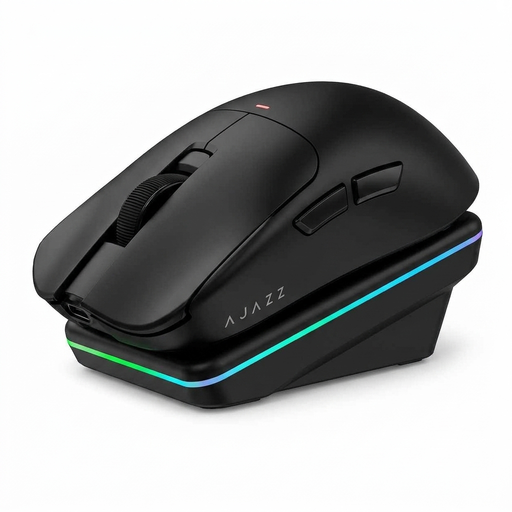 No image available
The product name lists three connectivity options. Check whether Bluetooth, 2.4G or USB-C suits the device you want to use the mouse with.
Specifications in the product name: PAW3311 sensor, 24,000 DPI, Bluetooth, 2.4G and USB-C. The stated weight is 63 g; the product name also mentions a charging dock.
Not necessarily. Check whether you can set the cursor speed comfortably for small points. Horizontal scrolling may also be useful with wide tables. Maximum DPI figures are model specifications, not comparative tests of how well a mouse performs in use.
According to Kensington, the Orbit Wireless Trackball is plug-and-play for Mac or PC. KensingtonWorks, separate software, is needed to assign button functions and adjust cursor and scrolling speed.
According to the Dutch government, online purchases from a business often come with a 14-day cooling-off period; check which terms apply to your purchase. In the Netherlands, faulty products are covered by a legal guarantee with no fixed statutory guarantee period. The seller is your point of contact for a solution; a manufacturer’s guarantee doesn’t replace this right.
Screen-work regulations apply to employers and workplaces, rather than requiring every buyer to use a particular type of mouse. According to Arboportaal, employees should break up screen work at regular intervals with other work or a break; a specialist mouse doesn’t replace the need to do this.
Milieu Centraal lists small electrical appliances, including mice, as items that you can take to suitable collection points. If possible, remove the battery and take it to a separate battery collection bin.