If there’s hardly any room to move a mouse, a stationary trackball is the most straightforward solution. Logitech describes the ERGO M575 as a mouse that doesn’t need to move while you control the cursor, while the Kensington Orbit has a central ball and scroll ring. If you do have a little room to move a mouse, look for a compact model with adjustable cursor speed. For long periods of use, fit and variety of movement also matter, and a vertical mouse still needs room to move.
Who is this guide for?
Chart user with a cluttered desk
You keep tables next to your computer and are mainly looking for a pointing device that needs little or no movement across the desk. Logitech and Kensington describe trackballs as a way to control the cursor without moving the mouse.
Precision chart worker
You want to point to values with control and scroll through tables. Adjustable cursor speed and controlled scrolling may matter more than a high maximum DPI.
Long-hours screen user
You often work for long stretches and want to take hand fit and variety of movement into account. A mouse’s shape is not a treatment for discomfort; Arboportaal recommends alternating screen work with tasks that don’t require a screen.
What should you look for when buying?
Stationary trackball
Choose this when: paper tables or other items take up almost all the space available for moving a mouse. Logitech describes the ERGO M575 as a trackball that stays in place while you control the cursor; the Kensington Orbit has a central ball and scroll ring.
The trade-off: you control the cursor with a ball rather than by moving the mouse. Bear in mind that the body takes up a fixed amount of desk space, and check that the controls suit you.
Compact standard mouse
Choose this when: you want to keep the familiar movement of a mouse and still have a small area to move it around. Trust lists adjustable 800–1600 DPI for the Yvi+ Silent; Logitech says the MX Anywhere 3S has an adjustable sensor and two scrolling modes.
The trade-off: a small body takes up less fixed space, but still needs room to move. A higher DPI doesn’t automatically mean you can point to values more accurately.
Vertical mouse
Choose this when: hand position and fit matter to you, and you can still move the mouse around. Logitech offers the Lift in left- and right-handed versions, and says it’s designed to fit small to medium-sized hands.
The trade-off: a vertical shape won’t solve a lack of room to move the mouse. Decide for yourself whether the different hand position and fit suit you; comfort claims aren’t proof that a mouse will relieve discomfort.
| What to consider |
What to look for when buying |
Who is this important for? |
| Room to move |
Measure the space for the mouse body as well as the clear area for moving it. A trackball doesn’t need mouse movement to control the cursor; a compact standard mouse does. |
If my tables are next to the mouse, I want to control the cursor without moving it across the whole work surface. Around 36% of consumers put available movement space at the top of their list of buying concerns. |
| Pointing to values and scrolling |
Check whether the cursor speed is adjustable, and try the controls in the software you use for plotting. Also look at the scrolling controls for long tables. |
When clicking a value, I want to move the cursor with control, then scroll through the table precisely. Around 29% of consumers give accurate pointing and scrolling top priority. |
| Hand fit and working hours |
Consider your hand size, preferred hand and the controls. Take breaks from prolonged screen work; a different mouse shape is no substitute for this. |
For long working sessions, I want to consider how the mouse fits my hand and not assume that an ergonomic shape prevents discomfort. Hand position and fit are the main buying concern for around 21% of consumers. |
| Connectivity and quiet operation |
Check whether the exact version has Bluetooth, whether a receiver is included and what power source it needs. Don’t compare versions based on a similar name alone. |
If I have few spare USB ports or want to work more quietly, I want to know in advance how the mouse connects and how loud its buttons are. Around 14% of consumers cite connectivity and quiet operation as their main buying concern. |
Common buying mistakes
-
Assuming a small mouse doesn’t need room to move
A compact standard mouse still needs to be moved across the desk. A trackball stays in place while you control the cursor, but it still takes up a fixed amount of space.
Before choosing a type of control, measure both the space available for the mouse body and the clear area for moving it.
-
Assuming versions with almost the same name are identical
Trust describes the Yvi+ Silent and the separate Yvi+ multi-device as different versions. For the MX Anywhere 3S, Logitech says that a compatible Logi Bolt receiver is not included.
Check the exact listing for the model version, connection type and box contents.
-
Seeing an ergonomic shape as a guarantee against discomfort
Manufacturers describe the intended comfort of their mice. Arboportaal also highlights varying your work and setting up your workstation properly; switching to a different mouse doesn’t replace these considerations.
Check the fit and take breaks from prolonged screen work. If you’re starting to experience work-related discomfort, seek appropriate professional advice.
Relevant brands for these types of mouse
Logitech
Offers models for trackball use, as well as compact and vertical mice; shape and controls vary between product ranges.
- Logitech describes the ERGO M575 as a trackball that doesn’t need to be moved to control the cursor. For the MX Anywhere 3S, the brand lists an adjustable sensor and two scrolling modes.
- According to Logitech, the Lift is available in left- and right-handed versions.
- Check the connection and fit of each version. Comfort claims are not independent medical findings.
Kensington
The Orbit Wireless with scroll ring is a trackball option for anyone with little room to move a mouse.
- Kensington lists four DPI settings, a scroll ring and a removable wrist rest for the Orbit Wireless.
- Using a ball feels different from using a standard mouse. Claims about accuracy or reducing discomfort are not independently established outcomes for this use.
Trust
Offers compact wireless mice, as well as separate multi-device and vertical versions.
- Trust lists silent buttons and adjustable 800–1600 DPI for the Yvi+ Silent.
- Bluetooth on the separate Yvi+ multi-device should not be attributed to the standard Yvi+ Silent. The Verto is wired and is not a stationary trackball solution.
CHERRY
The compact MW 9100 is an option if you need multiple connection methods and rechargeable power.
- CHERRY lists Bluetooth, a 2.4GHz receiver, USB-C charging while in use, and DPI settings of 1000, 1600 and 2400.
- The mouse still needs to move across the desk; its connectivity options don’t remove the need for room to move it.
Mouse options at Joybuy
This selection includes a trackball for use where there’s little room to move a mouse, and compact standard mice for a small but available movement area.
 No image available
Logitech ERGO M575S, Graphite
Thumb-operated trackball for a setup with little room to move a mouse; Logitech says you can adjust the cursor speed using Logi Options+.
View at Joybuy
 No image available
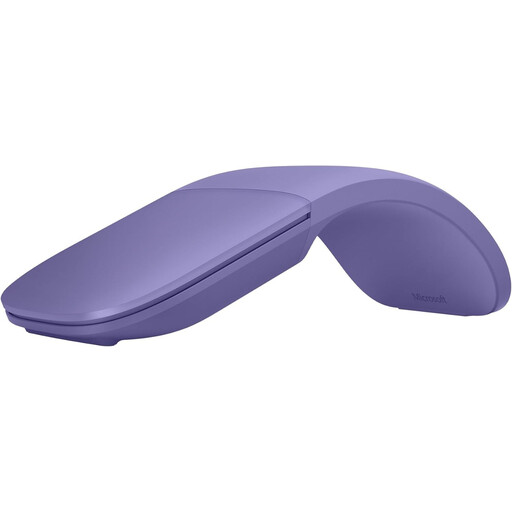
Microsoft Surface Arc Mouse Violet
Microsoft lists Bluetooth, a foldable design for storage, and vertical and horizontal scrolling. To move the cursor, this standard mouse still needs to be moved across the desk.
View at Joybuy
 No image available
DELL Pro Compact Silent Mouse MS355
Dell lists a compact design, quiet operation and RF or Bluetooth connectivity. Cursor speed is adjustable up to 4020 DPI; as a standard mouse, this model still needs room to move.
View at Joybuy
 No image available
Trust Yvi+ Wireless Mouse, Silent Buttons, Blue
Trust lists silent buttons and adjustable 800–1600 DPI. This compact standard mouse still needs to be moved to control the cursor.
View at Joybuy
 No image available
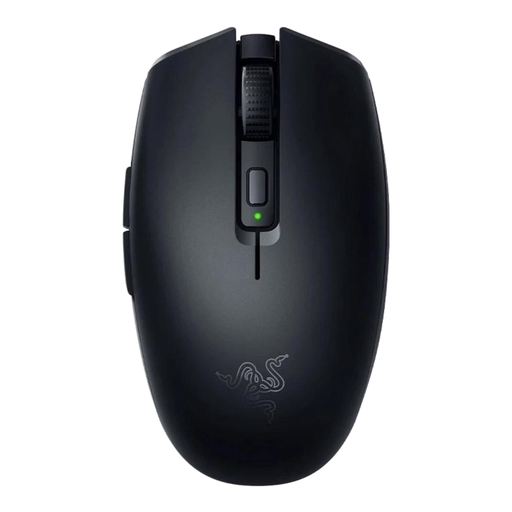
Razer Orochi V2 Wireless Gaming Mouse, Black
The product description lists a compact, symmetrical shape for left- and right-handed use, and Bluetooth or HyperSpeed connectivity. Room to move the mouse is still needed to control the cursor.
View at Joybuy
Frequently asked questions
Is a higher DPI always better for plotting values on a tide chart?
No. A higher setting moves the cursor faster; choose a setting you can control in your own charting software. On the Orbit product page, Kensington recommends a lower DPI for precise tasks. This is the manufacturer’s advice, not a measured result for working with tide tables.
How do I connect a mouse if my laptop doesn’t have a spare USB-A port?
Before buying, check whether the exact version supports Bluetooth. Logitech lists Bluetooth for the MX Anywhere 3S and says that a compatible Logi Bolt receiver is not included. The standard Trust Yvi+ Silent is a different version from the Yvi+ multi-device with Bluetooth.
What can I do if I spend a long time plotting or start to experience arm discomfort?
Break up intensive screen work with tasks that don’t require a screen; Arboportaal also recommends alternating with other work or taking a break. If you’re starting to experience work-related discomfort, you can seek appropriate professional advice, for example from your workplace prevention officer or occupational physician. A different mouse is not a guaranteed treatment.
What are my rights if I buy a mouse online and find it uncomfortable to use?
According to ACM ConsuWijzer, for a standard online consumer purchase you generally have a statutory 14-day cooling-off period after delivery; check for any exceptions and the applicable returns policy. This is separate from your statutory guarantee: if a product used normally doesn’t meet what you could reasonably expect, the seller must provide a solution, according to ACM ConsuWijzer.
Does Dutch law require a particular type of ergonomic mouse?
Arboportaal does not specify a required mouse model. However, rules apply to safe workstation set-up and breaks from screen work for employees; what applies in a particular workplace also depends on the working situation. This doesn’t mean that every individual buyer is legally required to choose a vertical mouse or trackball.


