
Tables and charts user
You regularly navigate wide tables and point to data in charts. Sideways scrolling and adjustable cursor speed are important features to compare; Trust and Rapoo list these features for specific mouse models.


For wide tide tables, a mouse with a side-scroll wheel is practical; if your main concern is not disturbing colleagues, prioritise quiet main buttons. If you use a mouse for long periods, also consider its shape and where it will sit on your desk. Finally, check that the connection and any configuration software are compatible with your office computer.
You regularly navigate wide tables and point to data in charts. Sideways scrolling and adjustable cursor speed are important features to compare; Trust and Rapoo list these features for specific mouse models.
You often click while sitting near others and want quieter main buttons, without assuming that the scroll wheel and every other action will also be silent. Trust, Logitech and Rapoo describe quiet buttons on specific models.
You work at a screen for long sessions and want to consider the grip, your hand size and where the mouse will sit on your desk. Arboportaal explains that screen work should regularly be alternated with other work or a break; a different mouse shape is no substitute for taking breaks.
Start with the task you do most often: navigating wide tables, clicking in a quiet space, finding a comfortable grip or connecting to office equipment.
| Feature to consider | What should you look for? | Who is this important for? |
|---|---|---|
| Table navigation | Check whether your application uses horizontal scrolling and whether you can adjust the cursor speed. | I often navigate wide tide tables and want to point to data without constantly using the horizontal scroll bar. Around 33% of consumers say table navigation is their top buying priority. |
| Quiet clicks | Check that the quiet-operation claim applies to the exact model variant; also consider how much noise the scroll wheel makes. | I often click near colleagues and mainly want the buttons to be quiet. Around 27% of consumers prioritise quiet clicks. |
| Comfortable fit | Check your hand size, whether the mouse is designed for left- or right-handed use, and whether there is enough room to position it by your keyboard. | For long work sessions, I want a grip that suits my hand and is comfortable to position. Around 27% of consumers put a comfortable fit at the top of their list. |
| Connection | Check whether Bluetooth is available, whether you have a spare USB port and whether you are allowed to use configuration software. | I want to know in advance whether the mouse will work with my office computer and whether I can change its settings. Around 13% of consumers name connectivity as their top buying priority. |
A claim about quiet buttons does not automatically say anything about the scroll wheel or the sound of the mouse moving across the desk.
Check which parts the claim applies to, and assess clicking and scrolling separately.
The Logitech Lift is designed for small to medium-sized hands and is available in separate left- and right-handed versions.
Check your hand size and the exact version before buying.
Adjustable cursor speed does not automatically tell you how accurately you can point to data in your own application.
Check the available settings and whether the cursor speed suits your screen and the way you work.
The Lift is a vertical option; according to Logitech, the MX Master 3S is designed, among other things, for quiet clicks and extensive cursor and scroll control.
According to Trust, the Ozaa+ combines quiet buttons, a side-scroll wheel and multiple connection options.
The M500 Silent is an option if you want quiet clicks and adjustable cursor speed.
The Orbit with scroll ring is a stationary trackball for anyone looking for an alternative to moving the whole mouse.
The MW 2310 2.0 is a conventional wireless mouse with adjustable DPI settings.
These mice are suited to office work where table navigation, cursor speed, grip and clicking noise are all considerations.
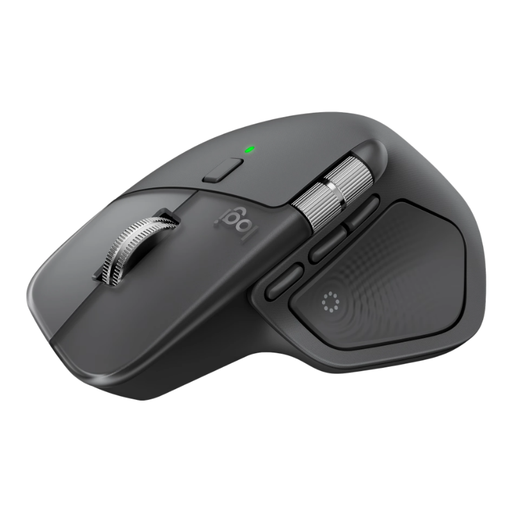 Image unavailable
Worth considering if you want to navigate wide tables horizontally; check the features of this version if side-scrolling and clicking noise are deciding factors.
 Image unavailable
Suitable if you want to consider a vertical grip and adjust the cursor speed.
Connection: Bluetooth and 2,4 GHz. DPI: 800/1200/1600. Charging: USB-C.
 Image unavailable
Worth comparing if you are considering a vertical grip and a different way to scroll; check that the controls suit your application.
6 buttons. Wireless via 2,4 GHz. DPI: 800–1600.
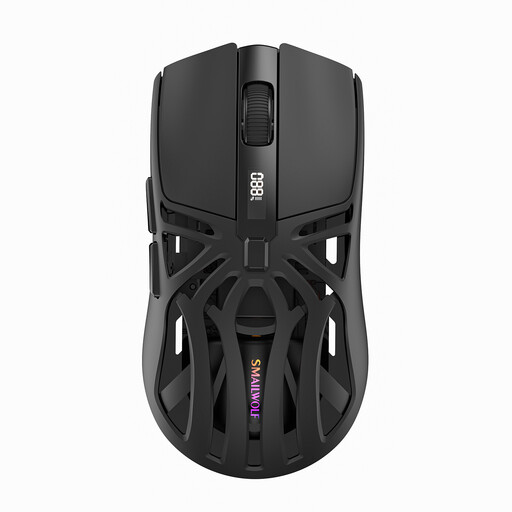 Image unavailable
Suitable if you want to weigh up cursor speed and connection options for different tasks.
Connection: Bluetooth, 2,4 GHz and Type-C cable. DPI: 6 settings.
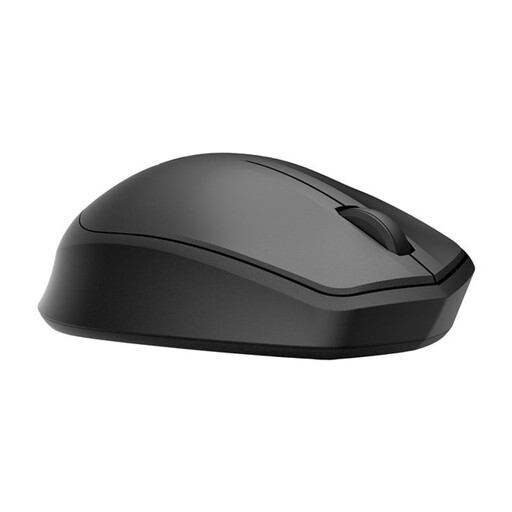 Image unavailable
One to consider if quiet main buttons matter when you are sitting near colleagues; check that the connection is compatible with your office computer.
Wireless mouse.
If your application supports horizontal scrolling, look for a mouse with a side-scroll wheel. Trust lists this feature for the Ozaa+; adjustable cursor speed is a separate consideration when pointing to data.
First check whether Bluetooth is available or whether you have a spare USB port for a receiver. Trust and Rapoo list Bluetooth and a 2,4 GHz receiver for specific models; also check whether your office policy allows configuration software.
No. Arboportaal explains that screen work should regularly be alternated with other work or a break; a different mouse shape is no substitute for taking breaks.
For a consumer purchase made online, ACM ConsuWijzer says you generally have a statutory cooling-off period of up to 14 days after delivery, subject to applicable conditions and exceptions. If the product is faulty, you also have statutory rights against the seller.
Arboportaal’s guidance does not specify a particular mouse model. It does outline obligations relating to healthy screen work and the design of the workplace.