
Planners with little room to move a mouse
If drawings or samples take up much of your small desk, a trackball could be the answer: you control the pointer without moving the mouse back and forth. Kensington describes the Orbit as a stationary model.


If you have hardly any room to move a mouse, a stationary trackball could be a good fit. If you have a small clear area, a compact conventional mouse is still an option. For longer sessions, consider how it fits your hand, and always check that the controls, connection and any cable suit your workspace.
If drawings or samples take up much of your small desk, a trackball could be the answer: you control the pointer without moving the mouse back and forth. Kensington describes the Orbit as a stationary model.
If you often browse digital plans, zoom in or adjust features, look at the scroll controls and whether you can adjust the pointer speed. Logitech lists two scroll modes and adjustable tracking for the MX Anywhere 3S.
For longer planning sessions, it’s worth considering how the mouse fits your hand and your working posture. Logitech offers the Lift in versions for different hands, while Arboportaal also recommends varying your activities and taking micro-breaks when working at a screen.
Start by checking how much room you have to move the mouse. Then consider the controls and grip, and finally check that the connection works with your computer(s).
A good fit when: there’s hardly any room to move a mouse across the desk.
Bear in mind: you control a ball instead of moving the whole mouse; also check that the cable will work for you.
A good fit when: you have a small clear area and want to move the mouse in the usual way.
Bear in mind: even a compact model needs room to move; check the connection and whether a receiver is included.
A good fit when: you’re mainly looking for a different grip and fit for your hand during longer sessions.
Bear in mind: choose a version for the hand you use, and don’t treat its shape as a replacement for breaks or a suitable workspace.
| What to consider | What should you check? | Who is this important for? |
|---|---|---|
| Room to move | Measure how much space is actually clear, and consider whether you’d like to try a trackball. | If drawings or material samples take up almost your whole workspace, you may want to control the pointer without moving the mouse; around 36% of consumers say room to move is their main buying need. |
| Digital controls | Check that the scroll functions and adjustable pointer speed work with your computer and planning software. | If you often view and edit digital plans, you’ll want smooth scrolling and the option to set the pointer to your liking; around 29% of consumers prioritise these controls. |
| Fit for your hand | Consider your hand size, whether the model is for the hand you use, and whether you can reach the controls comfortably. | For longer sessions, you’ll want a grip that suits your hand, without expecting a mouse on its own to prevent discomfort; around 21% of consumers say fit for their hand is their main need. |
| Connection | Check Bluetooth, available USB ports, included receivers and the power supply. | If you switch between computers, you’ll want a connection that works with each device and won’t cause unexpected connection issues; around 14% of consumers prioritise connectivity and switching between devices. |
You still need to move a compact conventional mouse across the desk; the Kensington Orbit trackball, by contrast, is designed to stay in one place.
Choose based on the room you have to move the mouse, not just the size of its body.
A stated maximum dpi value doesn’t, on its own, tell you how well you’ll be able to edit a floor plan.
Check whether you can adjust the pointer speed and whether the scroll controls work with your software.
Logitech states that the standard MX Anywhere 3S doesn’t come with a Logi Bolt receiver. The Lift is also available in versions for different hands.
Check the exact variant, what’s in the box and the connection options available on your computer.
If you need a separate receiver, you may have to buy one separately.
The Orbit trackball with scroll ring is designed to stay in one place on the desk, where there’s little room to move a mouse.
The MX Anywhere 3S is a compact conventional mouse. The Lift has a vertical grip and is also available in a left-handed version.
The Ozaa Compact is a compact conventional mouse with a choice of Bluetooth or a 2.4GHz receiver.
These mice cater to different needs around scrolling, adjustable controls, grip and connectivity when planning at a small desk.
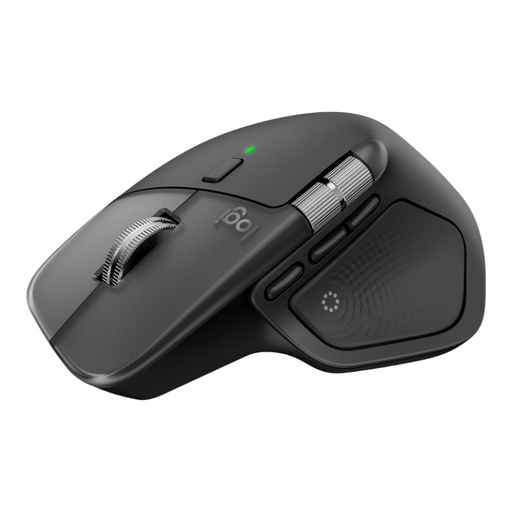 No image available
An option to consider if you do a lot of scrolling while planning and are looking at a shaped mouse.
The product name lists Bluetooth, USB-C charging, MacOS, iPadOS and Windows.
 No image available
A vertical mouse to consider if you’d like to try a different grip for your planning work.
The product name lists 2.4 GHz, a USB-C battery and a range of 800–1600 DPI.
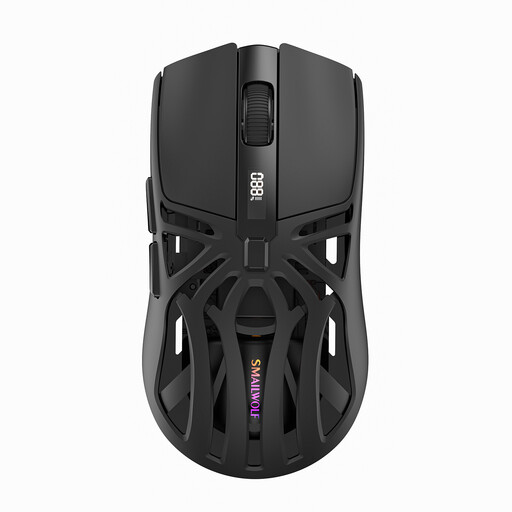 No image available
An option if your main priorities are the stated connection options and adjustable pointer settings.
The product name lists Bluetooth, 2.4G, a Type-C cable connection and six DPI levels.
 No image available
An option to compare if you’re looking for adjustable DPI and several connection types for digital work.
The product name lists 2.4G, USB-C, Bluetooth, a 400 mAh battery and a 56 g design. The product warning says to keep the magnetic charging dock at least 15 cm away from pacemakers.
 No image available
An option if quiet clicks and switching between connection options suit your workspace.
The product name lists 2.4G, Bluetooth, adjustable DPI and an AA battery.
Kensington says the Orbit K72337EU stays in place, so you don’t need to move the mouse back and forth. You do need room for the trackball itself and its cable; also try it out to see whether the ball controls suit you.
It depends on the mouse and your computer. Logitech says the standard MX Anywhere 3S can connect via Bluetooth, but a compatible Logi Bolt receiver isn’t included. The Trust Ozaa Compact offers Bluetooth or a 2.4GHz receiver; check which connections and ports your computer supports.
No. Arboportaal recommends varying your activities, taking micro-breaks and using a suitable workspace when working at a screen. A mouse’s shape doesn’t replace these considerations and, on its own, can’t guarantee that discomfort will be reduced.
For online purchases from a business, the Dutch Government says you’ll often have a 14-day cooling-off period; check which terms apply to your purchase. You’re also entitled to a product that works properly in the Netherlands. There’s no fixed statutory guarantee period; if a product is faulty, contact the seller.