
Lesson planner with little room for a mouse
If your keyboard and teaching materials fill your desk, you’ll want to find a dedicated spot for cursor control. A stationary trackball could work if its body fits beside your keyboard.


If you have very little room to move a mouse, see whether a stationary trackball will fit beside your keyboard. If you want to take your mouse with you or use it at different workstations, compare compact models for how they fit your hand, their controls, connectivity and scrolling options. A smaller mouse isn’t automatically more comfortable for long periods of use. Keep the mouse close to your keyboard, and vary your tasks and posture.
If your keyboard and teaching materials fill your desk, you’ll want to find a dedicated spot for cursor control. A stationary trackball could work if its body fits beside your keyboard.
If you regularly create or edit lesson plans, it’s worth considering how the mouse fits your hand and where you place it. Arboportaal advises keeping the mouse close to your body and letting go of it regularly; varying your activities is still important.
If you take your mouse with you or use different computers, compare its size, connectivity options, power source and click noise. Logitech and Trust describe models with portable designs or multiple connectivity options.
Start with the space available: a trackball doesn’t need room to move, but it does need a permanent spot for its body. Then consider how it fits your hand, its connectivity and how you navigate lesson documents.
| What to consider | What to look for | Who it’s for |
|---|---|---|
| Desk space | Measure the space for the mouse itself, as well as room for your hand and forearm. | If my keyboard and teaching materials fill my workspace, I mainly want to have enough room left over; around 36% of consumers prioritise available space. |
| How it fits your hand | Check whether the shape suits your hand and whether you can keep the mouse close to your keyboard. | When planning lessons for long periods, I want a mouse that suits my hand and sits close by; around 29% of consumers prioritise hand position. |
| Quiet operation and connectivity | Check for Bluetooth support, the connection needed for any receiver, and what’s included. | At a shared workstation, I look for quiet clicks and a connection that works with my computer; around 21% of consumers prioritise quiet operation or switching between devices. |
| Navigating documents | Decide whether you mainly scroll vertically, move horizontally through wide documents or want customisable buttons. | When I edit long lesson documents, I want to navigate the content smoothly; around 14% of consumers prioritise document navigation. |
A small, conventional mouse still needs room to move. A trackball doesn’t need to slide around, but it does take up a permanent spot itself.
Measure the space available for the device, and remember to allow room for your hand, keyboard and teaching materials.
Logitech says that the compatible Logi Bolt receiver is not included with the Pebble Mouse 2 M350s or the standard MX Anywhere 3S.
Before buying, check whether your computer supports Bluetooth, what connection any receiver requires, and what comes with the version you’ve chosen.
If your computer doesn’t have a suitable Bluetooth connection, you may need to buy a compatible receiver separately.
A product description isn’t proof that a mouse prevents discomfort. The right shape and workstation set-up vary from hand to hand and from one situation to another.
Assess how the mouse fits your hand and where you place it. If discomfort persists, consider seeking appropriate professional advice.
The Orbit Wireless Trackball is an alternative to a conventional mouse if you have little room to move one around.
The Pebble Mouse 2 M350s has a slim, portable design; the MX Anywhere 3S is a compact, rechargeable option with scroll controls.
According to Trust, the Ozaa Compact combines a compact design with quiet buttons and several connectivity options.
The HP 425 is a Bluetooth mouse worth comparing if you’re looking for a tilt wheel and customisable buttons.
These Joybuy products are conventional mice to compare for working at a small desk. Bear in mind that you’ll need to move them across the desk as you use them. Also check which shape and connection will suit your workspace.
 No image available
A vertical design to compare if how a mouse fits your hand is a priority; as a conventional mouse, this model still needs room to move.
The product name lists Bluetooth, 2.4 GHz, USB-C charging and three DPI settings: 800, 1200 and 1600.
 No image available
A vertical mouse to compare if you also need to navigate wide documents; you’ll still need to move it across the desk as you use it.
The product description lists six buttons, a 4-way scroll wheel and quiet operation. It connects wirelessly via 2.4 GHz using a USB receiver; check that your computer has the right connection.
 No image available
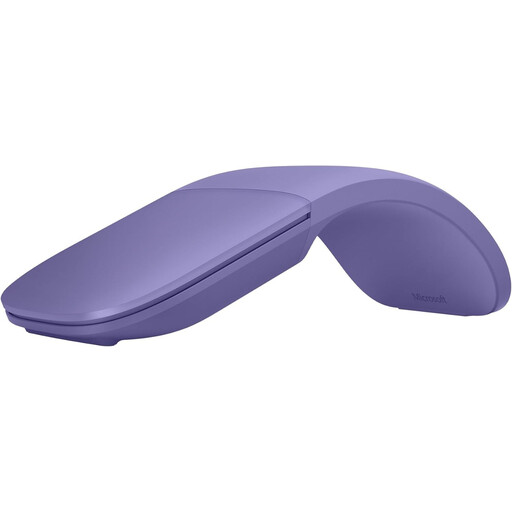
A foldable mouse to compare if you want to store it flat or take it with you; it still needs room to move on your desk.
The product description mentions Bluetooth compatibility with Windows 10/11 and a touch surface for vertical and horizontal scrolling.
 No image available
A conventional mouse to compare if multiple connectivity options matter to you; it still needs room to move on your desk.
The product name lists 2.4 GHz, USB-C and Bluetooth, and a weight of 56 g. Keep the magnetic charging dock at least 15 cm away from pacemakers, and away from medical implants and cards.
 No image available
A mouse to compare if quiet clicks and switching between devices matter to you; you’ll still need room to move it for cursor control.
The product description lists Bluetooth 5.1, 2.4 GHz via a USB receiver, connection to up to three devices, quiet clicks and a weight of 62 g. This model runs on one AA battery.
Place it close to your keyboard so you don’t have to reach far with your arm. Arboportaal suggests that a narrow keyboard can help free up space, and advises letting go of the mouse regularly.
No. According to the Dutch Authority for Digital Infrastructure, Bluetooth uses licence-exempt frequencies and doesn’t need to be reported or registered.
The Dutch government lists electrically rechargeable computer mice among the devices that must use a common USB-C connection if they are newly placed on the Dutch market from 28 December 2024. A mouse with a replaceable AA battery isn’t considered a rechargeable mouse solely under this rule.
When you buy as a consumer, the product must do what you can reasonably expect it to do. ACM ConsuWijzer explains that statutory guarantee in the Netherlands doesn’t have a fixed duration of exactly two years; normal use and the expected lifespan are relevant.
Milieu Centraal lists mice as small electrical appliances that you can take to designated collection points. If possible, remove any battery that can be taken out and recycle it separately.