
Anyone with little room to move a mouse
Your keyboard, paperwork and laptop leave barely any space to move a mouse. So compare the room needed for a conventional mouse with the stationary control of a trackball.


If you have some room to move a mouse, a compact conventional mouse offers familiar control. If you don’t, a stationary trackball may be worth considering. Also think about the fit, how you scroll and the connections available on your computer. An ergonomic product claim doesn’t guarantee that a mouse will prevent discomfort.
Your keyboard, paperwork and laptop leave barely any space to move a mouse. So compare the room needed for a conventional mouse with the stationary control of a trackball.
You repeatedly click and scroll through transactions. Look for controls and a working position that suit your hand and workspace. Arboportaal notes that prolonged screen work can be associated with health complaints.
You switch between devices while managing your household finances. Check in advance whether Bluetooth, a USB receiver or both connection options are compatible with the computers you use.
First, decide whether you have enough room to move a conventional mouse. Then compare how the controls work and check that the connection is compatible with your computer.
| What to consider | What should you check? | Who is this important for? |
|---|---|---|
| Room to move | Measure the space beside your keyboard and allow for the room your hand needs to move the mouse. | If there’s little space between your keyboard and paperwork, you’ll want to know whether you can still move a conventional mouse around. That’s why around 37% of consumers give available mouse space their highest priority. |
| Controls and hand comfort | Consider hand position, how far you need to reach for the buttons and how you scroll. No shape automatically suits every hand. | When checking lots of transactions, you’ll want controls that feel comfortable and put the scroll function within easy reach. Around 27% of consumers prioritise the controls and hand comfort. |
| Connection | Check whether your computer supports Bluetooth Low Energy, which type of USB port is available and whether a receiver comes with the version you’re considering. | If you use different computers, you’ll want to know in advance which connection method works with each device. Around 18% of consumers prioritise compatibility with their own devices. |
| Quiet and simple operation | Check that quiet buttons are included on the exact version you’re considering, and whether the mouse uses a battery or USB receiver. | If you work at a shared table, you’ll want quiet, straightforward everyday operation without unnecessary connection steps. Around 18% of consumers put quiet and simplicity first. |
A compact conventional mouse takes up little space, but you still need to be able to move it across the desk. A trackball stays in place.
Measure both the space for the device and the room your hand needs to use it.
Logitech says that a Logi Bolt receiver isn’t included with the Pebble Mouse 2 M350s.
Check whether your computer supports Bluetooth Low Energy and look at what’s in the box for the exact version before you choose.
If your computer doesn’t support the required Bluetooth connection, you may need to buy a compatible receiver separately.
Whether a mouse suits you depends on your hand, how you use the controls and how your workspace is set up. A product claim can’t predict how a mouse will feel to you.
Consider the fit and take breaks from prolonged screen use. If you already have discomfort, don’t choose a mouse based solely on a product claim.
The Pebble Mouse 2 M350s is a slim conventional mouse, while the ERGO M575S is a stationary trackball operated with your thumb.
The Orbit with Scroll Ring is a wired, stationary trackball operated with your finger.
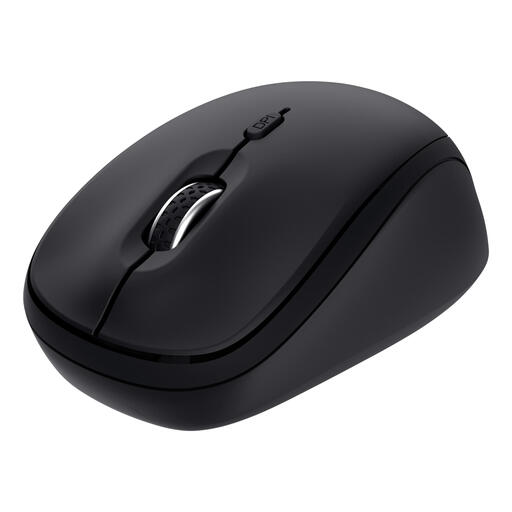
The Yvi+ Multi-Device is a compact conventional mouse with quiet buttons and a choice of Bluetooth or a 2.4GHz receiver.
The MW 2200 is a compact, symmetrical conventional mouse with a nano USB receiver.
This selection includes a stationary trackball for those with little room to move a mouse, as well as compact conventional mice for anyone with space to move one.
 No image available
A stationary trackball for anyone with little room to move a mouse.
Use your thumb to control the cursor. It’s designed for right-handed use.
 No image available
A compact conventional mouse for anyone with some room to move it who wants quiet clicks.
The product name lists 2.4G+BT, adjustable DPI levels and one AA battery.
 No image available
A conventional mouse described as compact, for anyone with room to move it beside their keyboard.
The product name describes it as a silent mouse. Before buying, check which connections are available with the version on offer.
 No image available
A compact conventional mouse for anyone with some room to move it who wants quiet buttons.
The product name describes a wireless mouse with quiet buttons for use with multiple devices.
 No image available
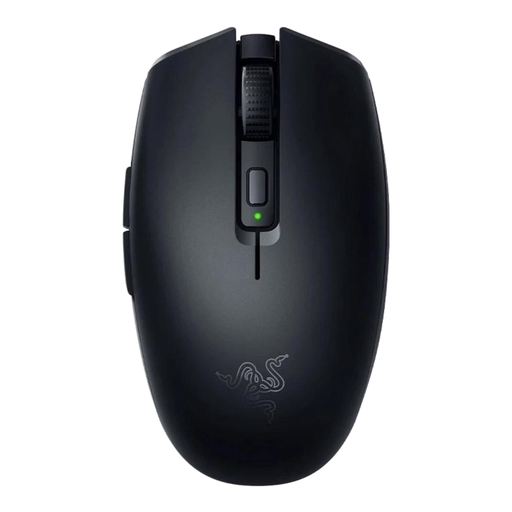
A conventional mouse for anyone with room to move it and interested in different wireless connection options.
The product name describes an optical mouse with 18,000 DPI.
No, not if your computer supports the Bluetooth connection the mouse requires. Logitech lists Bluetooth Low Energy for the Pebble Mouse 2 M350s; a compatible Logi Bolt receiver isn’t included. Check the connection options on your computer.
Follow the care instructions for the exact model. For the Orbit with Scroll Ring, Kensington recommends gently removing dirt with a finger or dry cloth. Don’t automatically apply this advice to a different model.
In the Netherlands, if a product breaks during normal use sooner than you could reasonably expect, the seller must put it right free of charge, according to ACM ConsuWijzer. There isn’t one fixed statutory warranty period for every mouse.
For a standard online consumer purchase, you generally have a statutory cooling-off period of up to 14 days after the product has been delivered. Check ACM ConsuWijzer for the rules on unpacking, trying out and returning an item.
According to the Dutch Authority for Digital Infrastructure, radio equipment placed on the market in Europe must meet the applicable European requirements and carry a CE mark. Check the information for the exact product on offer; a brand or model name alone doesn’t confirm that a particular listing is compliant.