
Rota planner in a shared space
You work while others are at the same desk and want to minimise distracting clicking sounds. Logitech, HP and Trust describe mice with quieter clicks or buttons; check which connection the shared computer supports too.


Choose a mouse that suits the users’ hand preferences and works with the shared computer. Then decide how much quiet clicking and extra scrolling functionality matter for your rota work. A symmetrical mouse can be practical if club members take turns and include both left- and right-handed users, while a contoured right-handed mouse is best suited to a single right-handed user. Manufacturers’ descriptions cover product features, not proven prevention of discomfort.
You work while others are at the same desk and want to minimise distracting clicking sounds. Logitech, HP and Trust describe mice with quieter clicks or buttons; check which connection the shared computer supports too.
Several members use the same workstation, so you don’t want to assume everyone has the same hand preference. Trust describes the Basi as suitable for both left- and right-handed users; check the shape and version of other models.
You often navigate lots of rota entries and want to choose a mouse and set up your workstation to suit your hand and how long you work for. Logitech describes scrolling options for the M650 series; Arboportaal advises setting up your workstation properly each time.
Start by considering who will use the mouse and which connections the computer supports. Then decide whether quieter clicking or extra scrolling controls would make a difference when working on the rota.
| What to consider | What to look for | Who is it most important for? |
|---|---|---|
| Clicking noise | Check whether the main buttons are described as quiet or quieter, and whether the shape suits the users. | If I want to minimise disruption to others at the same desk while working on the rota, quiet clicks are a priority. Around 29% of consumers prioritise this for shared use. |
| Hand preference | Check whether the mouse is symmetrical or designed for a specific hand. | When several club members use the mouse, I want it to work for both left- and right-handed users. Around 29% of consumers prioritise suitability for different hand preferences. |
| Connection | Check whether the computer supports a suitable USB port or Bluetooth, and whether pairing is allowed. | I want to know in advance whether the mouse will work with the connections available on the shared desk’s computer. Around 21% of consumers put connectivity first. |
| Scrolling and working posture | Consider how much you scroll through long lists and whether the mouse and workstation suit you. | When working on a long rota, I want to move through entries smoothly and set up my workstation comfortably. Around 21% of consumers prioritise scrolling controls and a personal fit. |
According to Logitech, the Logitech M330 is shaped for the right hand. It may be less suitable if left-handed users will also use it.
Check who will update the rota. If different people will use the mouse, compare symmetrical versions too, and choose a model designed for a particular hand only if it suits the users.
A USB receiver needs a suitable available port. Bluetooth doesn’t use a USB port, but it does require a supported connection and pairing.
Check the computer, the accessories included and the permitted connection method before choosing a version.
The Dutch government says there is no fixed statutory warranty period in the Netherlands. Your applicable rights also depend on the purchase and whether the product meets the terms of the agreement.
For a consumer purchase, you can contact the seller if a product doesn’t meet the terms of the agreement. Check who the buyer is: a purchase made by the club as an organisation doesn’t automatically fall under the same consumer rules.
Logitech describes a range of mice for shared use, a shape designed for a particular hand or scrolling through lists. The right version depends on the users and the rota.
Trust describes the symmetrical, rechargeable Puck, which has Bluetooth and a USB receiver, and the wired Basi, with buttons suited to both left- and right-handed use.
The HP 280 Silent Wireless Mouse is worth considering if you’re looking for a wireless mouse with a receiver for a shared space.
Dell lists the wireless MS3320W as a compact option for the office.
These Joybuy mice are suitable for working on a rota at a shared desk. Compare the clicking noise, hand preference and computer connection for each version.
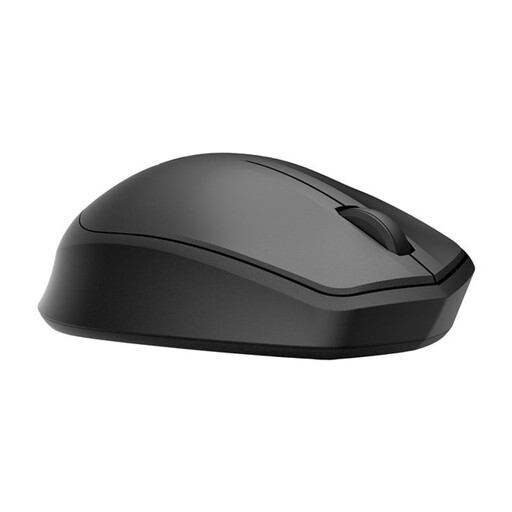 No image available
The product name suggests a quiet wireless mouse. Check that its connection and shape suit the shared computer and its users.
 No image available
The product name mentions 2.4G+BT and quiet clicks; check which connection method works with your computer. The title also mentions adjustable DPI and one AA battery.
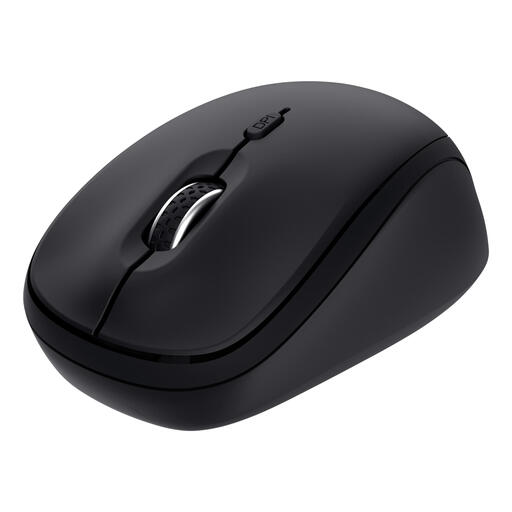 No image available
The product name mentions quiet buttons and use with multiple devices. Check whether these features suit the way you use the shared computer.
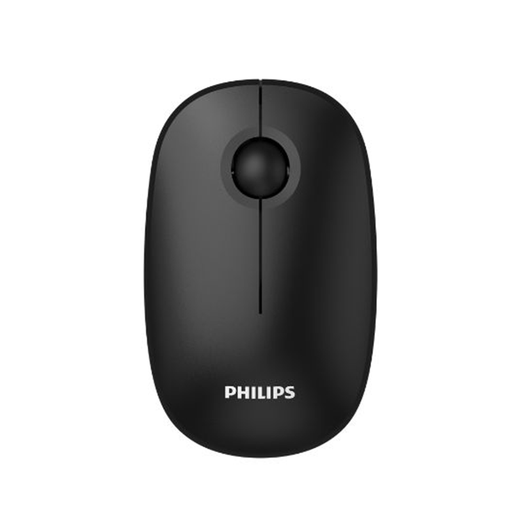 No image available
The product title mentions quiet clicks, 2.4 GHz, a USB receiver and 1600 DPI. Check that a suitable USB port is available on the computer.
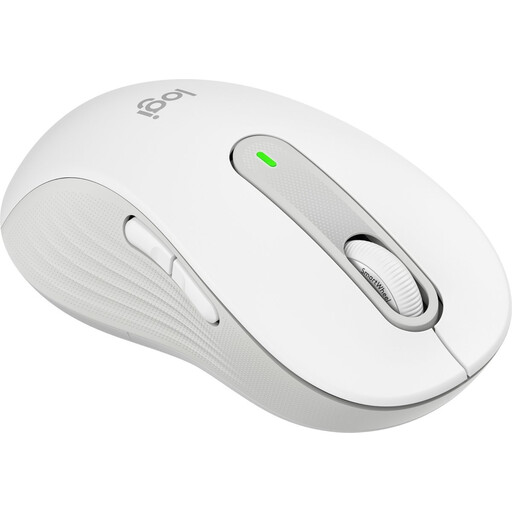 No image available
The product name identifies this as the left-handed M650 L Left version. Logitech describes scrolling options for the M650 series; check the connection and version before ordering.
Choose based on the computer at the shared desk: a receiver plugs into a suitable USB port, while Bluetooth requires a supported connection and pairing. Also check which accessories are included with the model you choose.
Readjust your chair, screen and posture whenever you sit down at a shared workstation, and vary your tasks and positions. Arboportaal describes this as workstation advice; a mouse labelled ergonomic is not, in itself, a guarantee against discomfort.
First, check whether your chosen model has a replaceable battery or a rechargeable one. HP lists one AA battery for the 280 Silent version described; Trust describes the Puck as rechargeable. Keep a separate receiver safe if users remove it from the computer.
For an applicable distance purchase made by a consumer from a business, there is usually a 14-day cooling-off period. A product must also meet the terms of the agreement; according to the Dutch government, there is no fixed statutory warranty period in the Netherlands. These consumer rules don’t automatically apply in the same way when the club buys as an organisation.