What should you look for?
First, check whether your computer supports Bluetooth and whether you’d like to keep a USB port free as an alternative. Then compare the grip, cursor controls and charging method with your everyday design work.
| What to consider |
What should you check? |
Who is this important for? |
| Connection and ports |
Check Bluetooth compatibility and whether you need a USB receiver as an alternative; it uses a USB port. |
If I have few ports, I want to know whether Bluetooth will work without plugging a receiver into my computer. Ports are the main concern for around 36% of consumers. |
| Controls for design work |
Check whether the tracking is adjustable and whether the scroll controls suit long pages or wide design canvases. |
When I want to point precisely and move smoothly around a design, I look at both types of control. Around 29% of consumers prioritise these design controls. |
| Fit and hand movement |
Check the hand orientation and size; try a vertical grip or trackball controls if possible. |
For longer sessions, I want a shape that fits my hand, without assuming a different grip will relieve discomfort. Fit and hand movement are the main concern for around 21% of consumers. |
| Power and charging |
Check whether the mouse uses a rechargeable battery or replaceable batteries, and which charging cable or connection it needs. |
If I want to minimise interruptions for charging or battery replacement, I also check what charging options I’ll need. Power is the main priority for around 14% of consumers. |
Mice at Joybuy
This selection includes Bluetooth mice with extra scroll controls, models with a USB receiver, vertical mice and trackballs.
 No image available
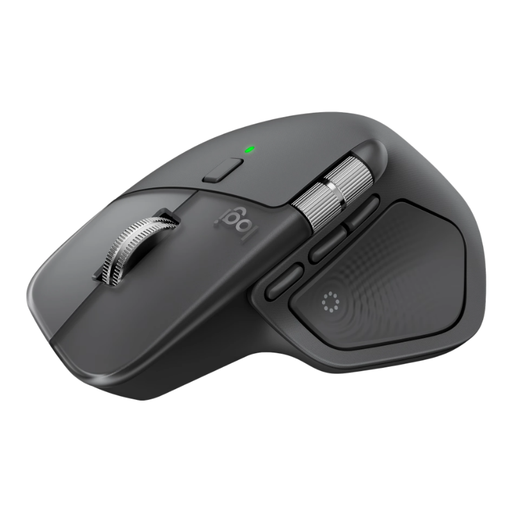
Logitech MX Master 4 Graphite
An option if you want Bluetooth alongside controls for navigating design canvases.
The description lists Bluetooth, adjustable controls, a MagSpeed scroll wheel and a horizontal thumb wheel. The built-in battery charges via USB-C.
View at Joybuy
 No image available
HOFOTEK M311 2.4G+BT mouse
An option if you want to switch between Bluetooth and a USB receiver.
The title lists Bluetooth and 2.4 GHz; the description mentions connection to up to three devices and adjustable dpi settings. The title lists one AA battery; the receiver uses a USB port.
View at Joybuy
 No image available
Logitech MX Vertical
A vertical model to consider if you’re deliberately looking for a different grip.
The title lists Bluetooth and a 2.4 GHz connection via a USB receiver; the description mentions a 4000-DPI sensor. Its vertical grip differs from that of a standard mouse, and this model has a rechargeable battery.
View at Joybuy
 No image available
Logitech ERGO M575S Graphite
A trackball to consider if you’re looking for a stationary pointing device for a compact desk.
The description lists Bluetooth and a Logi Bolt receiver. You control the cursor with the trackball instead of moving the mouse across your desk.
View at Joybuy
 No image available
Logitech Lift Vertical Ergonomic Mouse Graphite
A vertical mouse to consider if you’re looking for a right-handed version for a small to medium-sized hand.
The description lists Bluetooth, a USB receiver, a SmartWheel and customisable buttons. This version is designed for right-handed use.
View at Joybuy
Frequently asked questions
Do you need a free power socket or USB port for a Bluetooth mouse?
You don’t need a separate power socket or USB receiver for wireless use if your computer supports the required Bluetooth connection. However, you’ll need to plan for a suitable way to charge a rechargeable model; requirements vary by model.
What should you check when connecting and setting it up?
Choose Bluetooth or, if the model offers it, a USB receiver. Also check whether the software for customising buttons is available for your operating system; Logitech lists Logi Options+ for Windows and macOS.
Is an ergonomic mouse enough for long design sessions?
No, changing the shape of your mouse isn’t enough on its own. Arboportaal advises limiting intensive use of a screen, keyboard and/or mouse to a maximum of 6 hours a day; fit and changing your position are also important. This is advice on working posture, not evidence that a specific model has a therapeutic effect.
What if your mouse breaks too soon during normal use?
For consumer purchases in the Netherlands, statutory guarantees apply alongside any manufacturer’s guarantee. ACM ConsuWijzer states that the seller is responsible for providing an appropriate free solution if a product breaks too soon during normal use; there isn’t one fixed statutory guarantee period for every mouse.
What Dutch rules apply to a wireless mouse?
Radio equipment sold in the Netherlands must meet certain requirements. According to the Dutch Radiocommunications Agency, compliant equipment must carry a CE mark. These rules govern placing products on the market; they don’t require buyers to register or obtain a separate permit. The CE status of individual listings has not been verified.


