
For long editing sessions
You spend long periods working on text and layout, and want a mouse that suits your hand and working posture. Setting up your home workstation properly and varying your activities are important too.


When putting together and checking a concert programme, choose a mouse based on your dominant hand, the space available and how you navigate documents. A vertical mouse offers a different hand position, a trackball requires a different way of moving the cursor, and extra scrolling controls are only useful if you actually use them. Arboportaal (the Dutch occupational health and safety portal) also highlights the importance of setting up your workstation properly and varying screen-based tasks; a different mouse is no substitute for either.
You spend long periods working on text and layout, and want a mouse that suits your hand and working posture. Setting up your home workstation properly and varying your activities are important too.
You spend a lot of time navigating pages and want scrolling and cursor control to make checking details easier. Extra buttons are only worthwhile if you actually use them.
You work among documents and other items, and don’t want to need much room to move the cursor. A stationary trackball could be an option.
Suitable for: anyone who wants to try a different hand and forearm position during longer editing sessions, and can choose a model to suit their dominant hand and hand size.
Keep in mind: the grip may take some getting used to, and no one shape suits every hand.
Suitable for: a desk with limited room to move, or if you want to control the cursor without repeatedly moving the whole mouse.
Keep in mind: thumb control and finger control with a scroll ring feel different and may take some getting used to.
Suitable for: anyone who often navigates long documents and uses extra scrolling or customisable controls when working on layouts.
Keep in mind: extra features aren’t automatically useful. Check that any required customisation software is compatible with your operating system.
Suitable for: a fixed workstation with a free, compatible USB port, or if you don’t want to use a wireless connection.
Keep in mind: the cable needs room, so check that its length and connection suit your desk.
| What to consider | What should you check? | Who is this important for? |
|---|---|---|
| Fit and posture | Check your dominant hand and hand size, and whether you can reach the buttons comfortably. Also consider your workstation setup. | During long editing sessions, I want a grip that suits my hand and feels comfortable to use. Around 31% of consumers put fit and posture first. |
| Document controls | Check whether vertical or horizontal scrolling and customisable buttons would be useful in your layout software, and whether any software is required. | When checking pages, I want to move quickly through documents and details without choosing features I won’t use. Around 31% of consumers prioritise document navigation and layout controls. |
| Desk space | Measure the clear space beside your keyboard and decide whether thumb or finger control suits you. | If there’s little space beside my keyboard, I want to control the cursor without moving the mouse very far. Around 23% of consumers name limited desk space as their main consideration. |
| Connection and use | Check the available USB ports, Bluetooth support and whether the model is wired, rechargeable or supplied with a USB receiver. | At a fixed workstation, I want a connection and power supply that suit my computer. Around 15% of consumers prioritise a simple, compatible connection. |
A mouse’s shape, your workstation and the variety of tasks you do all play a part. A product description can’t predict how a mouse will feel for you.
Check that it fits your hand and suits your dominant hand, and make sure your workstation is set up properly. Discuss ongoing discomfort with an appropriately qualified professional.
A model may come in wired and wireless versions; some mice are also available for a specific dominant hand.
Before buying, check the full specification, intended hand, connection and included accessories.
Customisable features are only practical if they suit your layout work and computer.
Think about the actions you repeat often and check that any required customisation software works with your operating system.
Logitech offers different ways to work with documents: the Lift is vertical, the ERGO M575S is a thumb-operated trackball, and the MX Master 3S has extra document controls. These models don’t prove that one mouse will suit everyone.
Trust offers, among other products, vertical mice with different connections, including the wired Verto and wireless Bayo II.
The Kensington Orbit mentioned here is a stationary trackball with a scroll ring, for anyone who wants to try finger control.
According to R-Go Tools, the R-Go HE Break range offers different sizes, versions for different dominant hands and connection types.
These Joybuy picks include mice for working with long documents, customisable controls and a vertical grip. For each model, check that the connection and features suit your computer and layout work.
 No image available
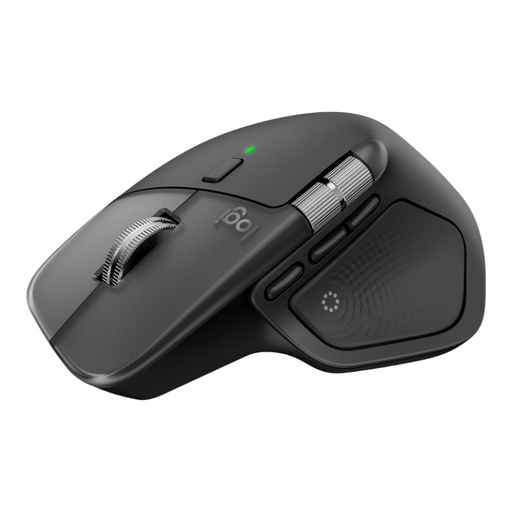
An option if you often navigate long documents and wide content when working on layouts.
The product information lists MagSpeed scrolling, horizontal scrolling, eight programmable buttons, Haptic Sense and an Actions Ring. Logi Options+ is required to customise the buttons and Actions Ring, so check that the software is compatible with your system.
 No image available
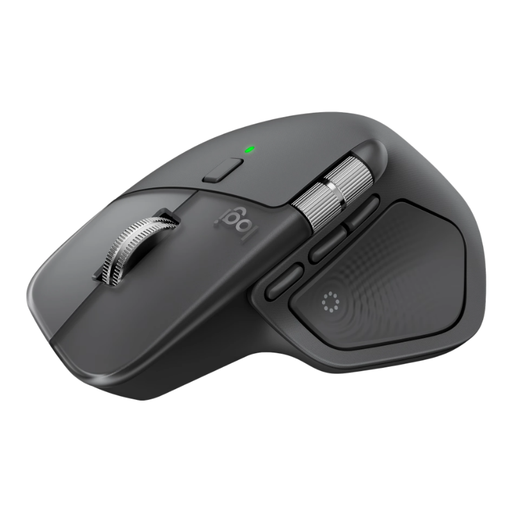
Suited to document work where you often want to scroll vertically or horizontally and customise the controls.
The product information lists MagSpeed scrolling, horizontal scrolling, eight programmable buttons, Haptic Sense and an Actions Ring. Logi Options+ is required to customise shortcuts and buttons, so check that the software is compatible with your system.
 No image available
An option if you want to try a vertical grip and are looking for buttons to help with document control.
The product name mentions Bluetooth, 2.4GHz connectivity and USB-C charging. The description lists three DPI levels: 800, 1200 and 1600, and six programmable buttons.
 No image available
Suited to anyone who wants to combine a vertical grip with scrolling and navigation controls.
The product information lists a 2.4GHz USB receiver, a USB-C battery, six buttons and adjustable DPI from 800 to 1600. It also mentions a four-way scroll wheel and forward and back buttons.
 No image available
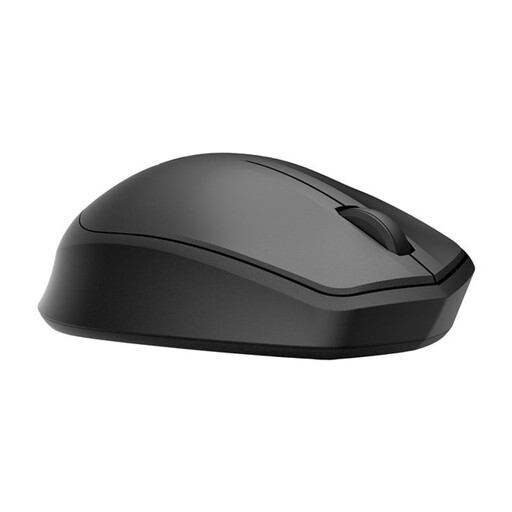
A wireless option if quiet clicks and using a mouse at home are important to you.
The product information lists a wireless USB receiver and compatibility with Windows and ChromeOS. Check that your computer has a compatible USB port.
No. The Dutch regulations referred to do not require a specific mouse model. Arboportaal does explain that employers are responsible for providing healthy and safe working conditions, including when employees work from home; how these obligations apply depends on your employment relationship. Screen-based work should also be regularly alternated with other work or a break.
Choose a version for your dominant hand and check that the fit and connection suit you. Set up your workstation properly and vary your tasks and posture too; Arboportaal considers these factors together, rather than treating the mouse as a solution on its own.
It depends on the version: the wired Trust Verto uses a USB cable, while the wireless Trust Bayo II has a rechargeable battery and a 2.4GHz USB receiver, according to Trust. Check the version you’ve chosen and the ports available.
For online purchases made as a consumer in the Netherlands, you generally have a statutory 14-day cooling-off period after delivery. ACM ConsuWijzer also sets out conditions and exceptions for trying out and returning products, so check these with the seller. This doesn’t automatically apply to a business order.
If you bought it as a consumer, you may be entitled to a statutory guarantee as well as any manufacturer’s warranty. According to ACM ConsuWijzer, the seller must offer an appropriate solution if the product doesn’t meet what you could reasonably expect; there isn’t one fixed statutory guarantee period for every mouse.