
Frequent checkout tester
If you regularly test fields, buttons and scrolling, look for cursor settings and a working posture that suit the way you test. Arboportaal recommends an adjustable workstation.


For checkout testing, a mouse is suitable if it lets you control the buttons and fields on your work surface precisely. A conventional mouse offers familiar cursor control; a vertical mouse is worth considering if it fits your hand, while a trackball may suit you if you have little room to move the mouse around. Also check which hand it’s designed for, its connection and its settings. No mouse shape replaces testing with a keyboard and other relevant input methods.
If you regularly test fields, buttons and scrolling, look for cursor settings and a working posture that suit the way you test. Arboportaal recommends an adjustable workstation.
If there’s little room to move a mouse beside your keyboard, a stationary trackball may be worth considering. Logitech describes the ERGO M575S as a model that lets you control the cursor with your thumb without moving the body of the mouse.
If you use different computers or connections, check that the exact mouse variant works with each test computer and find out which connections and any receivers you’ll need.
Start with what matters most during your checkout test: precise clicking, a comfortable grip, taking up little space or connecting to different test setups.
| What to consider | What should you check? | Who is this important for? |
|---|---|---|
| Click and cursor control | Try the cursor settings, buttons and scrolling on the system you use for testing. A high DPI figure alone doesn’t prove that small targets will be easier to hit. | When testing repeatedly, I want to click fields and buttons with control, rather than relying on a specification alone. Around 40% of consumers put click control first. |
| Hand fit and posture | Check the hand size the mouse is designed for, whether it’s for left- or right-handed use, and whether you can comfortably reach it at your sit-stand desk. | If I do a lot of mouse work, I want a grip and a version that suit my hand. Around 30% of consumers prioritise hand fit and posture. |
| Room to move | Check how much space you have beside your keyboard and whether you’d like to try a thumb-operated or symmetrical trackball. | On a crowded work surface, I want to control the cursor without constantly moving the mouse body. Around 20% of consumers put limited room to move first. |
| Connection and setup | Check the connections, ports and operating systems supported by the exact variant, as well as what’s included in the box. | When I switch between test computers, I want to know in advance whether the mouse can connect to each one. Around 10% of consumers prioritise connection and switching between setups. |
DPI alone doesn’t tell you how easy it is to click small targets on a page. Logitech lists adjustable tracking sensitivity for the MX Master 3S Bluetooth Edition, but that doesn’t mean it will be more accurate for every user.
Set the cursor to a usable speed and try the clicking and scrolling actions you’ll use during testing.
Logitech positions Lift for small to medium-sized hands; R-Go offers HE Break versions in different sizes and for left- or right-handed use.
Check the exact version and decide whether its shape suits your hand, rather than relying on the ‘ergonomic’ label alone.
A thumb-operated trackball and a symmetrical trackball control the cursor in different ways. Needing less room to move the body doesn’t automatically make small targets easier to use.
Try the type of control you’re considering with the clicking and scrolling actions on your checkout page.
Connections can vary by model and version. The R-Go HE Break version reviewed lists Bluetooth, 2.4 GHz with a dongle and USB; check the details of the version you’re planning to buy.
Before buying, compare the supported connections, compatibility with your test computer and what’s included in the box.
Logitech offers several mouse designs for checkout testing, including a vertical mouse, trackballs and a conventional mouse.
Trust’s Bayo II is a vertical wireless mouse to consider if you’d like to try this design.
The HE Break range is worth considering if hand size, hand preference or connection options matter to you.
The Orbit Wireless Trackball with scroll ring is a stationary trackball option to consider when space to move is limited.
This product selection focuses on conventional and vertical mice for mouse-based checkout testing at a sit-stand desk.
 Image unavailable
The listed adjustable DPI levels and connection options may be useful if you want to try different cursor settings and switch between devices.
The product information lists five DPI levels, 2.4 GHz or Bluetooth connectivity and connection to up to three devices. Windows, macOS and Android are also mentioned; the title lists a 1× AA battery.
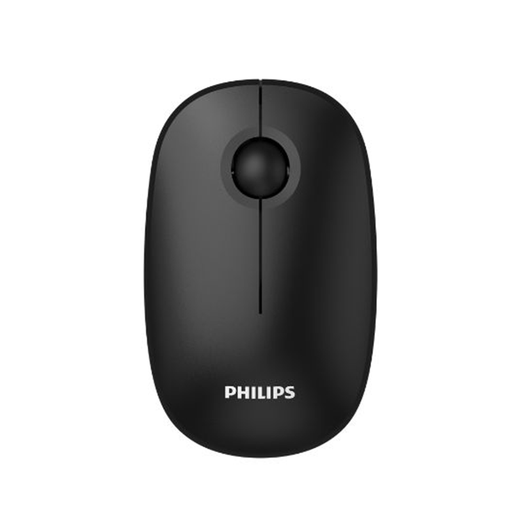 Image unavailable
This conventional mouse may suit a test setup that uses a 2.4 GHz connection and a USB receiver.
The product title lists 2.4 GHz, 1600 DPI, optical tracking and silent clicks. The product information mentions a USB receiver and use with Windows and Mac.
 Image unavailable
A vertical mouse to consider if you want to compare this grip with familiar cursor control; check whether the right-handed design suits you.
The product name lists a 4000-DPI sensor, Bluetooth and 2.4 GHz via a Unifying USB receiver, a rechargeable battery, four buttons and use with PC, Mac and iPadOS.
 Image unavailable
This wired vertical mouse may suit a fixed testing station with a USB port; the product information lists a right-handed version.
The product information lists adjustable DPI from 800 to 2400, two thumb buttons and a wired USB connection.
 Image unavailable
This vertical mouse is worth considering if you’re looking for a vertical grip and the version for small to medium-sized right hands suits you.
The product information lists a 4000-DPI sensor, a DPI switch, SmartWheel and customisable buttons. Bluetooth and a USB receiver are listed as connection options.
No. A mouse test alone doesn’t prove that. The W3C guidance on dragging movements explains why some users can’t perform these mouse actions and why a simple pointer alternative is needed. Assess input methods separately; buying a mouse isn’t an accessibility test.
Adjust the work surface and the rest of your workstation to suit your working posture, and keep the mouse within easy reach. Arboportaal also recommends alternating tasks when working intensively with a screen and mouse; a different mouse doesn’t replace this.
First check which connections your computer supports and which version you’re buying. The R-Go HE Break variant reviewed lists Bluetooth, 2.4 GHz with a dongle and USB; Kensington lists Bluetooth and 2.4 GHz for the Orbit Wireless. Don’t assume every version in a product range has the same connections.
When you buy as a consumer in the Netherlands, you’re entitled to a product that meets the required standards. According to the Dutch government, there’s no fixed statutory warranty period; contact the seller if the product is faulty. For distance selling, you’ll often have a 14-day cooling-off period. Check the terms and exceptions that apply to your purchase.
Arboportaal doesn’t list any explicit legal requirements for standing work that prescribe a particular mouse model. Choosing a mouse is therefore separate from assessing and setting up your workstation.