
Vandaag of morgen in huis

Kwaliteit gegarandeerd

Welkomstaanbiedingen ontgrendelen: GRATIS bezorging | Tot 80% korting | Gratis 30 dagen JoyPlus-proefperiode
Download de app
People looking for motorhome accessories usually want to solve three problems: checking their tyres on the road, using 230V appliances without a mains connection, and carrying enough energy for several days. However, it’s easy to choose a product that doesn’t work well with your motorhome, caravan, lorry or boat in practice.
The main pitfalls are:
A tyre pressure monitoring system for a motorhome typically measures tyre pressure and temperature using external sensors attached to the valves. Before buying, check:
According to GUTA’s product information, the GUTA RV/Trailer Tire Pressure Monitoring System supports a range of up to 0–13 BAR and a temperature range of -20 to 105 °C. The set includes four sensors, an LCD display and a battery-powered monitor. The manufacturer also states that it has an automatic sleep mode and that the sensor batteries last around four years. Check the latest product specifications, as the product title also states a range of 0–188 PSI.
According to the product description, Tymate models have a range of 0–8 BAR and a temperature range of -20 to 85 °C. Some versions come with a repeater. This may be useful for a long caravan combination, but check that your chosen model actually includes one.
A TPMS doesn’t replace manual checks. Use your vehicle’s tyre pressure gauge or a separate motorhome tyre pressure gauge to check the recommended pressure in your vehicle or tyre manual.
A pure sine-wave inverter converts direct current from the battery into alternating current. Pay particular attention to:
For example, the EAFC 2000W product information states 1000W rated power and 2000W peak power. The 12V DATOUBOSS 3000W model states 3000W continuous power and 6000W peak power. The DATOUBOSS 3500W is designed for a 24V system and states 3500W continuous power and 7000W peak power.
These differences matter for your motorhome’s power supply. A high-power inverter can draw very high currents from a 12V battery. According to the product information, the 3000W model can draw around 250–300A under heavy load. Have an installation like this carried out or checked by someone with expertise in vehicle electrics. Don’t connect this type of device to a cigarette lighter socket.
According to Foursun’s product information, a 12V 100Ah LiFePO4 battery has a nominal energy capacity of 1280Wh. The manufacturer states that the battery has a BMS with protection against issues including temperature fluctuations, overloading and short circuits. The information also states that up to 4S4P series and parallel connections are supported.
When buying and installing, consider:
A 1280Wh battery could theoretically power a 100W appliance for around 12.8 hours, but in practice, conversion losses, reserve capacity and other appliances all have an impact. Work out your power consumption before choosing a battery or inverter.
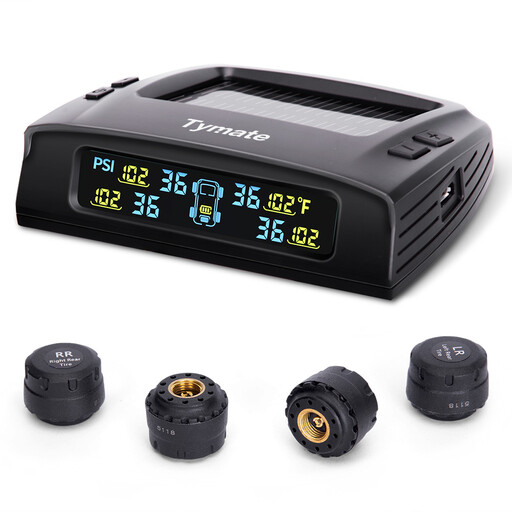
Why it suits this profile: A straightforward choice if you drive a car, SUV or compact motorhome and want to keep an eye on tyre pressure on longer journeys.
The 0–8 BAR range and four external sensors make the specifications clearer than a general marketing claim of “universal use”.
Colour LCD screen, automatic sleep mode, and pressure and temperature alerts, according to the product description.
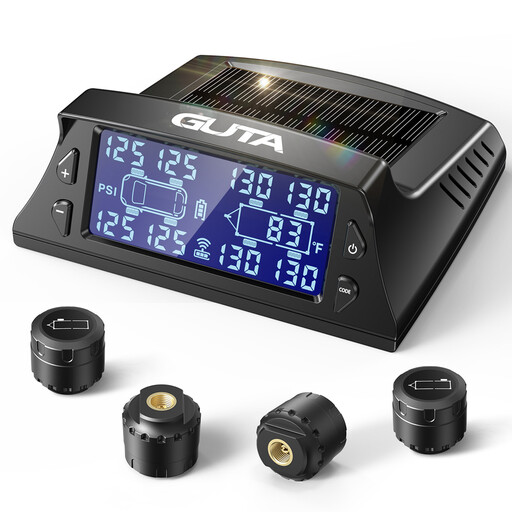
Why it suits this profile: A good option for motorhomes, trailers and vehicles where a wider pressure range and longer sensor battery life are desirable.
The product information states a wide pressure and temperature range, automatic calibration, and an alarm for rapid leaks or unusual readings.
0–13 BAR according to the specifications, four sensors, Type-C charging and a stated sensor battery life of around four years.
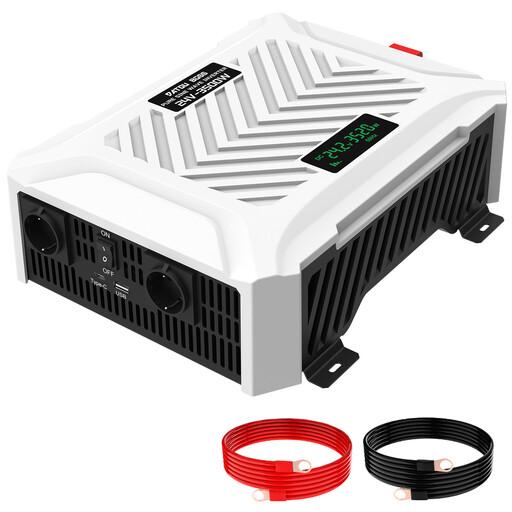
Why it suits this profile: Designed for users with a 24V battery system in a larger motorhome, boat, lorry or off-grid installation.
The product information distinguishes between 3500W continuous power and 7000W peak power. The device is specifically designed for 24V, not 12V.
Pure sine wave, LCD status display, aluminium casing, and protection against under- and overvoltage, overload and overheating, according to the product description.
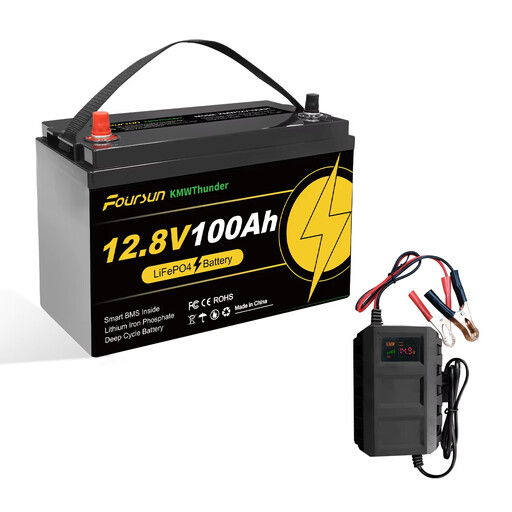
Why it suits this profile: A suitable option for campers who want to expand their 12V motorhome power supply without moving straight to a larger battery bank.
The nominal voltage, capacity, dimensions and maximum current are listed separately, making it easier to compare the battery with your charger and inverter.
12V, 100Ah and 1280Wh according to the product specifications, with a BMS and a stated IP67 rating.
We’ve put together a complete, up-to-date list of products that meet these strict selection criteria and the applicable European safety requirements.
First, choose between a 12V to 230V inverter and a 24V to 230V inverter. Then check the continuous power requirements of your appliances and their start-up surge. For sensitive electronics, a pure sine-wave inverter is generally the recommended product type, according to the product description. Always check the cable thickness, fuse and ventilation.
A TPMS isn’t automatically compulsory for every caravan, but it can provide useful information about tyre pressure and temperature. Check the legal requirements that apply to your vehicle and how you use it. Also consider the tyres’ maximum pressure, the number of wheels and the signal distance between the caravan and display.
Battery life depends on the charging profile, temperature, depth of discharge and usage. Foursun’s product information states more than 4500 cycles, but this is a manufacturer claim based on certain conditions, not a guarantee for every installation. Use a suitable charger and correctly rated fuse, and protect the battery from unsuitable temperatures.
