
Vandaag of morgen in huis

Kwaliteit gegarandeerd

Welkomstaanbiedingen ontgrendelen: GRATIS bezorging | Tot 80% korting | Gratis 30 dagen JoyPlus-proefperiode
Download de app
A motocross protective vest may seem simple at first glance: put it on, zip it up and ride. But models vary considerably in fit, the areas they protect and how comfortable they are to wear. A vest that feels right on a short ride may start to shift, dig in or get too hot on a long enduro ride.
The three most common pitfalls:
A motocross protective vest should fit snugly without restricting your movement. You should be able to bend, twist and move your arms without the vest riding up. A wide elasticated waistband with a hook-and-loop fastening is useful, as you can adjust it as you put the vest on.
Shoulder straps that run continuously are useful too. They let you adjust the position of the chest and back protection to suit your build. Elasticated sleeves with thumb holes can help stop the vest riding up while you ride. Ideally, wear a thin, quick-drying base layer underneath to reduce chafing and moisture build-up.
Check which parts of your body are actually covered. For many off-road riders, chest and shoulder protection, elbow pads, a back protector and extra waist or side protection are all worth considering.
According to the product description, the off-road protective gear available combines PE, EVA foam, TPU and an elasticated mesh fabric. The back segments are removable, and the back panel extends along the spine. This can be useful if you want to clean the protection or adjust the fit. The product description lists these materials and components; before buying, check the product page or label yourself to see whether a specific certification and protection class are stated.
A breathable motocross body protector should combine protection with sufficient airflow. Chest vents and an open mesh construction can help release heat, but they don’t automatically make a vest suitable for every weather condition.
The listed weights of the variants are around 1,24 to 1,27 kg. This is worth considering if you go on long rides or also use the vest for mountain biking, skateboarding or other outdoor sports. Removable pads make cleaning easier. According to the care instructions, remove the protectors before washing and hand-wash the vest in cold water. Then leave it to air-dry and avoid high temperatures.
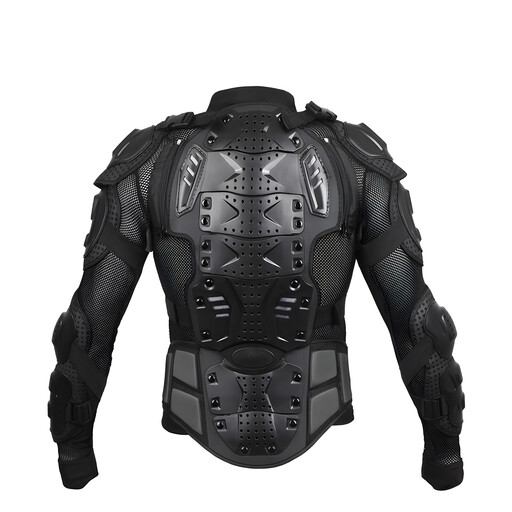
Why it suits this profile: This version is designed for adults looking for their first motocross protective vest, with adjustability and versatility as their main priorities. Size M is suitable if it matches your measurements on the size chart.
The shoulder straps, waistband and elasticated sleeves are adjustable. This helps prevent a loose fit and keep the pads from shifting.
According to the product description: PE/EVA/TPU components, mesh fabric, removable back and chest protectors, and a weight of around 1,24 kg.
Why it suits this profile: The size L version is for adults looking for full upper-body protection for off-road motorcycling, enduro or more intensive recreational use.
According to the product description, the back segments, chest pads and waist pads are removable and adjustable. This lets you tailor the gear more closely to your activity.
Features to note include extended back coverage, chest ventilation, a zip fastening with hook-and-loop closure, and protection around the chest, back, shoulders, elbows and waist.
Why it suits this profile: This version is designed for larger body sizes. The wide, adjustable waistband and shoulder straps are important if standard sizes don’t offer enough room to move.
The adjustable design gives you more room to achieve a snug fit. Always check your chest and waist measurements against the size chart.
The product details list a weight of around 1,27 kg, breathable mesh, upper-body protectors and suitability for motocross, enduro and other outdoor sports.
We’ve put together a full, up-to-date list of products that meet these strict selection criteria and the applicable European safety regulations.
That depends on the fit, ventilation and the protection standards listed for the product. A vest for motocross or enduro is often designed to fit snugly beneath an outer layer. Check that it sits comfortably under your protective motorcycle jacket and that the protectors stay in place.
There’s no set lifespan. Before every ride, check the vest for tears, misshapen hard shells, loose seams and damaged pads. After a heavy fall, inspect the product carefully and stop using it if you can see any damage. Follow the care instructions and don’t alter the protective structure yourself.
Choose a model with open mesh, ventilation openings and removable protectors. Wear a thin, quick-drying base layer and make sure the waist and shoulder adjustments fit snugly. More ventilation doesn’t automatically mean less protection, so check which areas are covered and which standards or certifications are actually listed.
