
Vandaag of morgen in huis

Kwaliteit gegarandeerd

Welkomstaanbiedingen ontgrendelen: GRATIS bezorging | Tot 80% korting | Gratis 30 dagen JoyPlus-proefperiode
Download de app
A motocross protective jacket with back protector needs to do more than look sturdy. Whether you’re motocross riding, enduro riding or mountain biking, you’ll encounter dust, sweat, impacts, unexpected movements and sometimes a fall. A model that fits loosely, offers little ventilation or only covers your back may disappoint in practice.
So don’t rely on terms such as “shockproof” or “full protection” alone. Check which parts of your body are actually covered, how the jacket can be adjusted and what information is provided on the product page.
A protective vest for motorcyclists should fit snugly without restricting your movement. If it rides up or shifts to the side while you’re riding, the protectors may not stay in place as well. A wide hook-and-loop fastening around the waist, adjustable shoulder straps and elasticated sleeves can help reduce this risk.
Bear in mind that “one size” or a loose fit won’t necessarily suit every body shape. Measure your chest, waist and height, then compare them with the seller’s size guide.
A motorcycle jacket with body protection can get warm if the protectors are attached to a non-breathable base layer. You’ll notice this quickly, particularly when riding slowly over technical terrain or in summer. Look for breathable motorcycle protection with mesh panels, ventilation openings and materials designed to wick away sweat.
Ventilation doesn’t automatically make a jacket suitable for rain. Check separately whether the product description mentions water repellency or waterproofing, and what types of fastenings are used.
Words such as “professional”, “extreme protection” and “premium” don’t tell you much on their own. Instead, check:
A product description is no substitute for a declaration of conformity. If a standard isn’t clearly stated, ask the seller before you buy.
For off-road riding, a separate back protector alone is often not enough. A back and chest protector covers several vulnerable areas and, when properly adjusted, stays better aligned with your body. Check whether the description mentions a segmented back protector, an extended spine protector, chest panels, and shoulder and elbow protection.
According to the product information, the protective jackets discussed here use a combination of PE or TPU, EVA foam, polyester and elasticated mesh. These materials serve different purposes: a hard shell helps distribute impact pressure, while foam and textiles provide cushioning, fit and comfort. The level of protection depends on the design, certification, fit and conditions of use.
When motocross or enduro riding, you’re constantly leaning forwards, moving to the side and standing up. A fixed, rigid construction can get in the way. Check whether the model has:
A close-fitting model is usually more practical than a loose vest, but it shouldn’t pinch at the chest, underarms or neck. If possible, wear the base layer you’ll use when riding while trying it on.
Depending on the size, the protective jacket weighs approximately 1,24 to 1,27 kg. This is worth considering on longer rides. Also check for ventilation openings around the chest and mesh fabric. According to the product description, the protectors are removable and the jacket should be hand-washed in cold water with mild detergent. Leave it to air dry and avoid high temperatures.
Before every ride, inspect the hard shells, seams, straps and foam sections. A heavy impact can cause internal damage that isn’t immediately visible. Don’t use the product further if a protector is cracked, deformed or has come loose; replace it instead.
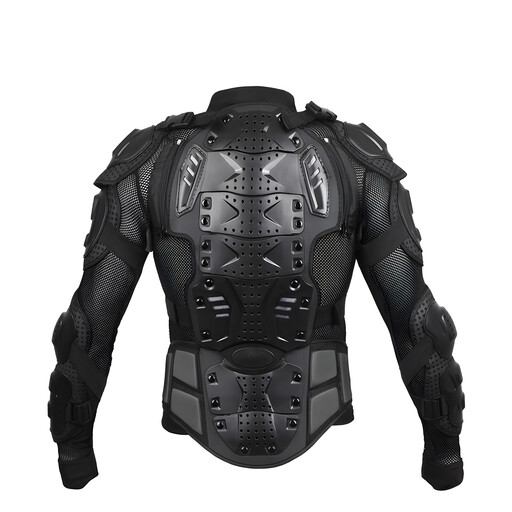
Why it suits this type of rider: This model is designed for adults looking for their first set of motocross body armour for off-road riding, cycling or other outdoor sports. Size M is a good starting point if your measurements fall within this size according to the size guide.
The adjustable shoulder straps and waistband help prevent the jacket from fitting loosely. The product information also lists chest, back, shoulder, elbow and waist protection.
Size M, removable protectors, mesh fabric and a combination of PE/TPU and EVA foam, according to the product description.
Why it suits this type of rider: This version is designed for riders who need more room around the chest and waist but still want adjustable points. Always check your actual body measurements against the size guide.
The continuous shoulder adjustment, elasticated sleeves and wide waistband are designed to help limit movement. The ventilation openings help balance the solid protective panels with airflow.
Size XXL, protection for the chest, back, shoulders, elbows, waist and spine according to the product information; weighs approximately 1,26 kg.
Why it suits this type of rider: Size L is a practical choice for adults who want protection for frequent enduro, motocross or mountain biking rides and need an in-between size.
According to the product description, the protectors are removable. This means you can care for the jacket and check the fit without having the protective panels permanently fixed in place.
Size L, zip and hook-and-loop fastening, breathable mesh construction, and suitable for motocross, enduro and a range of outdoor sports.
We’ve put together a complete, up-to-date list of products that meet these strict selection criteria and current European safety requirements.
It can be, provided the jacket offers enough freedom of movement and the protectors fit your body well. Pay particular attention to coverage of the chest, back, shoulders and elbows. Ventilation is also important for intense enduro riding, as you’ll often be active for long periods at low speeds.
Measure your chest, waist and height, then compare those measurements with the size guide for the specific product. Body armour should fit snugly, but mustn’t restrict your breathing or arm movements. Adjust the shoulder straps and waistband while adopting a riding position.
There’s no set lifespan that applies to every model. Check the vest before every ride and after every fall. Cracks, deformed hard panels, loose seams or worn hook-and-loop fastenings are all reasons to replace the product. Follow the care instructions too, and store the jacket somewhere dry, out of direct sunlight and away from high temperatures.
