
Vandaag of morgen in huis

Kwaliteit gegarandeerd

Welkomstaanbiedingen ontgrendelen: GRATIS bezorging | Tot 80% korting | Gratis 30 dagen JoyPlus-proefperiode
Download de app
A motion sensor light switches on automatically when someone enters its detection range. This is useful by the front door, on the driveway, in the hallway, bedroom, nursery, cupboard or garage. However, not every sensor light is suitable for every location. A product that looks ideal outdoors on paper may be too bright indoors. A solar outdoor light may stay on for less time than expected when mounted on a shady wall.
The following points will help you make a more informed choice and avoid common purchasing mistakes.
More light is not automatically more practical light. For a hallway or bedroom, 40 to 400 lumens may be sufficient, while a driveway or larger garden may require more light. Also consider the colour temperature:
A motion sensor light for a nursery therefore does not need to have the same brightness as a motion sensor light for a garden or driveway.
Check the IP rating rather than relying solely on the marketing text. IP44 means protection against splashing water and is suitable for many sheltered outdoor locations. It does not mean that the light can be exposed to a powerful jet of water or submerged.
For more exposed locations, such as an open façade or garden wall, IP65 may be a more suitable specification. Also always check the installation instructions and the information about rain, snow and direct water exposure.
A motion sensor detects movement within a specific range and at a particular angle. A sensor obstructed by a bush, fence or wall will be less effective. Passing cars, pets or moving branches can also cause the light to switch on unintentionally.
So pay attention to:
For hallway and bedroom lighting, a plug-in light, rechargeable LED light or magnetic cupboard light can be a practical choice. They generally do not require permanent wiring. An LED sensor night light provides focused illumination without the need to switch on a ceiling light.
For outdoor use, you can choose from:
A fixed 230V wall light must be connected by a qualified installer in accordance with the product information. Switch off the power before carrying out maintenance and follow local electrical regulations.
Solar lighting does not need to be connected to the electricity supply, but the solar panel must receive enough direct daylight. In winter, or on a north-facing shaded wall, the available lighting duration may vary.
A rechargeable light can be positioned more flexibly. However, check the charging connector, charging time and the fact that the light will need to be recharged regularly. A plug-in light works immediately, but you will need access to a socket.
A motion sensor responds to movement. A light sensor determines whether it is dark enough to activate the light. Products with both functions can prevent the light from switching on unnecessarily during the day.
With some sensors, the light threshold and delay can be adjusted. For example, the Aigostar PIR-360 specifies an adjustable sensitivity of 10 to 2000 lux and a delay of 10 seconds to 7 minutes. The product information states a maximum detection diameter of 6 metres, while the product name mentions 8 metres. Before buying, therefore, check which specification is relevant to your intended use.
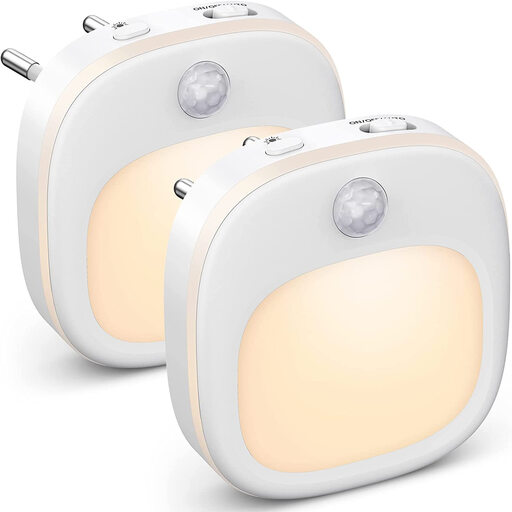
Why it suits this profile: This pair is practical for a hallway, bedroom, nursery or two dark passageways. The lights offer three colour temperatures and five dimming levels, allowing you to adjust the brightness to suit the room.
The dimming function prevents a small indoor space from being lit unnecessarily brightly. However, check the installation and power supply details on the product page.
2 lights, 1 W SMD LED per light, three colour temperatures and five dimming levels.

Why it suits this profile: This solar wall light is designed for an entrance, garden path or façade without a mains connection. It has a motion sensor, dusk sensor and two lighting modes.
The IP44 rating makes it clear that this is splash-resistant outdoor lighting, not a light that can be used underwater.
1000 lumens, 3000 K, solar power, two modes and an integrated motion and dusk sensor.

Why it suits this profile: For a driveway, garage, patio or larger garden area, this model offers three adjustable light heads and broad light distribution.
The IP65 rating is more specific than simply calling a product “waterproof”. Also position the panel where it will receive direct sunlight for charging.
According to the product description: 302 LEDs, 3000 lumens, 180° sensor angle, 60-foot detection distance and three lighting modes.
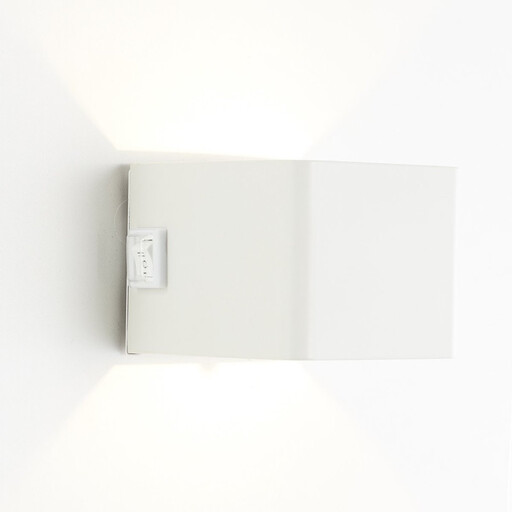
Why it suits this profile: This wireless outdoor light is also suitable for indoor use. The magnetic mounting and USB-rechargeable battery make it easy to move, for example between a balcony, hallway and garage.
There is no need to install wiring. With magnetic mounting, however, make sure the surface is flat and sturdy, and be aware of the risk of injury if the light comes loose.
300 lumens, 3000 K, integrated 4 W LED, IP44 and USB-rechargeable 18650 lithium-ion battery.
We have put together a complete, up-to-date list of products that fully meet these strict selection criteria and the applicable European safety regulations.
This depends on the sensor’s detection range and viewing angle. Position the light so that the route people take crosses the detection area, rather than leading directly towards the sensor. Check the recommended mounting height in the manual and make sure that branches, fencing and drainpipes do not obstruct the sensor.
An LED light generally uses little energy, particularly when it only switches on when movement is detected. Actual consumption depends on the wattage, the number of activations and the lighting duration. Solar lighting does not use mains electricity, but its performance depends on sunlight and the capacity of the integrated battery.
The service life varies depending on the light source, battery, installation location and maintenance. Product specifications may, for example, state an LED lifespan of 25,000 hours, but this does not guarantee the same lifespan for the complete light. Keep the solar panel and sensor window clean, prevent moisture beyond the stated IP protection and only replace the battery if permitted by the manufacturer.
