
Vandaag of morgen in huis

Kwaliteit gegarandeerd

Welkomstaanbiedingen ontgrendelen: GRATIS bezorging | Tot 80% korting | Gratis 30 dagen JoyPlus-proefperiode
Download de app
A light that only comes on when someone walks onto the driveway, up to the front door or into the garden is convenient and can help prevent unnecessary use. However, outdoor lighting with a motion sensor does not always perform well in practice. A sensor may respond too late, a solar outdoor light may stay on for less time in winter, and a high lumen rating does not automatically mean the light is distributed comfortably.
Use these checks to avoid a poor purchase and choose more confidently between an outdoor solar wall light, an LED outdoor light, pathway lighting or a powerful solar security light.
Brands sometimes advertise a range of several metres, but actual performance depends on the mounting height, direction of movement and obstacles. A PIR sensor often responds differently when someone walks straight towards the light than when they pass from the side.
So check:
A sensor aimed at a busy pavement or public road may also switch on unnecessarily often.
An IP44 outdoor light is protected against splashing water, but is not designed for immersion or direct, powerful jets of water. IP44 may be suitable for a sheltered entrance. On an exposed wall or in a location where rain and dirt hit the light directly, IP65 outdoor lighting may be more practical.
Consider the entire installation: cable entries, screws and the wall itself must also be suitable for outdoor use.
Lumens indicate the total amount of light, but not how widely or evenly it is distributed. Soft light is often enough for a pathway. For a garage, wide driveway or back garden, you are more likely to need a broad beam and a higher light level.
A light rated at 180 to 500 lumens may be suitable for entrance or accent lighting. Models rated at 1,000 to 4,000 lumens are more suited to functional or security lighting. Also check the light colour: 2700K to 3000K produces warm white outdoor lighting, while 5000K to 7000K looks noticeably cooler and brighter.
An outdoor solar light does not need a fixed power connection. This makes installation easier on a balcony, garden shed, fence or wall without an available cable. However, performance depends on direct sunlight, the angle of the panel, dirt on the panel and the season.
For solar lighting, check:
A model that, according to the product description, can operate for 8 to 12 hours after 6 to 8 hours of sunlight, such as the UME pathway lights, remains dependent on conditions at the installation site. In the dark Dutch winter, the operating time may be shorter.
An automatic outdoor light is more convenient when you can adjust the activation time and light sensitivity. With some sensors, you can set the delay from a few seconds to several minutes. This prevents the light from switching off too quickly when, for example, you are looking for your keys.
According to the product information, the Aigostar PIR-360 offers an adjustable delay from 10 seconds to 7 minutes and light sensitivity from 10 to 2000 lux. This is a separate sensor for suitable lights and electrical loads; installation must be carried out according to the instructions and applicable electrical regulations.
For an entrance or patio, 2700K or 3000K usually creates a relaxed atmosphere. For a driveway or security function, cooler light can provide more contrast, but it may also feel harsher.
Regular maintenance of solar garden lighting is simple but important:
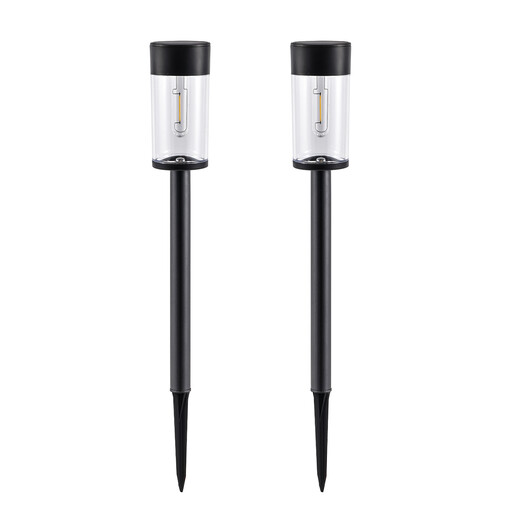
Why it suits this profile: This set is designed for a garden path, border, lawn edge or driveway and does not require fixed wiring.
The product information states IP65, automatic operation via a light sensor and a recommended location receiving 6 to 8 hours of direct sunlight.
Two lights per pack, 10 lumens per light, 3000K warm white light and ground installation with the supplied spikes.

Why it suits this profile: A practical outdoor solar wall light for an entrance, balcony or patio, with the familiar combination of motion and dusk sensors.
The stated IP44 rating makes it clear that the light is splashproof, but not suitable for immersion or direct water jets.
1000 lumens, 3000K warm white light, two lighting modes and installation without connection to the mains.

Why it suits this profile: This solar security light is designed for a wide driveway, garage, back garden or another location where plenty of light is needed.
The product specifications state IP65, an adjustable light head and a detection range of 8 metres for direct approach and 16 metres from the side.
4000 lumens, 3000K light colour, motion and dusk sensors, and a stated capacity of up to four nights on a full battery.
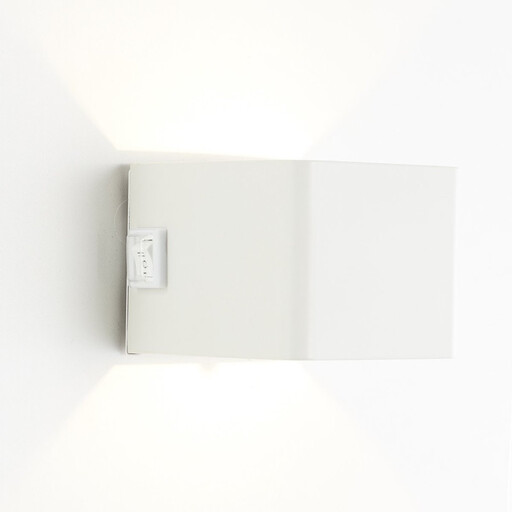
Why it suits this profile: The wireless magnetic mounting is useful for a balcony, canopy, storage area or rented home where you do not want to install fixed wiring.
The product information states IP44 and warns that the light must not be immersed. Also check that the magnetic surface is flat and sturdy enough.
300 lumens, integrated LED, 3000K warm white light and power from a rechargeable battery with USB cable.
We have compiled a complete, up-to-date list of products that fully meet these strict selection criteria and the applicable European safety regulations.
Yes, but operating time may decrease because of shorter days, a lower sun and cloudy weather. Position the panel towards direct sunlight as much as possible and clean it regularly. For essential lighting, you could consider a model with a larger battery or an additional mains-powered light.
Always follow the brand’s installation instructions. Generally speaking, the sensor should be mounted high enough to remain out of reach, but low enough to detect people reliably. After installation, test the route people will take, the detection angle and the activation time before permanently finishing the installation.
During normal use, a solar light does not draw electricity from the mains. Recurring costs mainly involve maintenance and, in the longer term, possible battery replacement. With a mains-powered LED outdoor light, you can estimate consumption using the wattage, operating time and number of hours of use per day.
