
Vandaag of morgen in huis

Kwaliteit gegarandeerd

Welkomstaanbiedingen ontgrendelen: GRATIS bezorging | Tot 80% korting | Gratis 30 dagen JoyPlus-proefperiode
Download de app
A night light with a motion sensor can automatically illuminate a dark hallway, bedroom or staircase as soon as someone walks past. This is useful when you do not want to search for a light switch at night. However, not all sensor lights are suitable for the same space.
The biggest buying mistakes usually stem from three simple misunderstandings:
For an automatic night light in a bedroom, a motion sensor is useful when you only need light while getting up. A light sensor is more suitable when you want a soft light that switches on automatically when there is little ambient light.
Pay attention to the stated range. A model with a detection distance of, for example, 3 to 5 metres works differently from a lamp that only detects movement directly in front of the device. Position the lamp so that the sensor area is not blocked by a cupboard, curtain or decoration.
A sensor night light with a separate constant-light mode offers extra flexibility. You can choose between automatic activation and continuous lighting.
Light output is measured in lumens (lm). For finding your way around a bedroom, nursery or toilet, a low light output is often sufficient. A staircase, pantry or workspace benefits from brighter light.
Colour temperature is measured in kelvin (K):
A dimmable night light means you do not need a different lamp for every situation. Also check whether dimming is stepless, available in set levels or controlled by touch.
A plug-in lamp is ready to use straight away and does not need charging. A rechargeable night light or cordless night light gives you more freedom when lighting cupboards, staircases and areas without a nearby socket. The trade-off is that you will need to charge the battery regularly.
Also check:
For outdoor use, you need a suitable outdoor light with a motion sensor. A wall light with a motion sensor for a façade or entrance may also require a fixed connection and installation by a qualified installer.
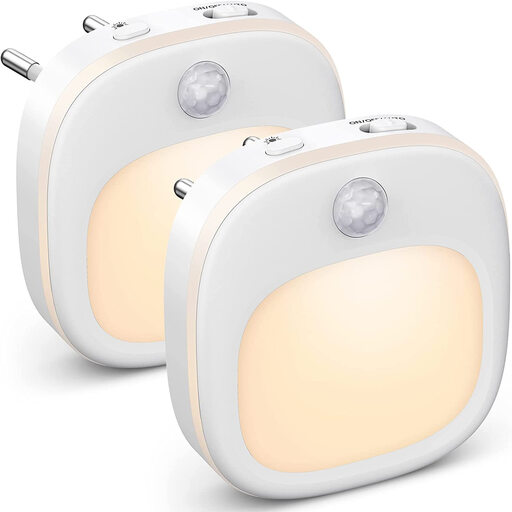
Why it suits this profile: The set of two lamps is practical for, for example, a bedroom and hallway. With three colour temperatures and five dimming levels, you can adjust the lighting to suit the room.
You are not limited to one fixed light colour or brightness level. Before buying, however, check the exact sensor and power details on the product page.
2 lamps, three colour temperatures and five dimming levels; 1 W power and 100–240 V according to the product listing.
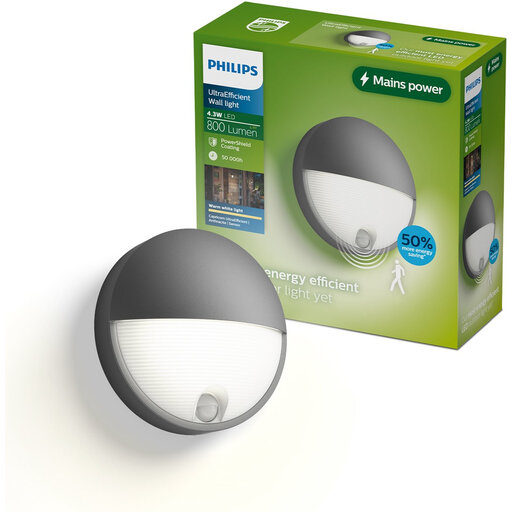
Why it suits this profile: This model is designed for an entrance, balcony or garden and combines a motion sensor with a dusk sensor. According to the product details, the integrated LED produces 800 lumens at 2700 K.
The IP44 rating clearly distinguishes it from a purely indoor model. IP44 means protection against splashing water, not complete waterproofing.
2700 K warm white, 800 lumens, integrated LED and motion plus dusk sensor according to the product information.
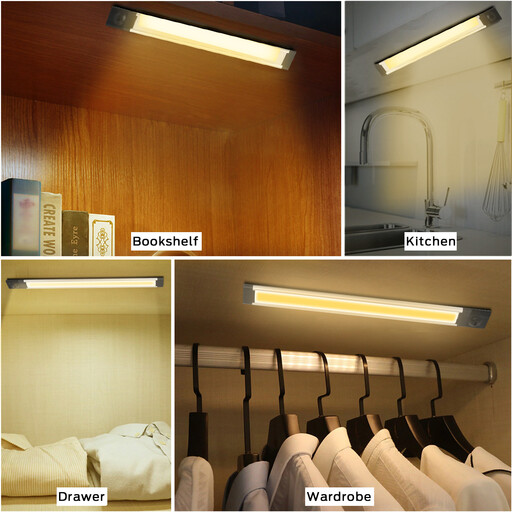
Why it suits this profile: The combination of 400 lumens, USB charging and magnetic mounting is ideal for cupboards, staircases, garages and areas without a conveniently located socket.
The model is not limited to one fixed location: magnetic mounting and hooks allow installation without drilling. Keep the device away from moisture during use.
36 SMD LEDs, 400 lumens, colour temperature of 2800–6500 K, USB rechargeable and gesture dimming according to the product description.
We have put together a complete, up-to-date list of products that fully meet these strict selection criteria and the applicable European safety regulations.
Place the lamp at a height where the sensor has a clear view of the route people take. Aim the detection area towards the point where someone enters, rather than at a window or heat source. Test the lamp in the dark and check that the brightness is sufficient without causing glare.
The operating time depends on the battery capacity, brightness and number of activations. A lamp that only switches on briefly when movement is detected uses less energy than a model that stays on continuously. Therefore, check the stated operating time and charge the device before the battery runs completely flat.
A 1-watt lamp theoretically uses 1 watt-hour for every hour it is switched on. When operated by a sensor, an LED night light usually stays on for less time than a continuously lit lamp. Actual consumption depends on the selected brightness, operating time and number of activations.
