
Vandaag of morgen in huis

Kwaliteit gegarandeerd

Welkomstaanbiedingen ontgrendelen: GRATIS bezorging | Tot 80% korting | Gratis 30 dagen JoyPlus-proefperiode
Download de app
A night light with a motion sensor can be useful in the bedroom, nursery, hallway, bathroom or wardrobe. The light comes on when you get up or walk past, without having to find a switch. However, not every model is suitable for every room. A light may have a motion sensor but no light sensor, for example. This means it could switch on unnecessarily during the day.
Terms such as “energy-efficient”, “soft light” and “long battery life” also mean little without specific specifications. So, before buying a rechargeable night light or LED night light, pay particular attention to the following points.
A motion sensor responds to movement within a certain distance. A light sensor measures the amount of ambient light. Both functions are useful at night: the light then only switches on when it is dark and when someone moves.
A night light with a light sensor that responds only to darkness may remain on throughout the night. This may be desirable in a nursery, but less convenient in a hallway or wardrobe. So, check whether the product description specifies a detection range, lux value and operating mode.
A high lumen count is not automatically better. For a bedroom or nursery night light, a lower light level is often more comfortable than a bright beam. Check the stated luminous flux in lumens, the colour temperature and whether the light can be dimmed.
Warm white light of around 2700 to 3200 K generally creates a softer lighting effect. Cool white light is more practical when you want to find something in a cupboard or on the stairs. A dimmable night light with multiple colour temperatures offers greater flexibility, but often comes with more control options too.
With a wireless night light, battery capacity is important, but it is not enough to assess the actual operating time. Battery life depends on the brightness, the selected mode and how often the sensor is activated.
Also check:
For a hallway light, a plug-in model may be more practical. For sensor cupboard lighting or a night light on a shelf, a rechargeable version is often easier to position.
With a PIR motion sensor, the range is usually given in metres. The available product information lists a range of 3 to 5 metres for some models. Check whether this range is suitable for where you plan to install the light. A wide range is not always necessary in a narrow hallway; in a bedroom, however, a sensor on the other side of the room may be useful.
The lux value indicates how dark it needs to be before the sensor becomes active. A setting of, for example, 20 lux is intended for a dark environment. A model with a light sensor of up to 40 lux may respond earlier, depending on the amount of ambient light.
Pay attention to the difference between models designed for orientation and those intended for task lighting:
These values are product specifications taken from the product descriptions. Perceived brightness also depends on positioning, light distribution and the colour of the walls and furniture. According to the product description, a PMMA light guide may help provide even light distribution, but always check that the light does not shine directly into your eyes.
A light with a magnet, hook or adhesive strip can be positioned flexibly without drilling. However, check that the surface is clean and suitable, and that the light remains securely attached. A falling device is particularly undesirable in a child's room.
The models listed are intended for indoor use. Keep electrical lights and charging ports away from water and moisture, especially in a bathroom. Clean the housing with a soft, dry cloth unless the product manual states otherwise. Only use the specified USB charger and do not dismantle the device.
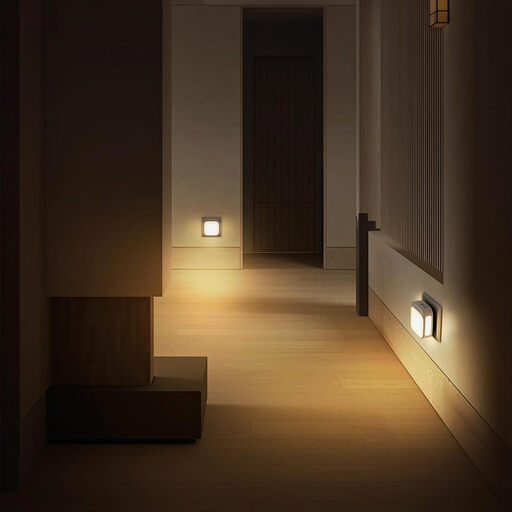
Why it suits this profile: This two-piece plug-in model is suitable for anyone who wants to light a bedroom, nursery or hallway without charging or installation.
The product description mentions an automatic light sensor, an activation threshold of up to 20 lux and a dimming range of 10% to 100%. This makes the key settings easy to verify.
2 lights, 0,3 W power, warm white light of 2800-3000 K and a 110-240 V connection according to the product information.
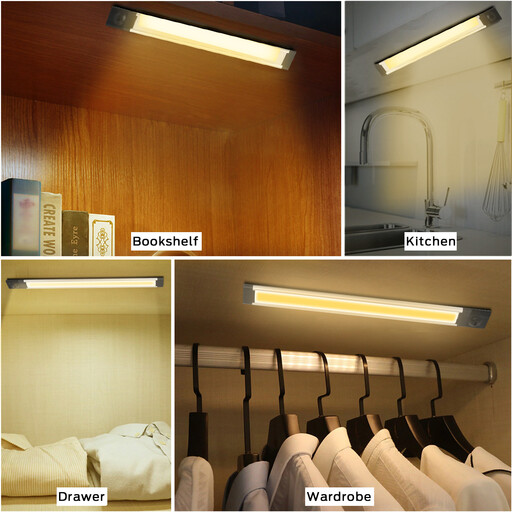
Why it suits this profile: This compact model is ideal for users who want to use one light in several places, such as a wardrobe, stair wall, garage or bedroom.
The product description specifies a dimming function, a range of 2800-6500 K and installation with a magnet or hooks. Before buying, check that the described gesture control suits the way you intend to use it.
36 SMD LEDs, a stated luminous flux of 400 lumens, aluminium and ABS, plus dimensions of 26 x 4 x 1 cm according to the product information.

Why it suits this profile: The long, flat design is intended for kitchen cupboards, wardrobes and shelves where a round night light may provide less even coverage.
The product description specifies a PIR sensor with a 3-5 metre range, three colour temperatures and installation with an adhesive strip without drilling.
41 LEDs, a built-in 1100 mAh battery, USB charging and two lights per set. Dimensions per light: 300 x 38 x 10 mm.
We have put together a complete, up-to-date list of products that fully meet these strict selection criteria and the applicable European safety regulations.
Position the light where the sensor has a clear view of the route you walk along. Do not point it directly at a strong light source and do not cover the sensor. After installation, test whether the light responds at the desired distance. With a magnetic model or adhesive strip, the surface must be dry, clean and flat.
This varies depending on the battery, brightness level and number of activations. A product description may, for example, specify an operating time of up to 10 hours in sensor mode, but this is not a fixed operating time for every situation. Charge the light using the specified USB requirements and regularly check that the battery still has sufficient capacity.
A light with low power consumption uses very little electricity. A 0,3 W model uses less electricity when left on continuously than a 1 W light, but with sensor operation the light usually only comes on for short periods. The actual cost depends on the power rating, operating time and your electricity tariff. A rechargeable model shifts the energy use to charging via USB; total consumption still depends on how often you use the light.
