
Vandaag of morgen in huis

Kwaliteit gegarandeerd

Welkomstaanbiedingen ontgrendelen: GRATIS bezorging | Tot 80% korting | Gratis 30 dagen JoyPlus-proefperiode
Download de app
Navigating your home at night without flipping on the main switch is a universal challenge. Whether you're getting a glass of water, visiting the restroom, or checking on the kids, a bright light disrupts your sleep. A motion sensor night light seems like the ideal solution. It turns on when you need it and switches off automatically. However, not all models are equally practical. Common problems can stand in the way of a good purchase.
As a Joybuy Product Recommendation Officer, I'll help you see past the marketing jargon. We'll focus on the specifications that truly matter, so you can choose a light that does its job without causing frustration.
Before you make a choice, it's wise to know what often goes wrong. Many night lights look great at first glance but have hidden drawbacks.
rechargeable night light sounds convenient, but if you have to charge it every two days, it quickly becomes a tedious chore. Short battery life is a common complaint, often caused by insufficient battery capacity.kids' night light.To avoid the pitfalls mentioned above, there are a few technical details to pay attention to. These determine whether a night light is truly functional for your situation.
Most night lights use a combination of sensors to operate efficiently.
night light with a dusk-to-dawn sensor measures ambient light. It ensures the lamp only turns on when it's dark enough (often below a certain LUX value). This prevents the light from activating unnecessarily during the day and saves energy.A good combination of both sensors ensures the light only turns on when there is movement and it is dark.
The choice of power source depends on where you want to use the light.
wireless night light offers the most freedom. You can place it anywhere. Pay close attention to the battery capacity (measured in mAh). A model with 500 mAh will last significantly shorter than a model with 1200 mAh or more.The quality of the light is crucial for a good night's sleep.
dimmable night light is a major advantage. It allows you to adjust the brightness to suit the environment. For a child's room, you might want a very soft glow, while a bit more light in the hallway can be practical.Based on these criteria, we have selected a number of products that suit different user profiles.
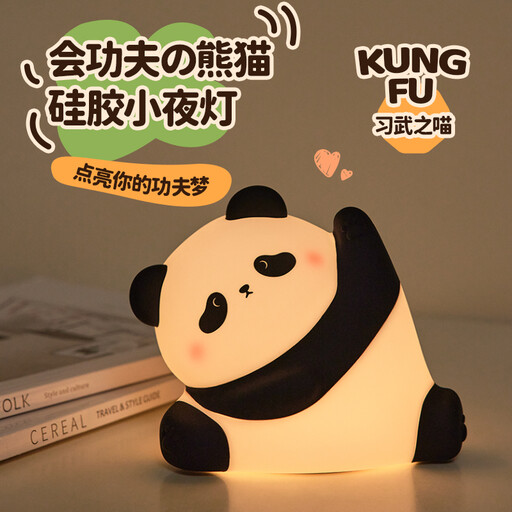
Why This Fits Their Persona: This light is designed with children in mind. It's wireless and rechargeable, so there are no cords near the bed. The touch control is easy for both parents and children to use.
The material is soft, child-safe silicone. The 3-step dimming function avoids the pitfall of overly bright light that disrupts sleep. The 1200mAh battery provides a solid runtime.
Made of food-grade silicone; 3-step touch dimming; USB rechargeable.
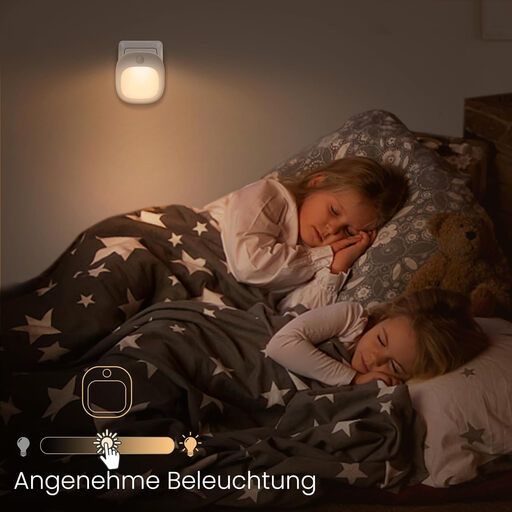
Why This Fits Their Persona: Ideal for those who need safe lighting in multiple areas of the house, such as the hallway, toilet, or landing. As it's a set of two, you can immediately equip several strategic locations with light.
This model combines a motion sensor with a light sensor (≤20 LUX), preventing it from turning on unnecessarily. With 3 colour temperatures and 5 dimming levels, you can avoid light that is too bright or cold. The 500mAh battery is suitable for sensor mode.
Set of 2; rechargeable and wireless; adjustable colour temperature (warm, cool, mixed) and brightness.

Why This Fits Their Persona: This ultra-thin `cabinet light with sensor` is specifically designed for places where a standard night light is too bulky, such as in a wardrobe, kitchen cabinet, or under a shelf.
The PIR sensor provides instant illumination when opening a cabinet. The 1100mAh battery is substantial for this size, avoiding the pitfall of constant recharging. Installation with adhesive strips is simple and requires no tools.
Ultra-thin design (10 mm); powerful 1100mAh battery; 3 adjustable colour temperatures; simple, drill-free installation.
A night light is a small but important addition to your home. If the options above aren't exactly what you're looking for, check out our full range.
This depends heavily on the battery capacity (mAh) and how often the sensor is activated. A light in a busy hallway will run out of battery faster than one in a guest room. Models with a capacity of 1000mAh or more typically last several weeks to months in sensor mode before needing a recharge. Always check the manufacturer's specifications.
Place the light at knee to hip height for good motion detection. Aim the sensor towards the walking path. Avoid placing it directly next to heat sources (like a radiator) or opposite a window, as this can interfere with the sensor and lead to unwanted activation.
Yes, an LED night light is very energy-efficient. LEDs consume significantly less power than traditional incandescent bulbs and have a much longer lifespan. A model with a power rating of 0.5W to 1W will have a negligible impact on your energy bill, even if it turns on multiple times each night.
