
Vandaag of morgen in huis

Kwaliteit gegarandeerd

Welkomstaanbiedingen ontgrendelen: GRATIS bezorging | Tot 80% korting | Gratis 30 dagen JoyPlus-proefperiode
Download de app
A motion sensor night light seems like a simple purchase. It turns on when you approach and off when you leave. Yet, there are pitfalls that lead many people to buy a product that is irritating, impractical, or consumes unnecessary power. Whether you want to safely navigate to the bathroom at night, need a soft light for the nursery, or want to prevent tripping hazards on the stairs, making the right choice is crucial.
As a Product Recommendation Officer at Joybuy, I see daily which specifications make the difference between a helpful tool and a source of frustration. In this guide, we'll discuss the most common purchasing mistakes and what you should look for to find a model that truly works for you.
Before we look at solutions, it's important to recognise the problems. Many night lights look the same at first glance, but the details determine the user experience.
To avoid the problems mentioned above, you can focus on a few concrete specifications. These determine whether an automatic night light is a good investment.
The power source determines flexibility and operating costs.
A good night light adapts to its surroundings. Two features are essential here:
dimmable night light is indispensable. It allows you to adjust the brightness: soft for the bedroom, slightly brighter for hallway orientation lighting or on the stairs.The quality of the sensor determines its ease of use. Pay attention to the following specifications:
LED night light with sensor will then only turn on when it is actually dark in the room (usually below 20 LUX), which prevents unnecessary power consumption during the day.Based on the criteria above, we have selected a number of products that suit specific needs.

Why This Fits Their Persona: Parents need a safe, soft, and reliable light source that won't disturb sleep. This rechargeable model is cord-free, can be placed anywhere, and its adjustable light colour and brightness are ideal for nighttime feedings or check-ins.
The ability to select a warm white light (2800-3200K) and dim the brightness across 5 levels prevents the issue of overly bright or harsh light that can wake a child.
Built-in 500mAh battery with USB charging. Three colour temperatures and five dimming levels provide complete control.

Why This Fits Their Persona: Safely illuminating a long hallway, staircase, or dark closet requires a wide beam of light. This 30 cm long, slim strip provides even illumination over a larger area than a standard point light.
The wide light strip avoids the pitfall of a single, weak point of light. It illuminates the floor evenly, effectively reducing tripping hazards in hallways and on stairs.
Ultra-slim design (10 mm) and a powerful 1100mAh battery for long-lasting use. Drill-free installation with the included adhesive tape.
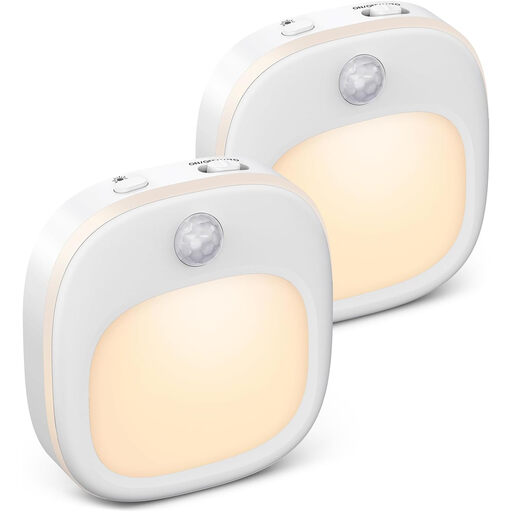
Why This Fits Their Persona: For those who want maximum freedom without thinking about recharging. Ideal for rental homes, basements, attics, or other areas where outlets are scarce. Just pop in the batteries, and it works.
This battery-powered model bypasses the reliance on outlets or the need to recharge, a common frustration with other models. You can place it wherever you want, without limitations.
Battery-operated for maximum placement freedom. Still offers advanced features like 5 dimming levels and 3 colour temperatures.
We have curated a complete, up-to-date list of products that fully meet these strict selection criteria and current safety standards.
This depends heavily on the model and usage. A model with a 500mAh battery, like the recommended light for the nursery, can often last for weeks or even months in sensor mode before needing a recharge, depending on how often it's activated. Models with a larger battery (e.g., 1100mAh) will naturally last longer.
For orientation lighting in a hallway or on a staircase, a low position (about 30-50 cm from the floor) is often most effective. This illuminates the floor well without the light shining directly into your eyes. Do not aim the sensor at heat sources like a radiator or at windows where movement from outside could be detected.
Yes, most night lights use a passive infrared (PIR) sensor that responds to heat and motion. A pet can therefore activate the sensor. If you want to prevent this, you can place the light slightly higher so that the animal can walk underneath it without being detected.
