
Vandaag of morgen in huis

Kwaliteit gegarandeerd

Welkomstaanbiedingen ontgrendelen: GRATIS bezorging | Tot 80% korting | Gratis 30 dagen JoyPlus-proefperiode
Download de app
A light with a motion sensor can be useful in a dark hallway, cupboard, entrance, garden or on a balcony. The light switches on as soon as movement is detected, so you do not have to search for a switch. However, not every model is suitable for the same space. A light for a kitchen cupboard has different requirements from a solar outdoor light with a motion sensor by the driveway.
If you only look at the number of LEDs or a low price, you may run into practical problems. Below, you can find out what to look for and which popular options suit different situations.
A product with a high lumen output may be bright enough for a driveway, but uncomfortable in a bedroom or cupboard. For a night light, a softer brightness is often more practical. So do not just look at the number of LEDs. Also consider lumens, colour temperature and dimming options.
Warm white light around 2700 to 3000 K generally creates a softer feel. Cool white light around 5000 to 7000 K is more functional when you want to illuminate a drawer, worktop or storage area.
An IP44 outdoor light is protected against splashing water, but is not designed for immersion or direct water jets. A model with IP65 offers a higher level of protection against dust and water jets according to its stated classification. The installation location remains important: position a solar light so that rainwater does not collect on seams or connections for long periods.
Also check that the solar panel receives enough direct daylight. On a north-facing wall, beneath a balcony or behind dense foliage, charging performance may be reduced.
A rechargeable LED light does not need a permanent mains connection, but it does need to be recharged regularly. With solar garden lighting, the available operating time depends on factors including sunlight, the season, operating mode and battery capacity.
For a wireless model, check the charging method, battery capacity and mounting system. A light that only stays in place with a small magnet needs a flat, sturdy surface.
A PIR sensor responds to movement within a specified range. For various cupboard lights in this range, that range is around 3 to 5 metres. This is sufficient for a cupboard, hallway or small entrance, but may be limited for a wide driveway.
Also check whether the sensor only works in the dark. Some models combine a motion sensor with a day/night sensor, so the light does not switch on unnecessarily during the day. An adjustable lighting duration or several operating modes can make the light more practical to use.
A USB-rechargeable light is a flexible choice for indoor use. A built-in 1100 mAh battery, as found in certain cupboard lights, can be charged via a laptop, power bank or USB charger. A smaller 500 mAh model is mainly suitable for short-term use as an LED night light.
For outdoor use, solar models offer installation without wiring. Check the positioning instructions and keep the solar panel clean. A fixed wall light with an E27 fitting works differently: it needs a 230 V connection, and professional installation may be required.
Measure your cupboard, shelf or wall beforehand. An ultra-thin light measuring 400 × 38 × 10 mm, for example, fits inside a narrow kitchen cupboard, while a larger outdoor light needs a more secure wall mounting.
Also consider:

Why it suits this profile: This set contains two compact lights, suitable for a kitchen cupboard, wardrobe or hallway, for example. According to the product information, the lights can be mounted with tape without drilling.
The 30 cm length and 10 mm profile make this light suitable for narrow spaces. The PIR sensor has a stated range of 3 to 5 metres.
Two lights per pack, three colour temperatures and a built-in 1100mAh battery with USB charging.

Why it suits this profile: This solar wall light with a motion sensor is designed for a wall, balcony, patio or entrance where you do not want a power cable.
The product information states an IP44 classification. This makes the light suitable for splashing water, but not for immersion or direct water jets.
Integrated solar power, two lighting modes, warm white light at 2700 K and a motion sensor.

Why it suits this profile: This model is designed for larger outdoor areas such as a driveway, garden, garage or patio where broad light coverage is desirable.
The stated IP65 classification provides a higher level of protection than IP44. Positioning the light where it receives enough direct sunlight is still necessary for charging.
302 LEDs, a stated light output of 3000 lumens, three lighting modes and three adjustable light heads.
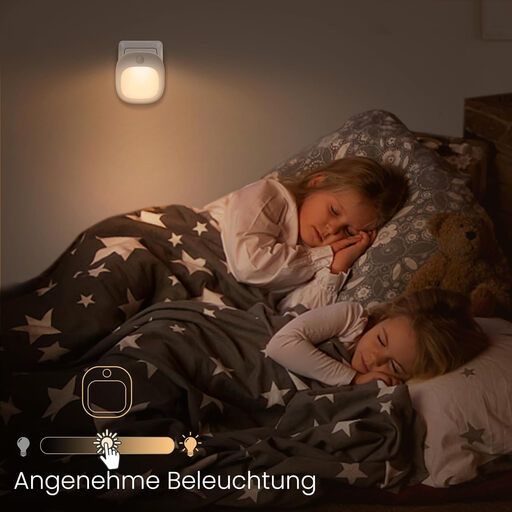
Why it suits this profile: This compact set is practical for a bedroom, hallway, child’s bedroom or cupboard where soft light is preferred without permanent mounting.
The light has five brightness levels and three colour temperatures. This allows you to adjust the brightness to suit the room, rather than relying on a single, permanently bright setting.
500mAh battery, USB charging, sensor range of 3 to 5 metres and a stated operating time of up to 10 hours in sensor mode.
We have put together a complete, up-to-date list of products that fully meet these strict selection criteria and the applicable European safety regulations.
This depends on the power supply and mounting method. Cupboard lighting with a sensor often uses tape, magnets or hooks. A rechargeable LED light should first be charged via USB. Install a solar outdoor light with a motion sensor in a location with sufficient daylight. A fixed 230 V wall light should be connected by a qualified installer in accordance with local regulations.
The operating time per charge varies depending on the model, brightness level and number of activations. With a solar light, the season and amount of sunlight also play a role. With a USB model, battery capacity partly determines how often charging is needed. Also check the stated lifespan of the integrated LED; this does not automatically indicate how long the battery will last.
An LED light generally uses little energy, but actual consumption depends on wattage, brightness and operating time. A sensor can reduce unnecessary use by switching the light on only when movement is detected. Solar models do not use mains electricity, while rechargeable lights need energy when charging via USB. For fixed lighting, check the wattage; for battery-powered or solar models, look at the battery specifications.
