
Vandaag of morgen in huis

Kwaliteit gegarandeerd

Welkomstaanbiedingen ontgrendelen: GRATIS bezorging | Tot 80% korting | Gratis 30 dagen JoyPlus-proefperiode
Download de app
A light that turns on automatically when you come home in the dark or deters unwanted visitors. That's the convenience of a motion sensor light. However, the reality can be different: an outdoor light that fails after a single autumn shower, a sensor that reacts to the neighbour's cat, or a cabinet light with a constantly dead battery.
Before you make a purchase, it's wise to know the potential pitfalls. Many models are advertised with features that disappoint in practice. Here are the three most common problems:
Fortunately, these problems can be avoided by paying attention to a few key specifications.
You don't need to comb through a technical manual to make a smart choice. Focus on the following three points, and you'll have enough information to prevent a bad purchase.
The IP rating (Ingress Protection) indicates how well a device is protected against dust and moisture. For an outdoor light with a sensor, this is crucial.
The power source determines the installation and maintenance.
Not every light serves the same purpose. The amount and colour of the light are decisive for its function.
Based on these criteria, we have selected a number of products that suit different needs.

Why This Fits Their Persona: Perfect for those who want instant, hassle-free light in a wardrobe, drawer, or pantry. This wireless lamp is USB-rechargeable, and its magnetic attachment makes installation a matter of seconds, with no drilling required. Ideal as a cabinet light with a sensor.
The rechargeable battery eliminates the need to constantly replace disposable batteries. The sensor is specifically designed for short distances, preventing it from activating unnecessarily.
Ultra-slim design (less than 1 cm thick) and simple magnetic mounting. Rechargeable via a standard USB-C port.

Why This Fits Their Persona: For those who want to powerfully illuminate a driveway, garden path, or back entrance. This security light combines a very high light output (4000 lumens) with an efficient solar panel and a reliable sensor. No electricity costs and no hassle with cables.
The IP65 rating guarantees that the lamp can withstand the heaviest downpours. According to Philips, the efficient battery provides light for several nights even after a full charge, which bypasses the pitfall of a quickly depleted battery in a solar-powered light.
Extremely high light output (4000 lm) for maximum visibility. Large detection range and a robust, weatherproof housing.
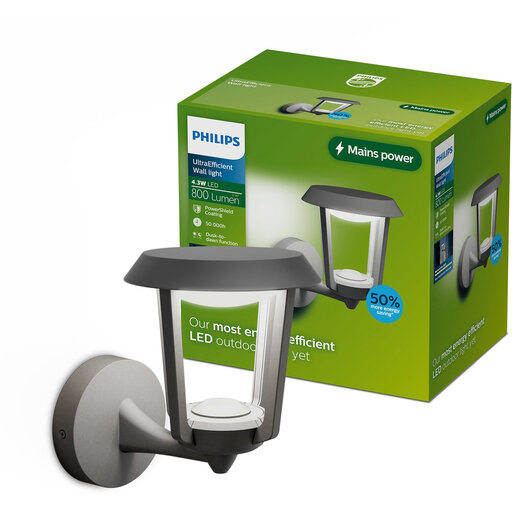
Why This Fits Their Persona: This wall light with a sensor is for those who don't want to sacrifice style for functionality. Its modern lantern design and warm white light (2700K) create an inviting atmosphere at the front door or on the patio, while the sensor provides convenience and security.
With an IP44 rating, this lamp is suitable for sheltered outdoor areas, which avoids the pitfall of inadequate weather resistance. The integrated Philips LED technology is known for its long lifespan, so you won't be left with a defective lamp anytime soon.
Stylish design with high-quality aluminium and a corrosion-resistant coating. Emits an atmospheric, warm white light (800 lm).
We have compiled a complete, up-to-date list of products that fully meet these strict selection criteria and safety regulations.
1. Can I adjust the sensitivity of a motion sensor myself? Yes, with many outdoor lights, particularly higher-end models, you can adjust the sensitivity and the duration the light stays on. This is often done with small dials on the sensor itself. This allows you to prevent the lamp from reacting to small animals or moving branches and lets you control how long the light remains on after detection. Always check the product description for these specific features.
2. How long does a solar-powered light last on a single charge? This depends heavily on the quality of the solar panel and the capacity of the battery. Cheaper models may struggle to last the entire night after a cloudy day. Higher-quality models, such as the Philips Zyren, can function for up to four nights on a single full charge, according to the manufacturer. Performance in winter will generally be less than in summer.
3. Is an outdoor light with an IP44 rating really sufficient for a wet climate? Yes, provided the lamp is installed in a sheltered location. Think of a spot under the eaves, in a porch, or under a carport. In these locations, the lamp is protected from direct, heavy rainfall. For a lamp that is fully exposed to the elements, such as on a freestanding shed wall or fence, a higher protection rating like IP65 is strongly recommended.
