
Vandaag of morgen in huis

Kwaliteit gegarandeerd

Welkomstaanbiedingen ontgrendelen: GRATIS bezorging | Tot 80% korting | Gratis 30 dagen JoyPlus-proefperiode
Download de app
A light that turns on automatically when you walk in. No more fumbling for light switches in the dark, whether it's in the hallway, the closet, or on the driveway. A motion sensor light offers convenience, security, and helps save energy. But the market is flooded with options, and not every sensor light is a smart purchase.
Many people fall into the same traps: they buy a light with an unreliable sensor, an impractical power source, or a model that isn't suited for its intended location. This leads to frustration and unnecessary costs. Before you make a choice, it's important to know what to look for to avoid buyer's remorse.
wireless sensor light that runs on batteries might seem convenient for a closet, but if you have to replace the batteries every month, it quickly becomes an expensive and tedious chore. Conversely, a mains-powered light might be impossible to install if there's no outlet nearby. The choice between batteries, a rechargeable battery, solar power, or mains power is crucial for ease of use.outdoor sensor light must be able to withstand the local weather. A light with a low IP rating (e.g., IP20) is only suitable for dry indoor spaces. If you place it outside, moisture will quickly cause short circuits and malfunctions.To find the right motion sensor light, it helps to understand a few technical specifications. This will help you see through the marketing jargon and choose a product that truly fits your situation.
Most sensor lights use a PIR (Passive Infrared) sensor, which reacts to the body heat of people and animals. Pay attention to two things:
motion sensor night light in a hallway, 3 to 5 metres is often sufficient. For an outdoor sensor light meant to monitor a driveway, you'll need a longer range, such as 8 to 12 metres.ceiling light with a sensor benefits from a 360-degree sensor to cover the entire room.Some outdoor lights combine the motion sensor with a dusk-to-dawn sensor. This ensures the light only activates when it's dark, preventing unnecessary power consumption during the day.
Think carefully about where the light will be installed and which power source is most practical.
battery-powered cabinet lighting or other places without power. The downside is that you have to replace the batteries periodically.LED lights with sensors use this method.solar-powered outdoor lighting. No installation costs, no electricity consumption. Just make sure the solar panel can receive enough direct sunlight to charge the battery.The IP rating indicates how well a light is protected against dust and moisture. This is crucial for outdoor lights.
outdoor sensor light in a sheltered location, such as under an overhang or on a porch.Based on these criteria, we have selected a few products that suit different user profiles.
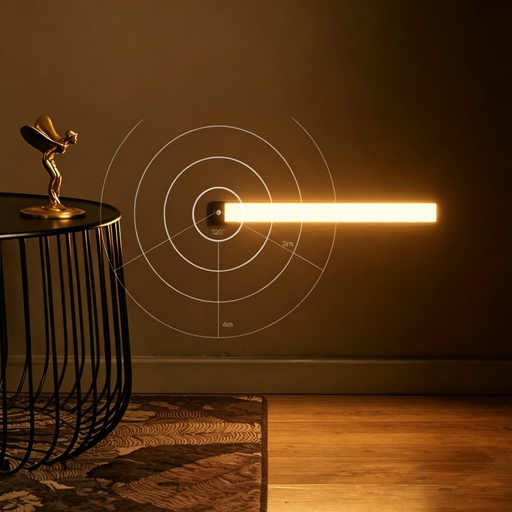
Why This Fits Their Persona: Perfect for anyone who wants instant light in a closet, drawer, or dark hallway without drilling or wiring. The magnetic mounting makes installation and recharging effortless.
The rechargeable battery avoids the hassle and cost of disposable batteries. The sensor is calibrated for short-range use, preventing it from activating unnecessarily.
Ultra-slim (less than 1 cm thick) and sleek design. Simple magnetic mounting. Rechargeable via USB-C.
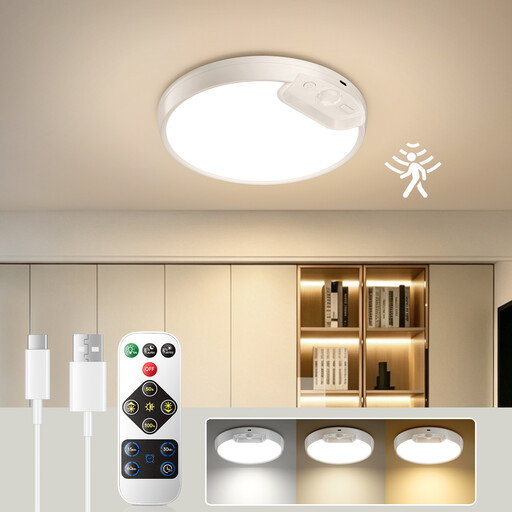
Why This Fits Their Persona: A solution for those needing a functional ceiling light in a garage, shed, attic, or storage room where there is no power outlet. Completely wireless and powerful enough to illuminate an entire room.
The large 8000mAh battery ensures a long runtime, preventing the 'constant-recharging frustration'. The remote control gives you full control over the sensor settings.
Large battery capacity (8000mAh). Adjustable brightness and 3 colour temperatures. Includes a remote control with a timer and various modes.
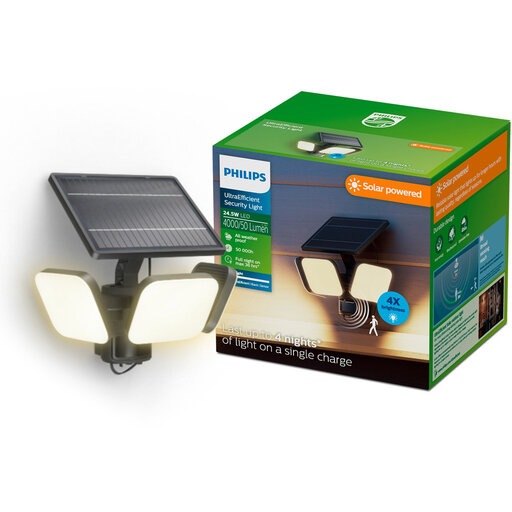
Why This Fits Their Persona: Designed for securing and illuminating outdoor spaces like the driveway, garden, or building fa?ade. It runs entirely on solar power, so there are no electricity costs or complicated installation.
The high IP65 rating guarantees that the lamp is resistant to all weather conditions. According to Philips, the PIR sensor offers a superior and wide detection range, which minimises false alarms.
Runs on solar power. Very high light output (4000 lumens). Adjustable lamp head to direct the light where it's needed.
We have compiled an up-to-date list of products that meet these strict selection criteria and safety regulations.
The battery life depends on the capacity, the type of light, and how often the sensor is activated. Rechargeable models often specify a runtime, for example, "up to 90 days with 10 activations per day". Choose LED lighting with a sensor to maximise battery life, as LED technology is very energy-efficient.
On some, often more advanced models, you can adjust the sensitivity and the light duration. This is especially common with an outdoor sensor light. You can then set the light level at which the sensor becomes active (LUX) and how long the light stays on after detection (e.g., from 10 seconds to 7 minutes). Simpler models like night lights often have fixed, optimised settings.
A motion sensor reacts to movement (heat). A dusk-to-dawn sensor reacts to the amount of ambient light and turns the lamp on when it gets dark. Many outdoor lights combine both technologies: the dusk-to-dawn sensor ensures the lamp only operates at night, after which the motion sensor activates the light upon detecting movement. This is the most energy-efficient configuration.
