
Spontaneous moss photographer
Want to capture a tiny detail quickly while camping, without changing lenses? Compare the close-up mode and how you can light your subject. OM SYSTEM says the TG-7 has a microscope mode that can focus from 1 cm away.


For capturing tiny moss details on a camping trip, a sturdy compact camera with a suitable close-up mode is a practical choice if you don’t want to change lenses. A mirrorless camera with a compatible macro lens is a better fit if you want to choose the magnification precisely and don’t mind carrying extra kit. If so, check the protection offered by the camera body and lens separately.
Want to capture a tiny detail quickly while camping, without changing lenses? Compare the close-up mode and how you can light your subject. OM SYSTEM says the TG-7 has a microscope mode that can focus from 1 cm away.
If you also take photos in rain, mud or dust, check the protection specified for the exact camera model. OM SYSTEM and Ricoh publish model-specific protection details for cameras including the TG-7 and WG-90.
Want to make moss textures appear deliberately larger in your photos, and are you happy to carry a separate lens? Check the magnification, lens mount and what’s included in the camera kit. Nikon lists a maximum magnification of 1:1 for the NIKKOR Z MC 50mm f/2.8.
First decide whether you mainly want to take close-up photos without changing lenses, choose your magnification with a separate macro lens, or use one camera for a range of travel photos.
Ideal if You want to take one camera with you and photograph moss on the go without changing lenses. OM SYSTEM lists a microscope mode from 1 cm for the TG-7; Ricoh lists a digital microscope function from 1 cm for the WG-90.
Bear in mind The specified focusing distance alone doesn’t tell you how much moss will fit in the frame or how you can light it.
Ideal if You want to choose the magnification precisely and are happy to carry a separate compatible lens. Nikon lists a maximum magnification of 1:1 for the NIKKOR Z MC 50mm f/2.8; Canon lists a maximum of 1.4× for the RF 100mm F2.8L Macro IS USM.
Bear in mind The Canon EOS R100 kit with RF-S 18-45mm doesn’t automatically include the separate RF 100mm macro lens. Check the lens mount and everything included in the kit.
Ideal if You mainly photograph a range of travel subjects on the same trip, and only take the occasional photo of moss. Sony specifies a 24–200mm-equivalent zoom range for the RX100 VII.
Bear in mind Sony lists a minimum focusing distance of around 8 cm at the wide-angle end and around 100 cm at the telephoto end for the RX100 VII. Check the range at the zoom setting you plan to use.
| What to consider | What to check before buying | Who is it important for? |
|---|---|---|
| Moss details | Compare the close-up mode or maximum magnification of the exact camera and lens combination. Focusing distance and magnification describe different things. | If I want to capture fine moss textures in sharp detail while camping, close focusing is my top priority. Around 36% of consumers put moss details first. |
| Outdoor protection | Read the protection specifications for the exact model. OM SYSTEM lists the TG-7 as waterproof to 15 m; if you’re using a mirrorless camera, check your chosen lens too. | In changeable weather, I want to know exactly what protection my camera offers, so I can plan my kit accordingly. Around 29% of consumers give outdoor protection top priority. |
| Macro lens and magnification | Check the lens mount, maximum magnification and everything included in the kit before treating a mirrorless camera kit as macro equipment. | If I want to choose the magnification deliberately, I’m happy to use a separate lens as long as it fits the camera body. Around 21% of consumers say control over magnification is their main buying priority. |
| Travel photos too | Check the focusing range at both the wide-angle and telephoto ends if you’re considering a zoom camera for a variety of subjects. | On a camping trip with a variety of subjects, I want to take landscape and travel photos too, not just pictures of moss. Around 14% of consumers prioritise general travel use. |
Focusing distance, magnification and zoom setting answer different questions. The minimum focusing distance of the Sony RX100 VII varies depending on the zoom setting.
Check the close-up mode or magnification, as well as the focusing range at the settings you plan to use.
The Canon EOS R100 kit with RF-S 18-45mm is not the same as a kit with the separate RF 100mm macro lens.
Compare everything included in the box and the lens mount before choosing the camera for dedicated macro photography.
A protection specification for a camera body doesn’t automatically apply to every lens attached to it.
Check the protection of the camera body and your chosen lens separately, or compare it with a complete rugged compact camera.
The TG-7 is a rugged compact camera with a microscope mode; the OM-5 Mark II is a separate mirrorless camera option with interchangeable lenses.
The WG-90 is a rugged compact camera with a digital microscope function.
The EOS R100 is a mirrorless camera; the RF 100mm F2.8L Macro IS USM is a separate macro lens option.
The NIKKOR Z MC 50mm f/2.8 is a macro lens for a compatible Nikon Z camera, not a complete camera.
The RX100 VII is a compact all-round camera for anyone who wants to photograph subjects other than moss on a camping trip.
This Joybuy selection features cameras whose product names mention photography, travel or video. For capturing moss details, check the close-up mode or focusing range of the exact model separately.
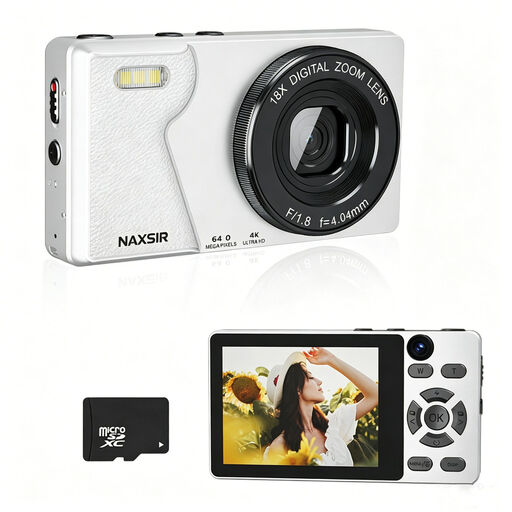 Image unavailable
The product name mentions photography and travel; check separately whether the camera can focus at the distance you need for moss.
The product name lists 4K Ultra HD, 64 MP photo resolution, 18× digital zoom, autofocus and a 32 GB memory card.
 Image unavailable
The product name focuses on photography and travel; for moss photography, check the close-up capability of the exact model.
The product name lists 5K, 80 MP UHD and 18× zoom.
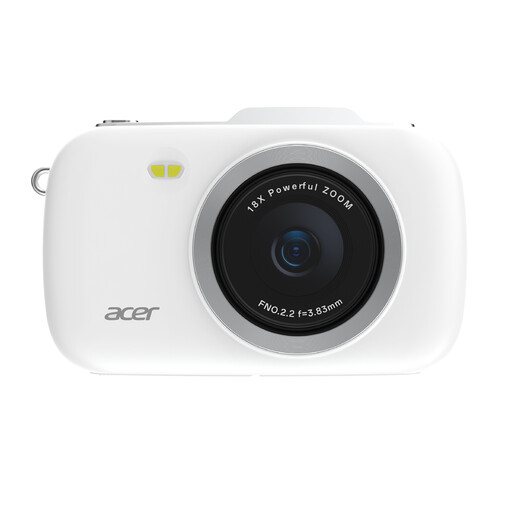 Image unavailable
The product name mentions photography and travel; check this camera’s focusing range separately for moss details.
The product name lists 4K, 80 MP UHD and 18× zoom.
 Image unavailable
The product name describes this model as a vlogging camera; for moss details, check its close-up capabilities separately.
The product name lists a 1-inch CMOS sensor, 4K/120fps video and 3-axis stabilisation.
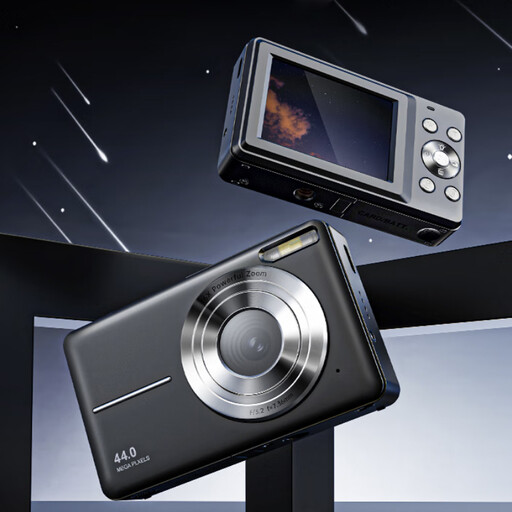 Image unavailable
The product name describes a pocket camera for photography and video; for moss photography, check the exact model’s focusing distance.
The product name lists 4K, 44 MP and 16× zoom.
No. The distance tells you how close a camera can focus in a particular mode; 1:1 is a magnification ratio specified for certain macro lenses. Compare the two specifications according to what each one means, and check them for the exact model.
You may be closer than the minimum focusing distance for the lens or zoom setting you’re using. Check the range for that setting and, if necessary, move back slightly until the camera can focus.
Not the EOS R100 kit with RF-S 18-45mm described by Canon: the separate RF 100mm macro lens isn’t included in that lens kit. Before buying, check everything included in the kit and make sure the lens is compatible.
Compare the protection specified for the exact model, and if you’re using a mirrorless camera, check your chosen lens too. OM SYSTEM lists the TG-7 as waterproof to 15 m; a specification for a camera body doesn’t automatically apply to every lens.
Check whether a lighting accessory is included with the version you’ve chosen. Ricoh lists six macro LEDs for the WG-90; OM SYSTEM describes an LG-1 light guide as part of the TG-7 micro adventure kit.