Who is this buying guide for?

Makers who want to capture colour accurately

You’re photographing a mosaic sample and want to capture its colours faithfully. Control over the light and white balance is important here; Canon Europe explains how white balance affects colour reproduction.

Photographers of glossy tiles

You want to fill in shadows without reflections overpowering the mosaic pieces and grout lines. Having room to change the angle of the light can help; Canon Europe and NEEWER describe reflection and positioning options for product photography, as well as their lighting products.

Makers working in changing window light

You want to use a similar setup at different times of day and decide whether you need extra equipment. Adobe Lightroom Academy explains that studio lighting is less affected by the weather and seasons than window light.

What should you look for when choosing?

Window light with a white reflector card

Choose this when: only the shadow side is too dark and you can take photos in the available daylight. Canon Europe suggests using a reflector or large white card to fill in shadows.

The trade-off: you won’t need an extra lamp or power supply, but you’ll still depend on the window light.

Compact, dimmable fill panel

Choose this when: space is limited and you want to light a small mosaic sample from close up.

The trade-off: check that the light is powerful enough at your chosen working distance and that the small light source doesn’t create distracting reflections.

Larger bi-colour panel with diffusion

Choose this when: you want to spread the light across the sample and adjust the colour temperature to suit the window light.

The trade-off: you’ll need more room to set it up and should check the stand, power supply and included accessories.

What to consider What should you look for? Who is this relevant to?
Colour reproduction and white balance Check the colour temperature and colour reproduction specifications for the exact model; take a reference photo under the lighting you plan to use. If capturing recognisable mosaic colours is your priority, you’ll want to be able to check the colour settings and white balance. Around 33% of consumers put colour reproduction first.
Reflections and detail Check whether the light has diffusion and whether the mount lets you change its angle. If glare or shadows make the mosaic pieces and grout lines harder to see, you’ll want to be able to adjust the direction of the light. Around 25% of consumers put reflection control first.
Consistent lighting Check whether the panel is dimmable and whether its light output is specified for a distance that suits your workspace. If you want to use a similar setup in changing daylight, adjustable fill lighting is important. Around 25% of consumers put consistent lighting first.
Size, power and setup Check the dimensions, mount, compatible battery type and what’s included in the box. If you want to keep the amount of equipment around the sample to a minimum, size and mounting options matter even more. Around 17% of consumers put a compact setup first.

Common buying mistakes

  • Assuming a high CRI rating guarantees accurate colours

    The colour reproduction rating alone doesn’t determine how your mosaic will look in a photo; the light you use and the white balance also play a part.

    Check the specifications for the exact model and take a photo with a neutral reference under the lighting setup you’ll actually use.

  • Assuming all bi-colour or RGB models in a range are the same product

    Colour temperature ranges, power options and what’s in the box can vary by model. A single light may also come with different accessories from a kit.

    Check the full model name and what’s included in the box. Make sure you have the right power supply, battery or mount for your setup.

  • Assuming a similarly named shop listing is the same product without checking

    Ulanzi lists a range of 2500–9000 K for the Ulanzi VL49 RGB, while a Joybuy listing for a similarly named light gives a range of 2500–9500 K. Don’t assume the model and specifications match based on the name alone.

    Compare the model identifier and key specifications of the version on offer with the manufacturer’s information.

Relevant brands to consider

Godox

The LP400Bi is a bi-colour panel for anyone looking for a larger, directional fill light. Godox lists diffusion, an adjustable bracket and power via an adapter or compatible batteries.

  • Godox specifies an adjustable range of 2800–6500 K for its bi-colour LP models.
  • Check the exact model and kit: features of RGB models or kits don’t automatically apply to the standalone LP400Bi.

NEEWER

The NL660 Bi-Color is a larger panel for setups where the direction of the light and diffusion matter.

  • NEEWER lists a range of 3200–5600 K, a diffuser and a rotatable bracket for this model.
  • NEEWER says compatible NP-F batteries aren’t included. What’s in the box varies between the standalone light and a kit with a stand.

Ulanzi

The VL49 RGB is a compact, rechargeable light for a small workspace and close-up fill lighting.

  • Ulanzi lists an adjustable range of 2500–9000 K for the VL49 RGB.
  • A Joybuy listing for a similarly named light gives a range of 2500–9500 K. Don’t treat this difference as confirmation that it’s the same model.

amaran

The P60x is a larger bi-colour panel for anyone who wants to check published light readings at different distances.

  • Aputure publishes photometric values for the P60x at different distances and colour settings.
  • Aputure warns that individual units may vary. The readings don’t directly predict the exposure or reflections in your mosaic setup.

Joybuy products for compact fill lighting

This selection includes compact fill lights and camera lights for small setups. The range includes everything from mini and phone lights to a portable video light; check which one suits the way you light your mosaic.
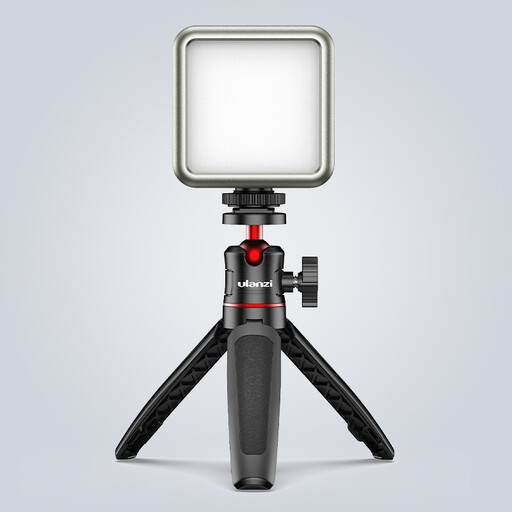
Ulanzi VL49 RGB compact camera light

Ulanzi VL49 RGB

Suitable as a compact close-up fill light when you have little space around the sample.

The product title specifies a dimmable light, a built-in 2000 mAh battery and a magnet on the back.

View at Joybuy
Ulanzi LM001 portable mini fill light

Ulanzi LM001

Suitable as a small fill light for photography when you want to position the light flexibly around your setup.

The product description specifies a magnetic base and a 1/4-inch thread for mounting. The product title lists a 500 mAh battery.

View at Joybuy
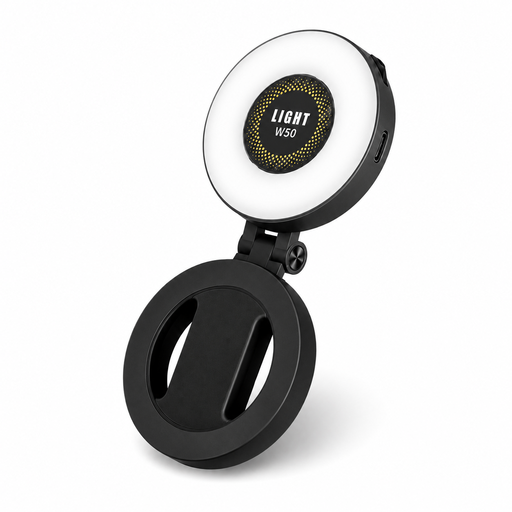
VoxorAI M28 Black phone light with magnetic mount

VoxorAI M28 Black

Suited to a compact setup where you want to attach the light to a phone; the product title mentions photography and selfies as uses.

The title specifies a magnetic mount, a mirror, a 360° LED light strip and compatibility with iPhone and Android.

View at Joybuy
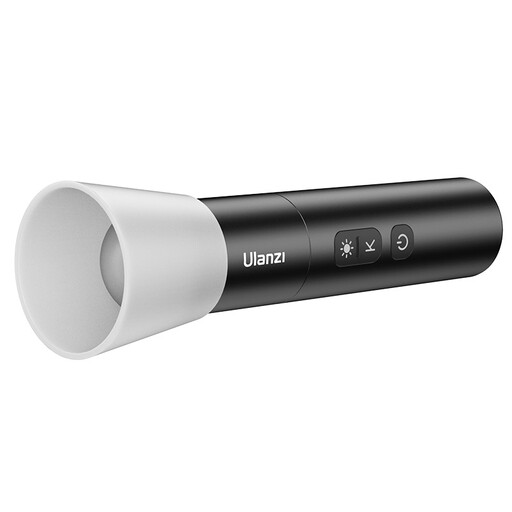
Ulanzi LM07 portable LED video light

Ulanzi LM07

Suitable as portable extra lighting for photography; the product title describes this model as a torch-style video light.

The product title specifies a bi-colour setting, four brightness levels, a 2000 mAh battery, a weight of 187 g and a zoom function.

View at Joybuy

Frequently asked questions

Do I always need to use an LED panel alongside window light?

No. If only the shadow side is too dark, try using a large white card to bounce the window light back onto it; Canon Europe suggests this as an option. A dimmable panel is worth considering if you also want to control the fill light when the daylight changes.

How should I position lights around glossy mosaic pieces?

Take test shots as you adjust the angle of the light and add diffusion if needed. Check that the details remain visible in the photo: a diffuser or rotatable bracket gives you options, but won’t automatically prevent reflections.

What should I check when setting up and maintaining the light?

Before use, check that the mount and power supply suit the exact model, and that any battery is compatible. Follow the model-specific instructions for cleaning and observe the safety guidance for the adapter and battery.

What returns and warranty rights apply to purchases made by consumers in the Netherlands?

For a standard online consumer purchase, there is generally a statutory 14-day cooling-off period after delivery, subject to legal exceptions; ACM ConsuWijzer explains how this period works. The statutory guarantee doesn’t have a fixed duration of exactly two years for every purchase: according to ACM ConsuWijzer, what you can reasonably expect from the product is also relevant. The retailer is your point of contact if a product is faulty, damaged or incorrectly described.

What does a CE mark on an electric LED panel mean?

If the applicable EU rules require the product to carry a CE mark, the manufacturer must assess its compliance and draw up the required documentation. Business.gov.nl emphasises that CE is not a quality mark and doesn’t prove that a panel produces photographically accurate colours. Check the documentation for the specific model.
