
Vandaag of morgen in huis

Kwaliteit gegarandeerd

Welkomstaanbiedingen ontgrendelen: GRATIS bezorging | Tot 80% korting | Gratis 30 dagen JoyPlus-proefperiode
Download de app
A mop with bucket may seem simple, but the differences between systems can be significant. A bucket that is too small, an awkward wringer or a mop that holds on to too much water can actually make cleaning slower. Marketing claims about “streak-free” cleaning or removing bacteria also deserve a sensible look: the result depends on the floor, how the mop is used, maintenance and the manufacturer’s instructions.
For households, families and pet owners, three pitfalls are particularly important:
A pedal-operated centrifugal wringer lets you wring out the mop without putting your hands in dirty water. It can also help you avoid bending down as much. Pay attention to the shape of the wringer: a flat microfibre mop does not always fit into a narrow centrifugal basket.
A mop set with wringer is particularly useful when you are cleaning several rooms one after another. A bucket with a water-level indicator, handle and pouring spout is more practical when filling and emptying it. A splash-resistant rim can help keep water inside the bucket, but it will not prevent splashing if you spin the mop too quickly or forcefully.
A microfibre mop can pick up dust, hair and dirt without requiring much cleaning product. However, “microfibre” does not guarantee the same quality in every product. Check:
A wide floor mop cleans open floors more quickly, while a smaller or swivelling mop is easier to use along skirting boards and under furniture. Wash microfibre cloths according to the product instructions and do not use fabric conditioner if this is discouraged. Fabric conditioner can affect the fibres’ ability to absorb moisture.
A more heavily moistened system is often suitable for tiles and vinyl, while you should use water sparingly on laminate, parquet and wood. Always check the floor manufacturer’s care instructions. Even if a product description states that a mop is suitable for all hard floors, using the right amount of moisture remains important.
A spray mop with a reservoir is useful for small spills or a quick clean without a bucket. A model with a 300 ml reservoir is compact, but less suitable if you want to clean a large house in one go. For more intensive floor cleaning, a bucket is usually more efficient.
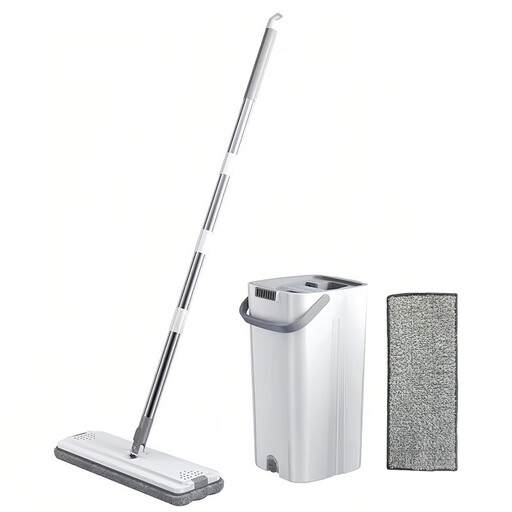
Why it suits you: An accessible set for flats, beginners and households looking for a complete mop with bucket without having to source separate components.
The product name lists a bucket, two cloths and a 125 cm handle. However, check the wringer’s current specifications before buying.
The two included cloths mean you are less likely to need to buy extra accessories straight away.
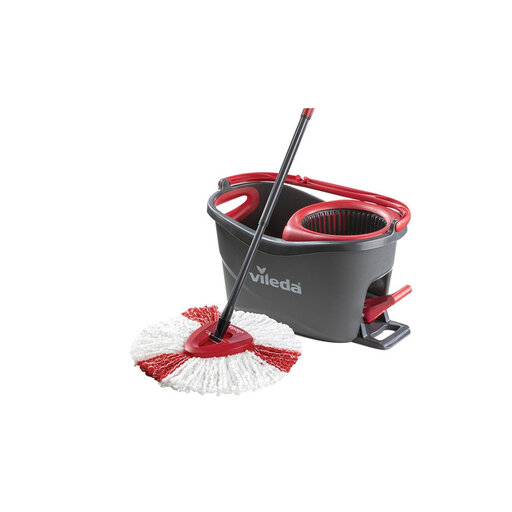
Why it suits you: Suitable for regular cleaning when you want a mop with a wringing function that does not require you to wring the cloth out by hand.
The pedal-operated centrifugal wringer is designed for hands-free wringing. According to the description, the telescopic handle adjusts to approximately 130–132 cm.
The triangular mop head rotates 360 degrees, making it practical for cleaning along skirting boards and in corners.
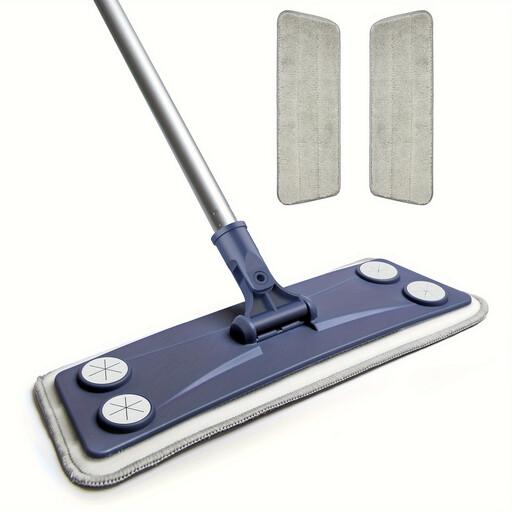
Why it suits you: A wide floor mop for removing dust, hair and dirt from large surfaces when you already have a suitable bucket.
The set includes two washable microfibre pads. This means you do not have to wash them immediately after every room, but a bucket and wringer are not included.
According to the product description, the head rotates 360 degrees and is approximately 60 cm wide.
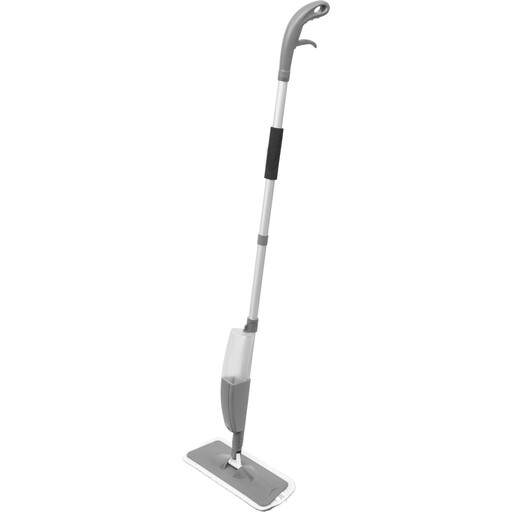
Why it suits you: Handy for small homes, kitchens and quick cleaning jobs when you do not want to get a full bucket ready.
The integrated reservoir holds 300 ml. You may therefore need to refill it when cleaning large areas.
According to the description, the handle is 120 cm long and the head swivels to reach areas around furniture.
A separate floor mop or microfibre cloth can be useful for dry maintenance between more thorough cleaning sessions. For grouting, patios or stubborn dirt, a mop alone may not always be enough; a sturdy brush may be more suitable.
Browse our current range of products that meet these selection criteria and the applicable Dutch and European consumer regulations.
It can be, as long as you use very little water and wring the mop out well. Always check your laminate flooring’s care instructions. Do not leave puddles on the floor and dry up any moisture immediately.
This depends on how often you use and wash it, as well as the level of wear. Replace the cloth when it becomes thin, no longer cleans properly, comes away from the mop head or develops a persistent smell. For the Vileda set, the product description recommends replacing the mop head after approximately three months for optimum performance; always follow the brand’s current instructions.
A spray mop uses less water per cleaning session and does not need a bucket. This can be practical for small areas. In a larger household, a mop with bucket may be more efficient because you can continue cleaning for longer before the water or cloth needs replacing. The overall cost depends on replacing the cloth, cleaning product and how often you clean the floor.
