
Vandaag of morgen in huis

Kwaliteit gegarandeerd

Welkomstaanbiedingen ontgrendelen: GRATIS bezorging | Tot 80% korting | Gratis 30 dagen JoyPlus-proefperiode
Download de app
A mop and a steam mop may look like similar cleaning products at first glance. However, they differ considerably in how they’re used, maintained and suited to different floors. A steam mop uses heat and moisture, while a flat mop or microfibre mop relies mainly on the right pad, the amount of water and manual pressure. A robot vacuum with a mopping function takes some of the work off your hands, but requires attention to settings, maintenance and replacement parts.
If you focus only on terms such as “powerful cleaning”, “smart navigation” or “hygienically clean”, you could end up buying a product that isn’t right for your home. Instead, pay close attention to the points below.
A steam mop is designed for sealed hard floors, such as certain types of tile and other non-porous surfaces. Untreated, oiled or damaged wood can be sensitive to heat and moisture. Always check the instructions from both the floor manufacturer and the steam mop manufacturer.
So, a mop for tiles and wooden floors isn’t automatically suitable for every type of wooden floor. If in doubt, a lightly damp microfibre mop is often a more cautious choice.
The tank capacity doesn’t tell you exactly how long you can clean for. This depends on the steam setting, the surface and the other settings. According to the product information, the BLACK+DECKER FSM13E1 steam mop can produce steam for up to 11 minutes from its 0.38-litre tank. That’s practical for a kitchen or bathroom, but may not be enough for a large home.
Reusable mop pads need washing and replacing when necessary. A worn pad absorbs less moisture and dirt, and may leave streaks. Compatible pads are particularly important for an automatic robot mop. A replacement part that isn’t made for your model won’t work properly and may be difficult to fit.
Check whether the product is suitable for:
A regular flat mop lets you control how much water you use. That’s useful for delicate surfaces. An electric mop or steam mop works faster, but requires more care with temperature and moisture.
For manual cleaning, three specifications are particularly useful:
According to the product description, the BLACK+DECKER BD STEAM MOP 1300W FSM13E1 has a power rating of 1300 watts, a 4-metre cord, a weight of 1.8 kg and a heat-up time of around 30 seconds. The manufacturer also states a maximum steam temperature of 85 °C and claims that it reduces common household bacteria. This is a claim made in the brand’s product information; use the appliance only as directed in the manual.
According to the specifications, the Shark Klik n’ Flip S6003EU has a power rating of 1200 watts, a 6-metre cord, a 380-millilitre tank and two washable pads. The manufacturer warns that the mop head and steam outlet become hot. Let the appliance cool down completely before refilling or cleaning it.
Microfibre is suitable for many smooth surfaces, but its construction varies from product to product. Look for:
A mop and bucket with separate clean and dirty water compartments is a good option if you’re cleaning several rooms in a row. A manual set doesn’t need electricity, but does require more effort.
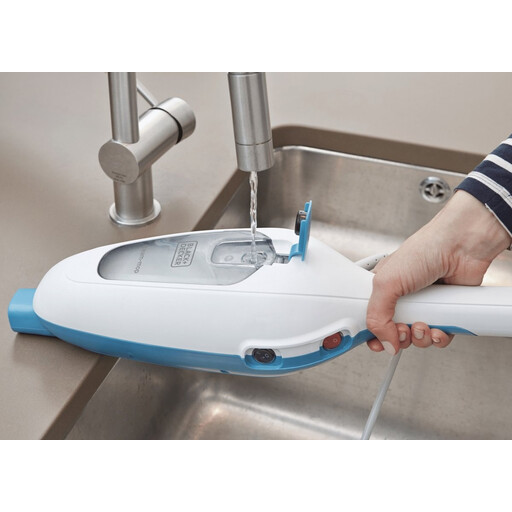
Why it suits this type of user: A compact steam mop for households that want to clean sealed hard floors without detergent and get started quickly.
The specifications state a heat-up time of around 30 seconds, a 4-metre cord and a 0.38-litre tank. However, check whether 11 minutes of steam will be enough for your floor area.
1300 watts, 1.8 kg, a 4-metre cord and a microfibre pad, according to the product description.
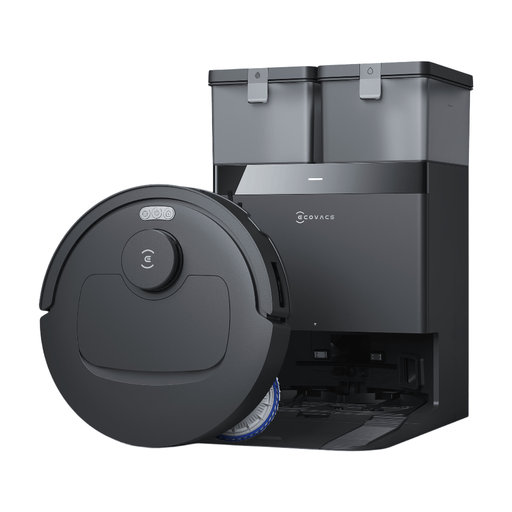
Why it suits this type of user: For households with pets and several rooms, and little time for daily mopping by hand.
The OMNI station functions reduce the need to empty, wash and dry things by hand. Check beforehand that you have enough space for the station and that it’s suitable for your floors.
According to the product information: 20,000 Pa suction power, dual rotating mops, carpet detection, map management and 75 °C hot-water pad washing.
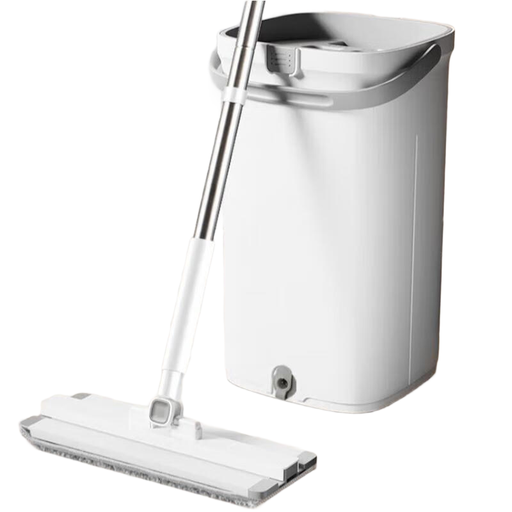
Why it suits this type of user: For larger households and cleaning professionals who want to control moisture and pressure themselves, without electronics.
The bucket has separate sections for washing and wringing. This helps keep dirty water separate, and lets you wring out the pad with one hand.
A 32 cm-wide microfibre head, a low-profile mop head for cleaning under furniture, and separate clean and dirty water compartments, according to the product description.
With a steam mop, ongoing costs mainly come from washable or replaceable pads and, where necessary, descaling as directed in the manual. Only use the water and products recommended by the manufacturer. Both BLACK+DECKER and Shark state that you shouldn’t put cleaning products, perfume, vinegar or other additives in the tank.
For a robot mop, you’ll also need to factor in replacement pads, brushes, filters and sometimes cleaning solution. According to the product information, the Eureka E20 Plus HEPA Mop 2-pack is suitable only for Eureka E10s/E20 Plus robots. The pads are washable and reusable; the description recommends replacing them every two to three months, depending on use.
For removing dry dust, a 50 cm Coconut Fiber Dust Mop may come in handy. Note that, according to the description, this product is supplied without a handle. A separate 50 x 60 cm microfibre mop cloth with hook-and-loop fastening is suitable for smooth surfaces and can be washed at 60 °C, according to the product information. Avoid using fabric softener if you want to maintain its absorbency.
We’ve put together a complete, up-to-date list of products that meet these strict selection criteria and comply with current European safety regulations.
Only if the floor is sealed and the floor manufacturer allows steam cleaning. For untreated, oiled or damaged wood, it’s better to use a lightly damp microfibre mop and avoid leaving standing water.
It depends on how often you use it, the washing instructions and how worn it is. Replace a pad if it’s becoming thin, absorbing moisture poorly or leaving streaks. Product descriptions may give guidance for specific robot mop pads, such as every two to three months for the Eureka pads.
As well as the purchase price, you’ll need to consider electricity, water, maintenance and replacement pads, brushes and filters. A station that empties, washes and dries the pads automatically can reduce the amount of work you do by hand, but it has more parts that need regular maintenance. So, check not only the features but also the availability and price of compatible accessories.
