
Vandaag of morgen in huis

Kwaliteit gegarandeerd

Welkomstaanbiedingen ontgrendelen: GRATIS bezorging | Tot 80% korting | Gratis 30 dagen JoyPlus-proefperiode
Download de app
The term 'Montessori toy' is everywhere, but what does it really mean? As a parent or grandparent, you want toys that not only entertain but also contribute to a child's development. However, the market is flooded with products that carry the 'Montessori' label but don't adhere to its principles. This often leads to disappointment and unnecessary expense.
Before you make a choice, it's wise to recognise the most common pitfalls:
To make a well-informed choice, you can look for a few specific characteristics. These will help you see through marketing hype and focus on what truly matters for your child's development.
This is the most important factor. Toys sold in the EU must comply with the EN71 safety standards. This certification guarantees that the product has been tested for, among other things, chemical substances, flammability, and the presence of small parts that could pose a choking hazard. Always check if a product, whether it's made of wood, plastic, or foam, mentions this certification. This is your guarantee of a safe product.
Good educational toys are 'open-ended'. This means there is no fixed outcome. A child can play with them in countless ways, which stimulates creativity, problem-solving skills, and imagination. Think of soft play blocks that can become a castle, a tunnel, or a chair, as opposed to a puzzle with only one correct solution. This type of developmental toy remains interesting and relevant for longer.
Choose toys that match the child's age and skills. For a 2-year-old toddler, fine motor skills toys like large blocks are ideal for practising hand-eye coordination. An older child might need more of a challenge with more complex construction sets. For developing gross motor skills, an indoor climbing frame or a set of climbing blocks is an excellent option for learning to climb, crawl, and balance in a safe environment.
Below is a selection of products, linked to the specific needs of parents and children.
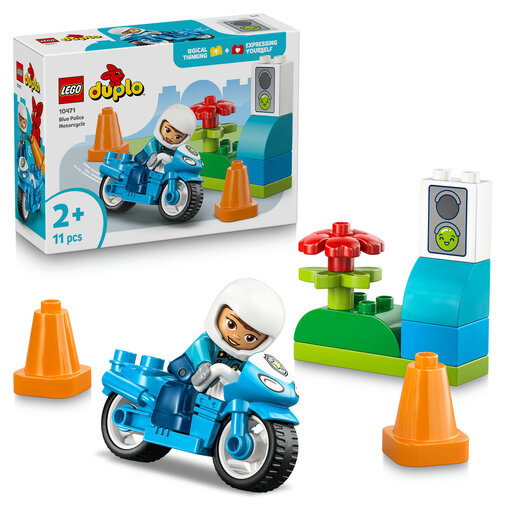
Why This Fits Their Persona: Ideal for those who want to start with developmental toys without making a large initial investment. This set is affordable, compact, and still offers the educational benefits of a top-tier brand.
This isn't a vague 'Montessori' product, but a toy from LEGO DUPLO, a brand known for its strict safety controls (compliant with EN71). The play value is open-ended: the motorcycle and cones can be used in countless stories.
Stimulates fine motor skills and role-playing. The traffic light element simply introduces concepts like cause and effect.
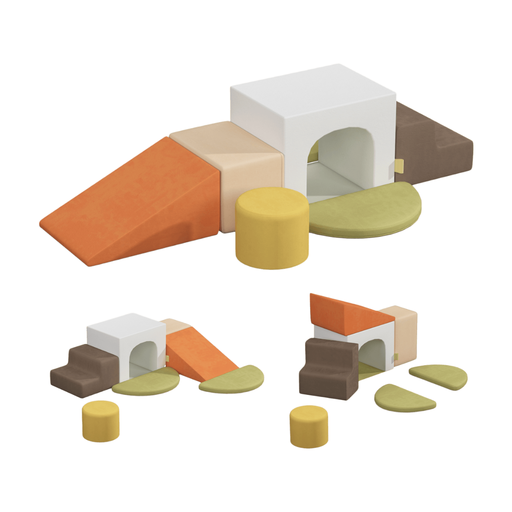
Why This Fits Their Persona: Perfect for parents of energetic toddlers looking for a safe way to encourage movement indoors. This set of soft play blocks functions as a versatile indoor climbing frame and stimulates gross motor skills.
This product directly addresses the safety pitfall. It is explicitly EN71-certified and has a non-slip base. The washable covers make maintenance practical, a detail often missing in cheaper alternatives.
Modular and open-ended: the blocks can be combined to create obstacle courses, forts, or slides. This promotes both physical development and creativity.
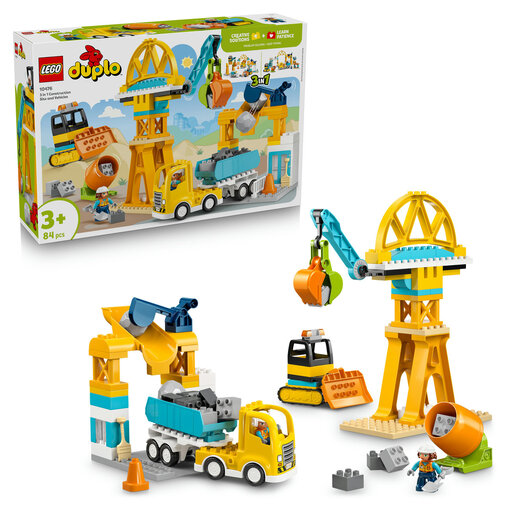
Why This Fits Their Persona: For the parent seeking a durable set that will last for years and offer new challenges. This set provides enormous variety and encourages more complex thinking and collaboration.
This set is the opposite of 'limited play value'. With its 3-in-1 building options, a child can create new scenarios time and again, which promotes long-term engagement and creativity.
Promotes logical thinking, spatial awareness, and fine motor skills. The different vehicles with moving parts (crane, dump truck) mimic reality, a core principle of Montessori.
We have compiled a complete, up-to-date list of products that fully meet these strict selection criteria and EU/UK safety regulations.
The main difference lies in the philosophy, not necessarily the material. Montessori toys are designed to stimulate a child's independence and natural curiosity. They are often realistic, simple in design, and focused on developing a specific skill without unnecessary distractions. Regular wooden toys can also have these qualities, but the term 'Montessori' implies a deeper educational purpose.
The principles can be applied from infancy with simple, tactile objects. For toddlers (e.g., toys for 2 year olds), there are sorting games, stacking blocks, and LEGO DUPLO that promote fine motor skills and logical thinking. For preschoolers, there are more complex construction sets, climbing frames, and materials that prepare them for writing and maths. The key is to find the right toy for the right developmental stage.
For wooden toys, a slightly damp cloth is usually sufficient. Avoid harsh cleaning agents, as they can damage the wood or leave unsafe residues. For soft play blocks made of foam, like the sets from BanaSuper, the covers are often removable and machine-washable. Regularly inspect toys for wear and tear, such as splinters or loose parts, to ensure continued safety.
