
Vandaag of morgen in huis

Kwaliteit gegarandeerd

Welkomstaanbiedingen ontgrendelen: GRATIS bezorging | Tot 80% korting | Gratis 30 dagen JoyPlus-proefperiode
Download de app
Montessori toys for children are not about having as many buttons, sounds, or flashy features as possible. The principle is that children should be able to explore, move, and solve problems independently. In practice, this means choosing toys with a clear purpose, an appropriate level of challenge, and materials that can withstand everyday use.
For parents, grandparents, nurseries, and childcare professionals, choosing the right product is not always straightforward. Product titles often use terms such as “Montessori”, “educational”, and “safe”, but these words alone say very little. Below, you’ll discover which common pitfalls often lead to disappointing purchases and which specifications you should actually check.
Not every wooden or colourful product supports independent play. Check what a child can actually do with it. Can they stack, sort, build, climb, or explore different textures? A product that mainly makes sounds after an adult presses a button offers a very different play experience from soft baby toys that allow infants to grasp and discover independently.
Toys for babies aged 6 months and up are not automatically suitable for toddlers or older children. Pay attention to the minimum age, choking warnings, and the presence of detachable parts. Toys with small components require supervision. Also check regularly for cracks, loose seams, damaged fasteners, and parts that are coming away.
Soft building blocks, foam climbing blocks, and sensory toys often end up on the floor. A removable, washable cover is therefore highly practical. For plastic or rubber components, it should be clear how they can be cleaned. A product that does not dry properly or is difficult to clean can quickly become impractical at home or in a childcare setting.
Choose toys that match the child’s motor skills. For babies, soft blocks, grasping toys, and simple shapes are suitable for holding and exploring. For toddlers, stacking, sorting, climbing, and simple role-play are natural next steps. Children up to around 8 years old can benefit from greater challenges through construction toys, movement games, and imaginative play.
Measure the available space beforehand. An indoor play set with large foam blocks requires sufficient clear floor space, while a compact sensory car can also fit comfortably in a smaller living room or group area. Also consider where the set will be stored.
For foam climbing blocks, foam density, a durable cover, and a non-slip underside are important considerations. According to BanaSuper’s product description, the covers are removable and machine washable. The sets are delivered vacuum-packed and, according to the same description, require 24 to 48 hours to fully expand.
For soft baby toys, the material is at least as important as the design. According to the product information, the Clementoni Clemmy Sensory Car comes with soft rubber blocks and is intended for children aged 6 months and up. The blocks can reportedly be cleaned on the top rack of the dishwasher; the car itself should be wiped with a damp cloth.
Check whether the product page includes an age recommendation, warnings, material information, and care instructions. Several BanaSuper sets state that they comply with EN71-1, EN71-2 and EN71-3 as well as Directive 2009/48/EC. This information comes from the product documentation; when purchasing, always verify the current packaging and enclosed instructions.
A CE mark is a manufacturer’s declaration of conformity, not a quality ranking. Look beyond the logo alone. For electronic toys, also check the batteries, charging requirements, cables, assembly, and recommended level of supervision.
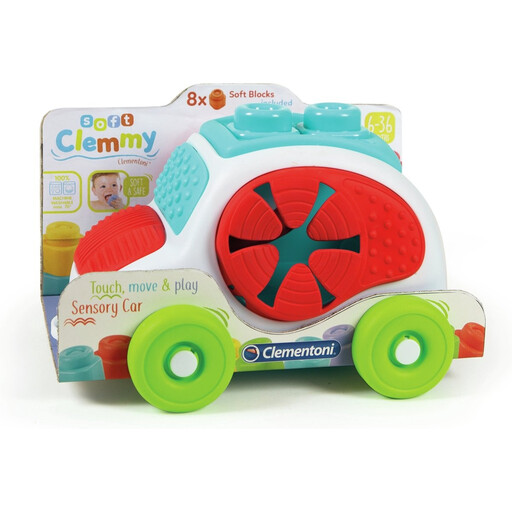
Why This Fits Their Persona: A compact choice for babies and young toddlers beginning to explore textures, grasping, and stacking. According to the product information, the set is suitable from 6 months.
The age recommendation, warnings, and cleaning instructions are clearly provided. This makes the set easier to assess than toys relying solely on broad marketing claims.
Eight soft blocks, a car with a shape-sorting function, and blocks that the manufacturer states are dishwasher-safe on the top rack.
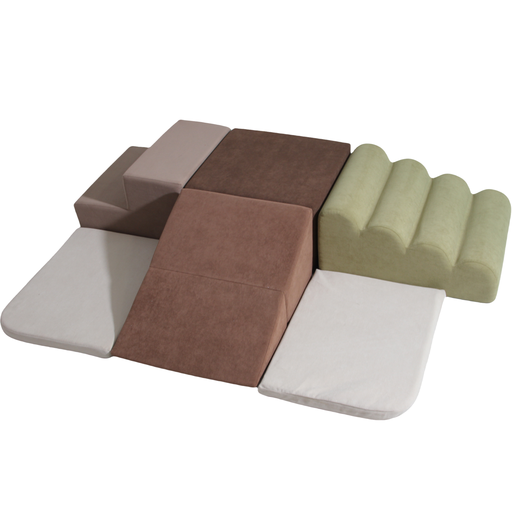
Why This Fits Their Persona: Suitable for families or childcare settings where children want to crawl, build, and climb using soft materials.
The product description mentions a non-slip base, hook-and-loop fasteners, and concealed zips. After delivery, still check that all components are securely attached.
Six foam blocks, removable machine-washable covers, and several ways to play: building, crawling, climbing, and sliding.

Why This Fits Their Persona: An indoor play set for children who want to alternate between climbing, crawling, and sensory play in a larger space.
According to the product description, the covers and lining are removable and machine washable. Please note: the play balls are not included.
A combination of foam climbing blocks and a ball-pit base, with non-slip components, hook-and-loop fasteners, and washable covers.
Do not offer all the components at once. Start, for example, with two or three soft building blocks and introduce additional shapes later. This keeps play manageable and engaging. With toddlers, you can give simple prompts such as “build a low tower” or “find the round block”. For babies, free exploration usually works better than instruction.
Place large movement sets on a level surface and keep furniture with sharp edges outside the immediate play area. For vacuum-packed foam products, first check that the blocks have fully regained their shape. Always use toys in accordance with the stated age range and safety instructions.
Browse a current selection of products that meet these practical criteria for safe and educational indoor play.
That depends on the product. According to the product information, some soft blocks are suitable from 6 months, while pretend-play sets with small parts are often recommended only from age 3. Always check the current age recommendation on the product page and packaging.
For the BanaSuper sets mentioned above, the fabric covers can be removed and machine washed according to the product description. Allow the covers and foam to dry completely before using them again. Also check the zips, seams, and non-slip underside regularly.
Their useful life depends on the materials, intensity of use, storage conditions, and the child’s age. A set with multiple ways to play may remain engaging for longer because children can discover new combinations. This does not guarantee a specific lifespan. Inspect toys regularly and replace any damaged components.
